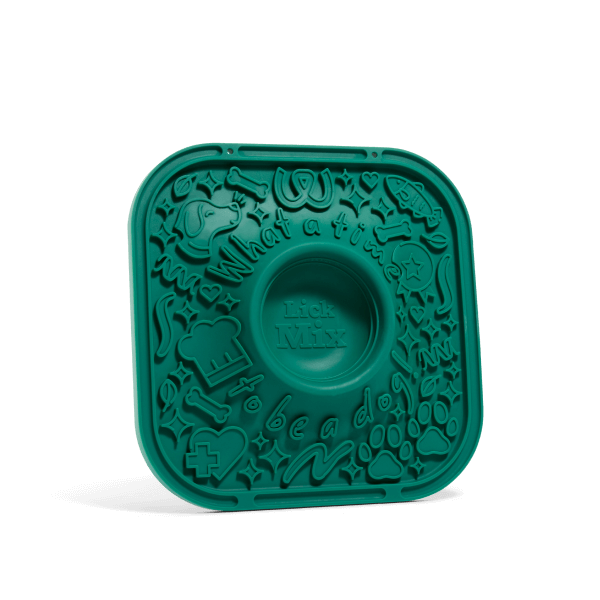
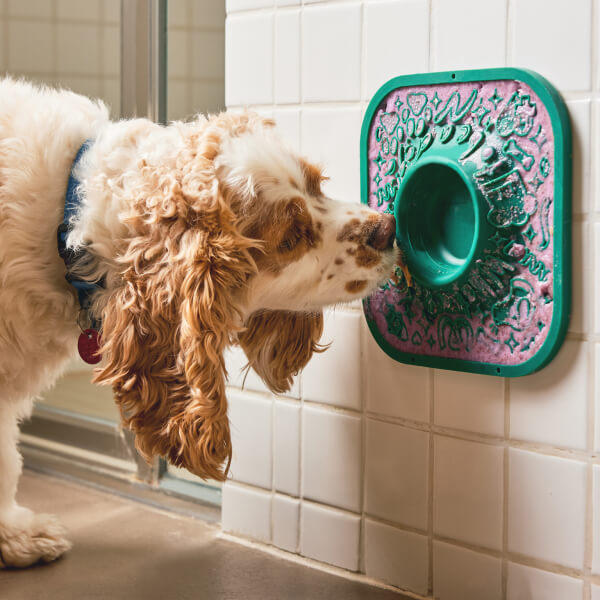
Have you ever noticed your dog gently licking their mat or toy after a long walk or during a quiet moment? It’s not just a quirky habit—they might actually be helping themselves relax. At Woof, we believe understanding what your pup is doing and why can deepen your bond and help you offer smarter enrichment tools like our LickMat that support true calm and comfort.
When you ask “Does licking relax dogs?” the answer is: yes — but with nuance. Licking isn’t just about taste or clean-up. It engages your dog’s brain and body in ways that can soften stress, lower tension and promote a restful state. Research indicates that repetitive licking can trigger the release of endorphins and activate the parasympathetic nervous system, the part of their body that helps them rest, digest and recover.
What’s happening under the surface when your dog licks?
Think of licking like a natural “reset” button for your dog’s system. The rhythm of tongue-to-surface stimulates nerve endings and signals the brain to ease into a calmer mode. One article explains that the act of licking can release endorphins and reduce levels of cortisol, the hormone associated with stress. For your dog, that means when they engage with a textured surface like our LickMat or a treat-holder, they’re not just being entertained—they’re doing something soothing.
At the same time, licking also offers mental focus. When a dog concentrates on extracting a treat from ridges or grooves, their mind shifts away from external triggers. This kind of focused, gentle task is the same kind of thing humans often find calming—like doodling or knitting—and the data suggest it can be effective for dogs too.
Why licking matters: benefits beyond the tongue
Here’s how licking enrichments like our LickMat or the dual-purpose Fly n’ Feed can support well-being for dogs of all ages and energy levels:
• Stress relief: Licking engages calming pathways in the brain, offering dogs a healthy way to release tension. When fireworks, storms or unfamiliar spaces upset your pup, offering a licking task gives them something safe and soothing to focus on.
• Mental enrichment: The process of licking a textured surface and engaging with a puzzle-treat device activates cognition and gives your dog something meaningful to do, which can prevent boredom and the unwanted behaviours that spring from it.
• Slower consumption: If your dog eats quickly, spreading kibble or treats on a lick mat or using a licking-friendly toy slows them down. Slower feeding supports healthier digestion and reduces gulping-associated risk.
• Bonding and trust: Offering a licking enrichment tool sends the message: “I know you, I see you, and I want you to feel safe.” It strengthens the connection between you and your dog while giving them a constructive outlet for their instincts.
When licking is helpful … and when it’s a red flag
Most licking is harmless and beneficial, but it’s important to pay attention to context. Normal licking might happen during grooming, a relaxed moment with you, or while using a lick mat. But excessive licking—especially of paws, furniture, fabrics or specific spots—can signal anxiety, pain, allergies or a compulsive issue.
If your dog is engaging in persistent licking that seems out of their normal behaviour, or you notice patches of hair loss, redness or skin lesions (such as a lick-granuloma), it’s time to pause enrichment and seek veterinary or behaviour-specialist input.
How to use licking enrichment the right way
To harness the calming power of licking in a safe, fun, effective way, follow these simple tips:
1. Choose a textured surface your dog can engage safely—like our LickMat or Fly n’ Feed app-easy device.
2. Spread a dog-safe treat (e.g., plain yogurt, pumpkin, or peanut butter – xylitol-free) or use your dog’s usual kibble. Freeze for a longer-lasting experience if desired.
3. Introduce the tool during quieter moments (after a walk, before bedtime, during grooming) rather than in high-stress situations only.
4. Supervise initial uses to ensure your dog uses the tool as intended and doesn’t chew the mat itself. Clean the mat regularly to maintain hygiene.
5. Integrate licking into a broader enrichment routine—a walk, some sniff time, a chew toy, and then a lick session overlay the calming effect beautifully.
Bottom line for you and your pup ??
Yes—licking can relax dogs, when used thoughtfully, especially when paired with the right tool and environment. At Woof, we crafted products like the LickMat and Fly n’ Feed with exactly this kind of calming enrichment in mind. By creating a moment where your dog can slow down, focus and enjoy texture and taste, you’re not just giving a treat—you’re helping their brain and body unwind.
Keep an eye on how—and why—your dog licks. Use the behaviour to your advantage when it’s positive, and consult your vet if it shifts into something persistent or harmful. With the right approach, licking becomes a tool for connection, calm and contentment. Because when your dog feels good, you feel good too, and that’s the kind of full-body relaxation we all seek together.