






































































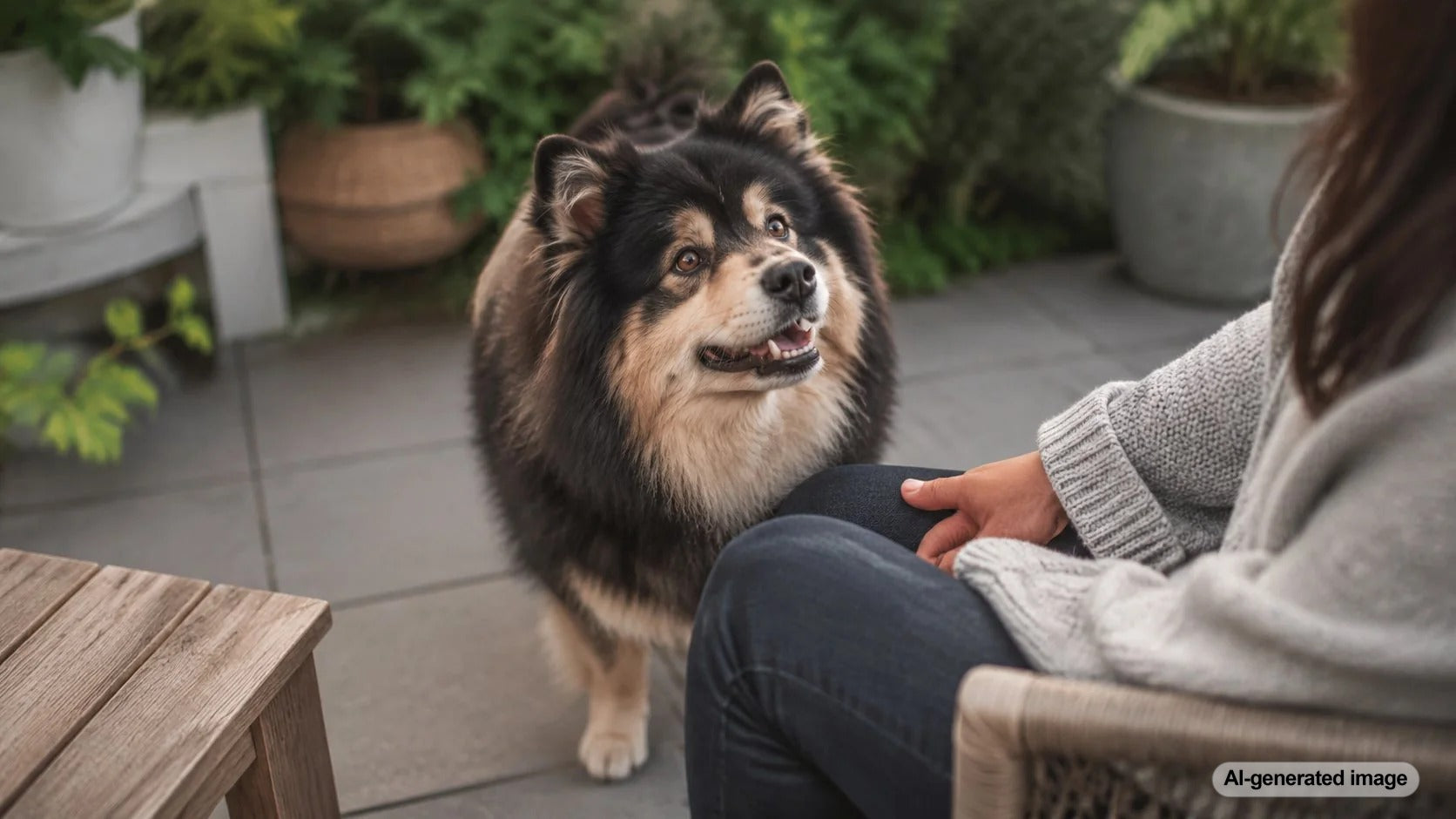
You finish the dishes, answer the last email, lower yourself onto the couch, and immediately feel a paw on your knee. Your dog suddenly needs the door opened, the water bowl inspected, a toy rescued, or your full attention. The timing can feel almost theatrical, but your dog probably is not plotting to ruin your break.
Dogs are excellent observers of routines and consequences. Sitting down changes your body language, makes you easier to approach, and often signals that the busy part of the day is over. If a nudge or whine has worked at that exact moment before, your dog may have learned that your seated position is the most reliable cue to ask.
Why Sitting Down Becomes Your Dog's Green Light
Dogs notice tiny patterns we barely register: shoes coming off before a walk, a laptop closing before dinner, or a certain chair meaning cuddle time. When you sit, your face and hands may become accessible and your attention is no longer bouncing between rooms. To your dog, that posture can mean, "Now I have a chance."
The behavior is often reinforced accidentally. If pawing makes you stand up, speaking to your dog makes whining continue, or a bark produces a tossed toy, the request worked. Even saying "not now" can be rewarding to a social dog because eye contact and conversation still count as attention. This does not make your dog manipulative. It means your dog is repeating a behavior with a useful history.
First, Decide Whether It Is a Need or a Habit
Before changing anything, run a quick needs check. Does your dog need a bathroom break, fresh water, a scheduled meal, movement, or relief from being too hot or cold? Puppies have smaller bladders and less impulse control, while senior dogs may need more frequent trips outside or extra help getting comfortable. A dog who just woke from a long nap may genuinely need activity when you are ready to rest.
Next, look at the request itself. A dog standing by the door and glancing between you and the handle is communicating differently from a dog who drops the same ball in your lap every evening. Restless pacing, repeated position changes, panting without heat or exercise, hiding, excessive drooling, appetite changes, limping, or a sudden increase in clinginess should not be dismissed as attention seeking. Contact your veterinarian when the behavior is new, intense, or paired with physical or emotional changes.
What Owners Often Misunderstand
Ignoring every request is not the goal. Your dog needs a reliable way to communicate, and punishing barking, pawing, or whining can add frustration without teaching what to do instead. The useful distinction is between meeting a legitimate need and paying the exact behavior you would rather not repeat.
For example, if you are confident your adult dog's basic needs are met, wait for one brief moment of quiet or four paws on the floor. Then calmly invite your dog outside, offer affection, or begin play. Over time, calm behavior becomes the action that opens the door to good things. Keep expectations easier for puppies, newly adopted dogs, and dogs still learning your household rhythm.
A Simple Sit-Down Routine That Protects Your Break
- Before sitting, offer a bathroom break and check water.
- Add five to ten minutes of sniffing, training, or gentle play when your dog has been inactive.
- Guide your dog to a bed or mat and reward a relaxed down.
- Provide an appropriate independent activity before the pawing begins.
- Notice and quietly reward calm behavior while you remain seated.
Timing matters. If enrichment appears only after barking starts, barking can become the ticket to enrichment. Offer the activity as part of the routine, or after a simple cue your dog already knows. The Pupsicle can be a useful option for supervised, food-based engagement when you want to settle with your dog nearby. Account for treats in your dog's daily food intake, choose the correct size, and supervise use.
You can also teach a specific polite request, such as sitting near you, touching your hand with a nose, or bringing one designated toy. Mark the calm action with a cheerful "yes" and reward it with what your dog wanted when practical. Small, quick rewards such as Love Nuggets can help during short training sessions, but praise, a sniff break, play, and access to the yard may also be valuable rewards.
Adjust the Plan to the Dog in Front of You
A high-energy adolescent may need more physical and mental activity before couch time. A power chewer needs a durable, correctly sized activity and close supervision. A small dog may paw because jumping onto the couch is physically difficult, while a senior may be asking for a softer resting spot or help navigating slippery floors. The pattern only makes sense when you consider age, body, environment, and recent routine changes.
If requests escalate when you stop responding, stay neutral and look for the smallest calm behavior you can reward. Avoid yelling or repeatedly pushing your dog away. If the behavior involves panic, destruction, aggression, an inability to settle, or seems difficult to interpret, ask your veterinarian or a qualified reward-based trainer or behavior professional for individualized guidance.
Dog Parent FAQs
Is my dog trying to control me?
Usually, no. Your dog has likely learned that approaching when you sit is effective, or has connected that moment with attention and activities.
Should I ignore my dog when they paw at me?
Check for genuine needs first. If those are covered, wait for a calm pause and reward an alternative behavior instead of automatically rewarding the pawing.
Why does this happen at the same time every night?
Dogs learn daily patterns. Your sitting time may reliably predict a walk, play, dinner, or the first moment you are available.
When should I talk to a veterinarian?
Call your veterinarian if the behavior starts suddenly, becomes intense, or appears with pain signs, appetite or bathroom changes, panting, pacing, drooling, or unusual anxiety.
The Bottom Line
Your dog's perfectly timed request is usually less about interrupting your peace and more about reading your availability. Meet real needs, get ahead of predictable requests, and reward the calm behavior you want to see. With a consistent routine, sitting down can become a cue for both of you to settle.


