






































































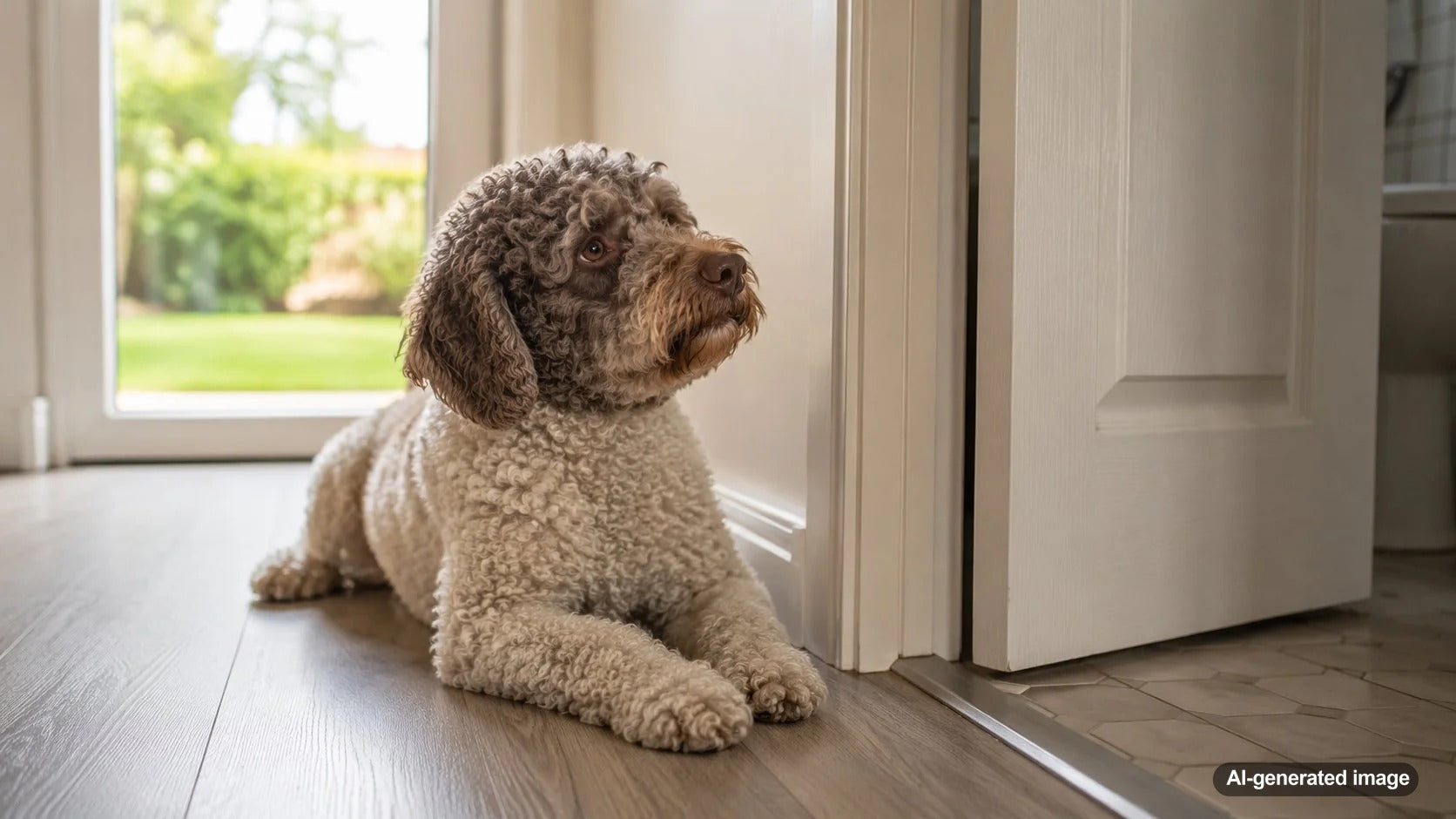
You close the bathroom door, and within seconds, a familiar shadow appears on the other side. Your dog may sit quietly, sniff beneath the door, lie across the hallway, or stare at the doorknob as though you have vanished into another dimension. In most cases, your bathroom guard is simply staying close to a favorite person, following a familiar household routine, or waiting to see what happens next.
Dogs are highly social animals, and many pay close attention to our movements throughout the day. A closed bathroom door creates a brief interruption in that routine, which can make an otherwise ordinary room suddenly seem very important.
Quick answer: Your dog probably waits outside the bathroom because they enjoy being near you, expect you to return quickly, and have learned that following you is part of the daily routine. Curiosity, habit, protective behavior, boredom, and mild discomfort with barriers can also play a role. Quiet waiting is usually normal. Frantic scratching, nonstop barking, heavy panting, drooling, or destructive behavior may point to separation-related distress that deserves closer attention.
Your Dog Likes Being Close to You
The simplest explanation is often the most accurate: your dog likes your company. You are connected to food, walks, play, comfort, safety, and most of the interesting things that happen at home. Following you down the hallway keeps your dog close to their most valuable social connection.
Some dogs are naturally more people-focused than others. Companion breeds and dogs developed to work closely beside humans may be especially likely to trail their owners from room to room. Individual personality matters too. One dog may nap through your bathroom break, while another treats every closed door as an urgent mystery.
This behavior does not automatically mean your dog has separation anxiety. A relaxed dog who lies outside the door and calmly greets you afterward is usually showing attachment, habit, or curiosity rather than panic.
The Bathroom Door Interrupts Their Routine
Dogs are excellent observers of patterns. They learn that brushing your teeth happens before bed, a shower may happen before you leave, and a certain morning sequence leads to breakfast or a walk. Waiting outside the bathroom can simply be your dog's way of keeping track of the schedule.
Your dog may also have learned that patience pays. Perhaps you offer attention when you come out, head toward the kitchen next, or pick up the leash after getting ready. Even without intentional training, repeated outcomes can make the bathroom door a meaningful checkpoint in the day.
Closed Doors Make Dogs Curious
A bathroom is filled with interesting sounds and scents. Running water, cabinets opening, grooming products, towels, and echoes can capture a dog's attention. When the door closes, your dog loses visual access while still hearing activity, which can increase curiosity.
Some dogs are also frustrated by physical barriers. They may be perfectly comfortable resting across the room when they can see you but become focused on a door that blocks access. A dog who gives one soft whine and then settles is behaving very differently from one who claws at the door until their paws or nails are injured.
Are They Trying to Protect You?
Some dogs do seem to position themselves near doors, hallways, or family members as part of their normal watchful behavior. Your dog may believe that waiting nearby helps them keep track of you and the rest of the home. However, bathroom waiting is not proof that your dog thinks you are in danger or has appointed themselves as your personal security guard.
Body language offers better clues. A loose body, soft eyes, relaxed ears, and quiet lying down suggest calm companionship. A stiff posture, repeated alarm barking, intense scanning, or growling at anyone who approaches may reflect fear, guarding, or another behavior concern. A qualified trainer or veterinary behavior professional can help if your dog appears unable to relax or blocks people from reaching you.
When Bathroom Waiting May Signal Distress
Quietly waiting by the door is common and usually harmless. Separation-related distress involves more than wanting to be nearby. Watch for a cluster of behaviors such as persistent barking, pacing, heavy panting when the room is not hot, excessive drooling, frantic scratching, indoor accidents, destructive chewing near exits, or an inability to eat when separated from you.
The timing matters. A dog who calmly waits during a two-minute bathroom break but panics when left home alone may need support with longer absences. A dog who suddenly becomes unusually clingy may also be responding to pain, changes in vision or hearing, cognitive changes, or another health issue. This can be especially relevant for senior dogs.
Contact your veterinarian if clinginess appears suddenly or comes with appetite changes, pain, vomiting, diarrhea, excessive drooling, confusion, restless nights, weakness, or other major behavior changes. Ask a qualified behavior professional for help if your dog becomes frantic, destructive, or at risk of injury when separated.
How to Encourage Comfortable Independence
You do not need to stop your dog from loving your company. The goal is to help them feel secure even when they cannot follow you everywhere.
Start with very short, low-pressure separations. Give your dog a comfortable mat or bed a few feet from you, reward calm settling, and briefly step out of sight. Return before your dog becomes distressed. Gradually build duration over many easy repetitions rather than suddenly shutting the door for a long period.
Keep departures and reunions calm. If your dog waits quietly, acknowledge them without turning every bathroom exit into a huge celebration. You can also practice sending your dog to a mat while you move around the house, rewarding them for staying relaxed instead of following every step.
Enrichment can give your dog something more rewarding to do than monitor the bathroom door. A food-based activity such as The Pupsicle can offer a longer-lasting licking project while you shower or complete your morning routine. For a shorter settling activity, FlipMat provides two licking and slow-feeding surfaces with different challenge levels. Choose treats that fit your dog's diet, use the correct product size, and supervise according to the product directions.
Helpful tip: Introduce enrichment while you are still nearby. Once your dog understands the activity and settles comfortably, begin stepping away for only a few seconds. This prevents the special toy from becoming a signal that you are about to disappear.
What Puppies and Senior Dogs May Need
Puppies often follow closely because the home is still new and you provide guidance. They also have limited experience being alone. Practice tiny separations early, pair them with safe resting spaces, and avoid waiting for the puppy to become overwhelmed before returning.
Senior dogs may become more dependent if their hearing, vision, mobility, or cognitive function changes. Keep pathways clear, provide nonslip surfaces, and place a comfortable bed where your dog can rest without needing to follow you across the house. A veterinary check is wise when an older dog's clinginess is new or noticeably increasing.
Dog Parent FAQs
Does my dog waiting outside the bathroom mean they love me?
It can be one sign of attachment, but it may also reflect habit, curiosity, or an expectation that something interesting will happen when you come out.
Should I let my dog into the bathroom?
That is a household preference. Keep medications, cleaning products, razors, trash, and other hazards secured if your dog has bathroom access.
Should I ignore my dog when they wait outside?
You do not need to ignore calm behavior. A quiet greeting is fine. Avoid rewarding frantic scratching or barking by immediately opening the door, but do not use punishment, which may increase fear or frustration.
Why did my dog suddenly start following me everywhere?
Routine changes, stress, aging, discomfort, or illness may contribute. Contact your veterinarian when sudden clinginess is intense, persistent, or accompanied by other physical or behavioral changes.
The Bottom Line
For most dogs, waiting outside the bathroom door is a sweet combination of attachment, curiosity, and routine. Pay attention to how your dog waits rather than the fact that they wait. A relaxed hallway companion is usually just keeping you company, while signs of panic suggest that your dog may need gradual independence training and professional support.


