






































































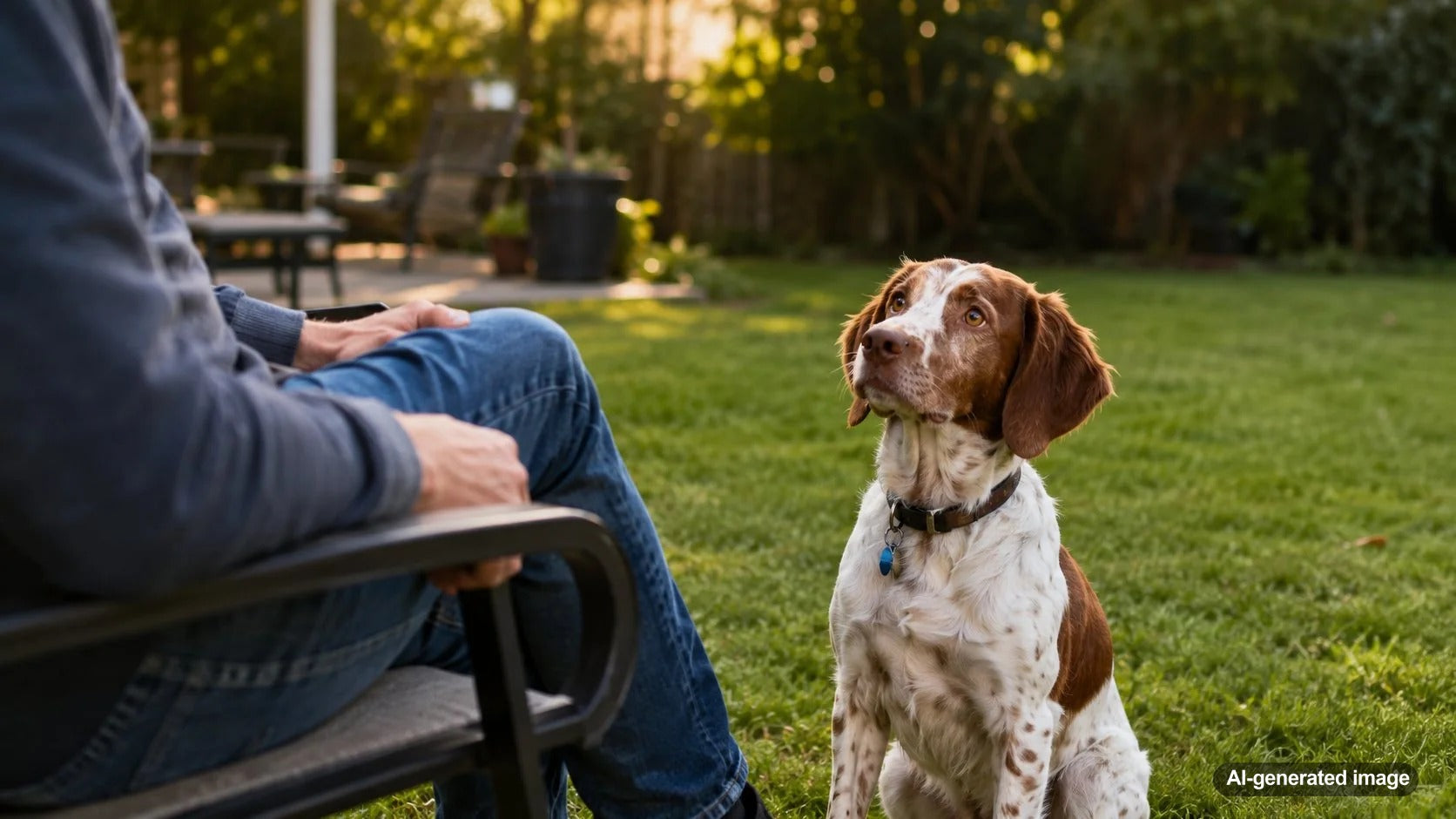
Your dog circles the living room, checks the hallway, watches one person refill a drink, and refuses to lie down until the entire household is finally seated. Once everyone settles, your dog releases a dramatic sigh, curls into a favorite spot, and appears to switch off for the evening. This behavior is often a normal combination of social awareness, learned routine, and your dog's desire to know that the household has finished moving before committing to rest.
Dogs are remarkably good at noticing patterns. They learn which actions predict dinner, walks, departures, bedtime, and quiet family time. When everyone sitting down consistently signals that nothing exciting is about to happen, your dog may use that moment as permission to relax.
Your Dog Is Reading the Room
Dogs do not need to understand your conversation to recognize the difference between an active room and a resting room. Footsteps, opening cabinets, people entering and leaving, and chairs moving can all suggest that another event is coming.
A socially attentive dog may remain standing or follow people from room to room until those signals stop. This is especially common in dogs that enjoy staying close to the family, dogs that have learned household routines quickly, and dogs that dislike being left out of whatever happens next.
The behavior is not necessarily an attempt to control the family. Your dog may simply be gathering information. Waiting keeps options open: follow someone to the kitchen, greet a person returning from another room, investigate a sound, or claim the best resting spot once everyone has chosen a seat.
Sitting Down Has Become a Reliable Rest Cue
Dogs learn through repetition and consequences. If everyone sitting usually leads to a movie, quiet conversation, or bedtime, the posture of the household becomes a cue even though nobody intentionally taught it.
Your dog may have built a sequence that looks like this: people finish moving, everyone sits, the lights become softer, attention decreases, and the dog lies down. After hundreds of repetitions, the first part of that sequence can trigger the rest.
This explains why the same dog may settle immediately on a calm weekday but stay alert during a party. Sitting alone is not the only clue. Your dog also notices noise level, unfamiliar guests, food on tables, excited voices, and whether people keep getting up.
Some Dogs Feel Responsible for Keeping Track
Certain dogs are more watchful than others. Herding breeds, working breeds, recently adopted dogs, and dogs that have experienced unpredictable routines may carefully monitor where every person is located. Personality and past experience matter as much as breed.
A dog that follows the last standing person may be maintaining social contact rather than displaying separation anxiety. Look at the whole picture. A relaxed follower may have loose muscles, a softly wagging tail, and an easy expression. A distressed dog may pace, pant without being hot, whine, repeatedly lick their lips, scan the room, or struggle to lie down even after everyone is seated.
Why Puppies and Senior Dogs May Do It Differently
Puppies often wait because they have not yet learned that household movement can be ignored. Every person standing up could mean food, play, a bathroom trip, or access to another room. Puppies can also become overtired and strangely more active when they need sleep, making it harder for them to settle without help.
Senior dogs may rely more heavily on familiar routines. Predictable cues can make the evening easier, but new restlessness deserves attention. Pain, reduced vision or hearing, increased bathroom needs, and age-related cognitive changes can affect settling. Contact your veterinarian if an older dog suddenly begins pacing at night, seems confused, vocalizes unusually, or cannot get comfortable.
How to Help Your Dog Settle Without Waiting
You do not have to change the habit if it works for your family and your dog appears comfortable. However, teaching independent settling can be useful when you are cooking, entertaining guests, working from home, or moving around after your dog's usual bedtime.
- Choose a comfortable bed or mat in a low-traffic area where your dog can still see the family.
- Reward your dog quietly whenever they choose to lie there without being asked.
- Add a consistent cue such as "settle" only after the behavior is happening reliably.
- Begin while the room is calm, then practice with one person moving briefly.
- Increase activity gradually instead of expecting your dog to ignore a busy household immediately.
Keep rewards calm. Dropping a small treat between your dog's front paws is less likely to restart excitement than calling the dog toward you. You can also give your dog a safe enrichment activity in the resting area. A filled The Pupsicle can provide a focused licking activity while family members finish their evening tasks.
For dogs that prefer a flatter surface, a FlipMat can support a predictable lick-and-settle routine. Supervise enrichment, select food that fits your dog's normal diet, and account for treats when planning daily portions.
What Dog Parents Often Misunderstand
Waiting for everyone to sit is not proof that your dog believes they are the household leader. Dominance explanations are often applied to ordinary behaviors that are better understood through routine, reinforcement, comfort, and social attachment.
It is also not automatically anxiety. The important question is not simply whether your dog follows people. Ask how the dog looks and whether they can eventually relax. Loose posture, normal breathing, a comfortable resting position, and the ability to sleep all point toward a familiar routine rather than distress.
Avoid repeatedly ordering your dog to lie down or physically placing them on a bed. Pressure can make resting harder. Build the behavior by making the resting location comfortable and rewarding voluntary calmness.
When the Behavior Deserves More Attention
Speak with your veterinarian if the behavior appears suddenly or is accompanied by pain, limping, excessive panting, trembling, appetite changes, nighttime confusion, frequent bathroom requests, vomiting, diarrhea, or difficulty getting comfortable.
A qualified reward-based trainer or veterinary behavior professional may help if your dog cannot settle unless every person is visible, becomes distressed when someone leaves, guards family members, or reacts intensely whenever anyone stands up. Record a short video when possible so the professional can see the dog's posture and the household context.
Dog Parent FAQs
Is my dog trying to protect everyone?
Possibly, but simple social monitoring and learned routine are more common explanations. Look for relaxed versus tense body language rather than assuming a protective motive.
Should I stop my dog from following people?
Not necessarily. Calm following is usually harmless. Independent mat training can still help your dog learn that they do not need to investigate every movement.
Why does my dog sigh after everyone sits?
A sigh paired with loose muscles and a resting posture often appears during relaxation. It may mark the transition from alert observation to rest.
Can evening enrichment help my dog settle?
Yes. A brief sniff walk, gentle training session, licking activity, or food puzzle may help meet physical and mental needs before quiet time.
The Bottom Line
Your dog is probably not waiting to issue a verdict on the seating arrangement. They are watching familiar social cues and using the household's stillness to predict that the active part of the day is over. When the behavior is calm and consistent, it can be one of those endearing signs that your dog knows the family routine remarkably well.
Offer a comfortable resting place, reward independent calmness, and pay attention to changes in body language. With a little practice, your dog can learn that it is safe to relax even when one last human is still wandering around looking for the remote.


