






































































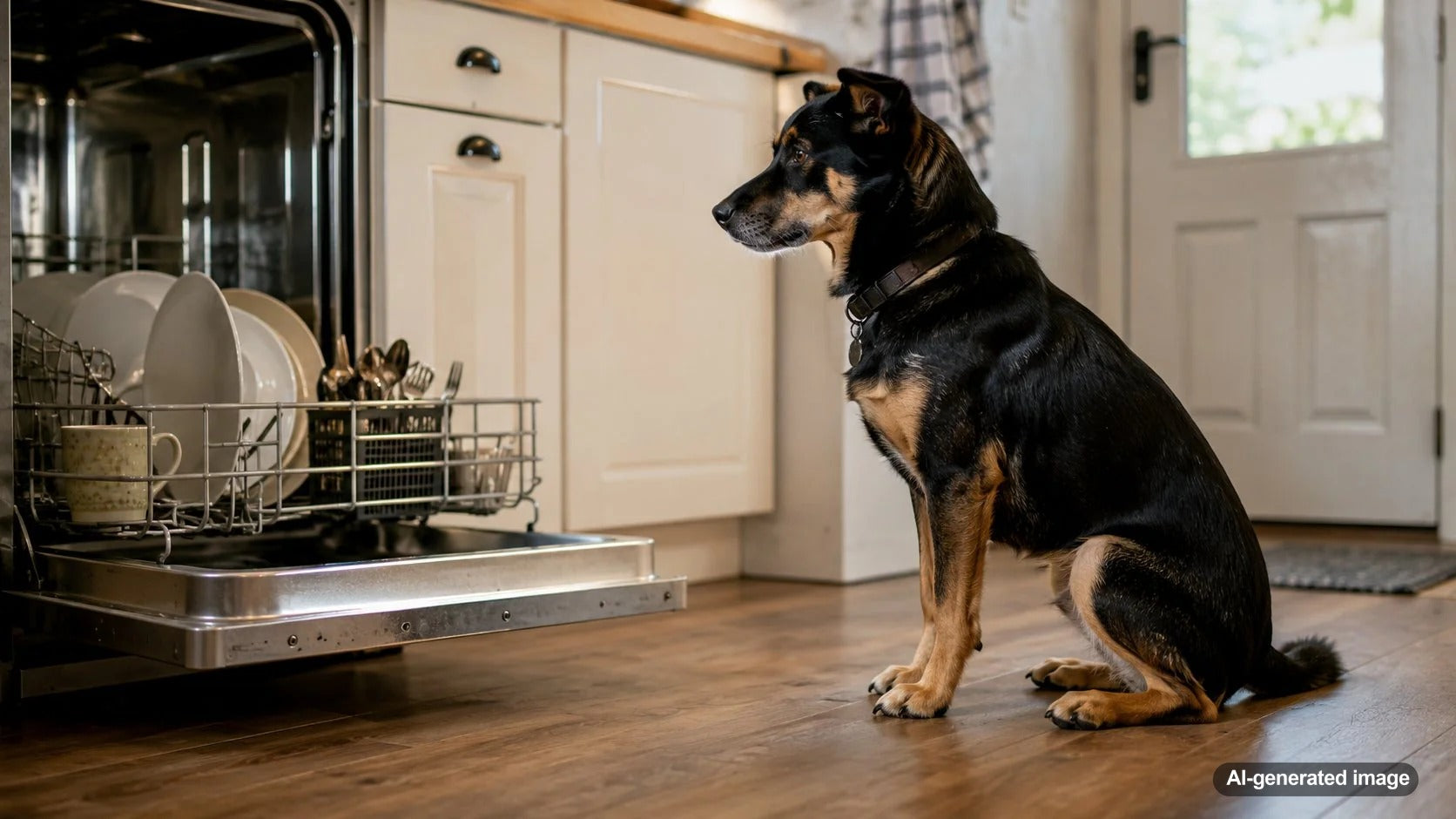
There you are, trying to load the dishwasher like a normal person, and suddenly your dog appears with the seriousness of a tiny kitchen inspector. Nose in the plates, eyes locked on the silverware basket, tail giving away the whole operation. Why Your Dog Thinks the Dishwasher Requires Close Supervision comes down to one very simple truth: to your dog, that open door is not an appliance. It is a warm, shiny, food-scented treasure drawer.
Even if the plates look basically clean to you, your dog can smell the last whisper of chicken, butter, cheese, peanut butter, or breakfast egg. Add the clatter of dishes, your attention on the task, and the exciting possibility of one lucky lick, and the dishwasher becomes one of the most interesting places in the house.
Quick answer: Your dog supervises the dishwasher because it smells like food, offers easy access to tiny leftovers, and may have accidentally rewarded them in the past. The habit is common, but it is worth managing because dishwashers can contain detergent residue, sharp utensils, broken bits of food, and ingredients that are not safe for dogs.
Why the Dishwasher Is So Interesting to Dogs
Dogs experience the world through scent first, and a dishwasher is packed with layered smells. A dinner plate may hold traces of gravy. A bowl may smell like yogurt. A fork may have sauce tucked near the tines. Your dog does not need a visible snack to believe there is something worth investigating.
The dishwasher also sits right at dog height when the door is open. Unlike the countertop, which might be out of reach, the lower rack practically invites a curious nose. For puppies and small dogs, it may feel like a new tunnel to explore. For larger dogs, it can feel like a buffet line that someone kindly lowered to mouth level.
There is also a routine factor. Dogs are brilliant at spotting patterns. If loading the dishwasher usually happens after dinner, and dinner means food smells, your dog may learn that the sound of clinking dishes is their cue to report for duty.
Your Dog May Be Scavenging, Not Misbehaving
It is easy to see dishwasher licking as naughty, but your dog is probably not trying to be difficult. Scavenging is a normal dog behavior. Many dogs are naturally motivated to search for edible opportunities, especially when a smell is strong, new, or associated with people food.
What owners often misunderstand is that a dog does not need to be hungry to investigate. A well-fed dog can still be wildly interested in a plate that smells like roasted meat. A puppy may be exploring with their mouth. A senior dog may be following a familiar kitchen ritual. A power chewer or high-energy dog may simply be looking for something to do during a boring part of the evening.
If your dog has ever scored a lick from a plate, found a crumb, or received attention when they poked their head into the dishwasher, the habit can grow quickly. Dogs repeat what works, and sometimes even a dramatic, "Hey, get out of there!" can feel like exciting interaction.
The Safety Side: Why Supervision Should Go Both Ways
While the behavior is understandable, the dishwasher is not the safest enrichment station. Detergent residue, rinse aid, and cleaning chemicals are not meant for dogs to ingest. Sharp knives, forks, glass, ceramic chips, and hot surfaces can also pose risks. Even food residue can be a problem if it includes ingredients dogs should avoid, such as onions, garlic, grapes, raisins, chocolate, alcohol, cooked bones, or anything sweetened with xylitol.
If your dog licks a dish once, you do not need to panic, but it is smart to prevent the habit from becoming routine. Contact your veterinarian if your dog may have consumed detergent, swallowed a sharp object, eaten a toxic food, or shows symptoms like vomiting, diarrhea, drooling, mouth irritation, lethargy, swelling, or sudden behavior changes.
Helpful tip: Load sharp utensils point-down or place them in a covered utensil area if your dishwasher has one. Keep detergent pods and powders sealed away before you open the dishwasher, and close the door whenever you step away.
How to Teach Your Dog the Dishwasher Is Not Their Job
The goal is not to scold your dog for being curious. The goal is to give them a clear, repeatable alternative. Start by deciding what you want your dog to do instead of hovering over the open dishwasher. A mat stay, a place cue, a chew session, or a food puzzle can all work.
When you begin loading dishes, ask your dog to go to their spot and reward them before they dive toward the lower rack. At first, reward often. You are teaching that staying away from the dishwasher pays better than inspecting it. Keep sessions short and realistic. If your dog is already nose-deep in a lasagna pan, you are working too late in the sequence.
For dogs who need something more engaging, give them a safe licking or chewing activity before you start. FlipMat can be a useful kitchen-time redirect because it gives dogs a textured licking activity and slow-feeder challenge that feels rewarding without involving dirty dishes. For longer distraction, The Pupsicle can help turn dishwasher time into a planned enrichment moment instead of a sneaky plate patrol.
What to Try First, Based on Your Dog
Match the fix to the dog in front of you:
- For puppies: Use a baby gate or leash management while teaching a simple place cue. Puppies are still learning impulse control, so make the right choice easy.
- For food-obsessed dogs: Pre-load an enrichment toy before dinner cleanup begins so they are not making decisions in front of tempting smells.
- For senior dogs: Keep the routine calm and predictable. A comfy bed nearby may work better than asking for a long stay across the room.
- For power chewers: Choose a safe, durable chew option and supervise closely. The goal is satisfying chewing, not access to utensils or plastic dishwasher parts.
- For anxious dogs: Avoid yelling or sudden corrections. Redirect gently, reward distance from the dishwasher, and ask a qualified trainer for help if the behavior feels intense or hard to interrupt.
Common Mistakes That Keep the Habit Going
One common mistake is letting the dog lick plates "just this once." Dogs are excellent accountants when it comes to food rewards. One successful dishwasher snack can make the whole routine more tempting tomorrow.
Another mistake is waiting until your dog is already at the dishwasher before offering an alternative. Prevention works better than interruption. Set up the enrichment item, chew, or place cue first, then open the dishwasher.
It also helps to avoid turning the moment into a chase game. If your dog grabs something from the rack and you sprint after them, some dogs will interpret that as the best game of the week. Practice calm trades with safe treats and keep the dishwasher closed when you cannot supervise.
Dog Parent FAQs
Why does my dog lick plates in the dishwasher?
Your dog is likely drawn to food smells and tiny residues left on plates, bowls, and utensils. The open dishwasher is easy to reach and may have rewarded them before with a taste, a crumb, or attention.
Is it safe for my dog to lick dishes before they are washed?
It is better to discourage it. Dirty dishes can contain unsafe foods, sharp utensils, broken pieces, or cleaning residue. If your dog may have eaten something dangerous or is acting unwell, contact your veterinarian.
How do I stop my dog from supervising the dishwasher?
Give your dog a clear alternative before you open the dishwasher. Use a place cue, baby gate, chew, lick mat, or puzzle toy, then reward them for staying away from the open door.
Is dishwasher licking a sign my dog is not getting enough food?
Usually, no. Many dogs investigate dishes because scavenging and sniffing are naturally rewarding. If your dog suddenly seems unusually hungry, loses weight, vomits, has diarrhea, or changes behavior, ask your veterinarian.
The Bottom Line on Your Dishwasher Supervisor
Your dog is not weird for thinking the dishwasher deserves close inspection. To them, it smells fascinating, appears at nose level, and sometimes contains the most exciting traces of your dinner. With a little management and a better job to do, you can keep your dog out of the dishes while still meeting their need to sniff, lick, chew, and feel included in the household routine.
Close the dishwasher when you are not actively loading it, keep unsafe items out of reach, and build a repeatable redirect that your dog actually enjoys. The dishwasher can go back to washing plates, and your dog can proudly supervise something much safer: their own enrichment time.


