






































































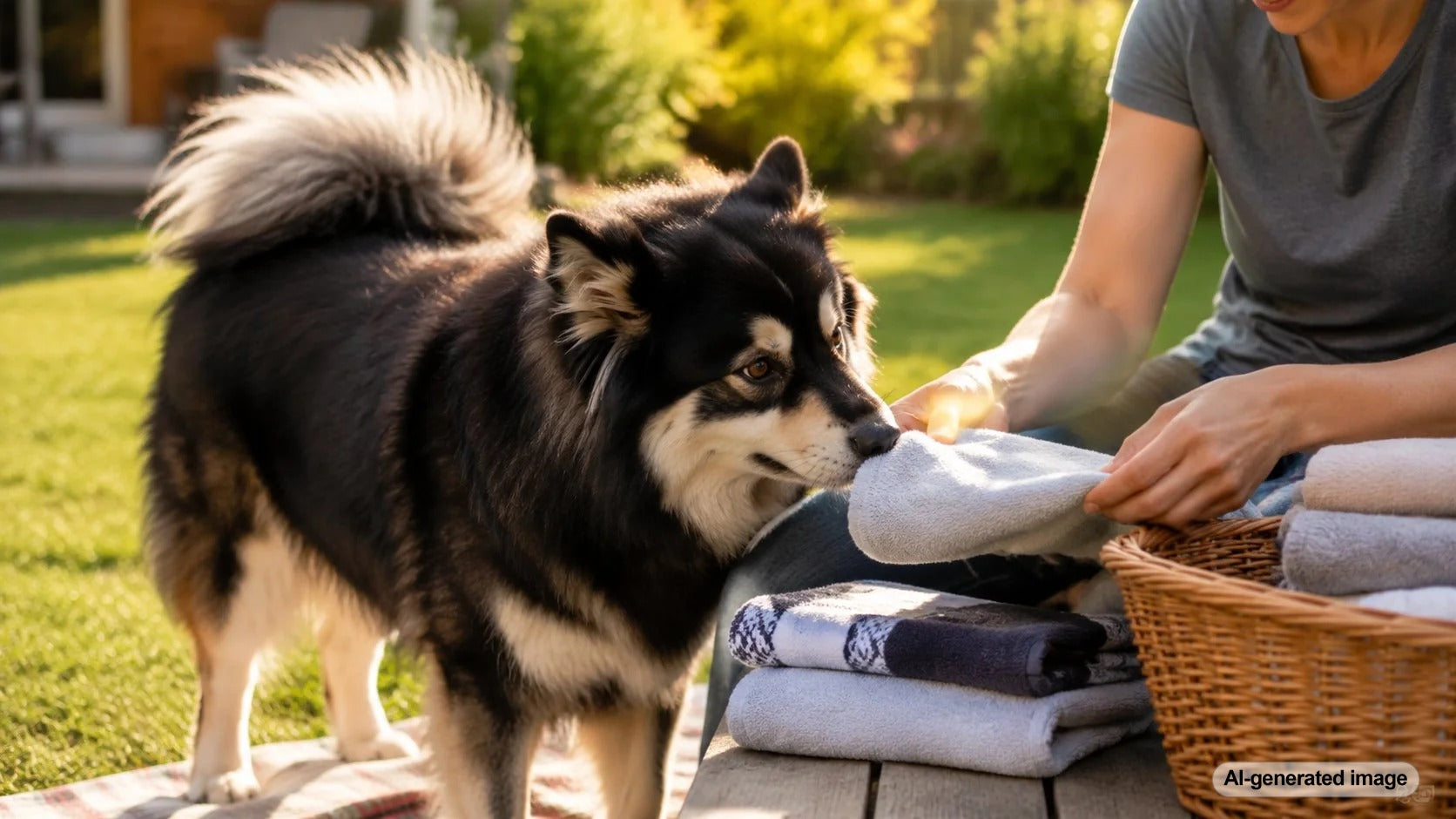
You place a neat stack of towels on the couch, turn around for three seconds, and discover your dog proudly carrying one across the room. Another dog may burrow into the warm pile, supervise every folded shirt, or repeatedly deliver socks as if helping with an urgent household mission. To your dog, laundry day combines your scent, interesting textures, predictable movement, and a valuable chance to interact with you.
Most laundry involvement is normal social, exploratory, or attention-seeking behavior. The important distinction is whether your dog calmly joins the routine or steals, shreds, guards, or swallows fabric.
Your Laundry Smells Like the Most Important People in the House
Dogs gather a remarkable amount of information through scent. Worn shirts, socks, towels, and bedding hold much stronger human odors than most objects in the home. That makes a laundry basket less like a pile of boring fabric and more like a detailed scent collection about the family.
This can explain why some dogs sniff each item, lie on worn clothing, or select one person's shirt from an entire pile. A puppy may investigate with both nose and mouth because mouthing is part of exploration. A dog settling on your clothes may simply find the familiar scent comforting, especially when you have recently returned home or are preparing to leave.
Folding Creates an Irresistible Moving-Object Game
A flapping towel, dangling sleeve, or rolling sock can resemble the movements that trigger chasing and grabbing during play. Your hands are busy, items keep appearing, and every piece changes shape. From a dog's perspective, it is an interactive toy presentation with excellent production values.
Young dogs and energetic breeds may be especially attracted to the motion. Retrievers may want to carry an item, while terriers may shake it. Scent-focused dogs may spend more time investigating worn clothes. These tendencies do not make the dog naughty, but they do influence which part of the routine becomes rewarding.
Your Reaction May Be Keeping the Sock Game Alive
Imagine that your dog grabs a sock and you immediately call their name, rush over, and begin negotiating. Even if you sound frustrated, the dog has gained attention and possibly a lively chase. Repeating that sequence can teach a simple lesson: taking laundry makes humans exciting.
A safer response is calm and uneventful. Ask for a familiar cue such as "drop it" or offer an appropriate toy or treat in exchange. Avoid chasing, cornering, or pulling fabric from the dog's mouth. Once the item is released, put it away and redirect your dog to an activity that can earn attention appropriately.
Give Your Dog a Real Laundry-Day Job
You do not have to exclude a sociable dog from every household routine. Instead, create a clear station a few feet from the folding area. A bed, mat, or open crate can become the dog's designated place. Reward four paws on the station while you fold one or two items, then gradually extend the time.
For a dog who needs more to do, start an enrichment activity before opening the basket. The Pupsicle provides a longer-lasting licking activity that can help redirect attention while you sort and fold. A food-motivated dog can also work on a few Love Nuggets delivered for staying on the mat. Count treats as part of the dog's normal daily intake, supervise the activity, and use the appropriate product size.
Prevent Rehearsal of Laundry Theft
Training works better when the dog cannot practice the unwanted behavior all day. Use a hamper with a secure lid, keep laundry-room doors closed, and place sorted piles above nose level. Check the floor for small socks before releasing a puppy or known fabric eater into the room.
Teach "leave it" with low-value objects before practicing near clothes. Teach "drop it" using safe toys and reward the release, then return the toy when appropriate. Returning practice toys helps the dog learn that releasing an object does not always end the fun.
If your dog guards laundry by freezing, stiffening, growling, showing teeth, or snapping, do not force the item away. Create distance and consult a qualified reward-based trainer or veterinary behavior professional. Sudden fabric eating, frantic stealing, or a major behavior change also deserves a conversation with your veterinarian.
When Joining You Is Simply Social
Some dogs do not want the socks at all. They follow you because household routines are shared events and proximity is rewarding. A senior dog may quietly nap beside the basket, while a puppy may need active guidance to settle. If your dog remains relaxed, leaves clothing alone, and can move away when asked, there is usually no problem to solve.
The goal is not to make your dog uninterested in family life. It is to give that social instinct a safe outlet. With accessible laundry removed, calm behavior reinforced, and an appropriate job available, your enthusiastic assistant can remain part of the routine without reorganizing every towel.
Dog Parent FAQs
Why does my dog lie on clean laundry?
Clean laundry can be warm, soft, elevated, and surrounded by your scent from handling. Provide an equally comfortable nearby bed and reward your dog for choosing it.
Why does my dog steal socks but not other clothes?
Socks concentrate foot odor, are easy to carry, and move like small toys. Their size also makes swallowing a serious risk, so keep them secured.
Should I chase my dog when they grab laundry?
No. Chasing can turn theft into a game. Stay calm, trade for a suitable reward, secure the item, and practice "drop it" separately with safe toys.
Will more exercise stop laundry stealing?
Physical activity may reduce restless behavior, but it does not erase a well-practiced game. Combine suitable exercise with mental enrichment, management, and reward-based training.


