

























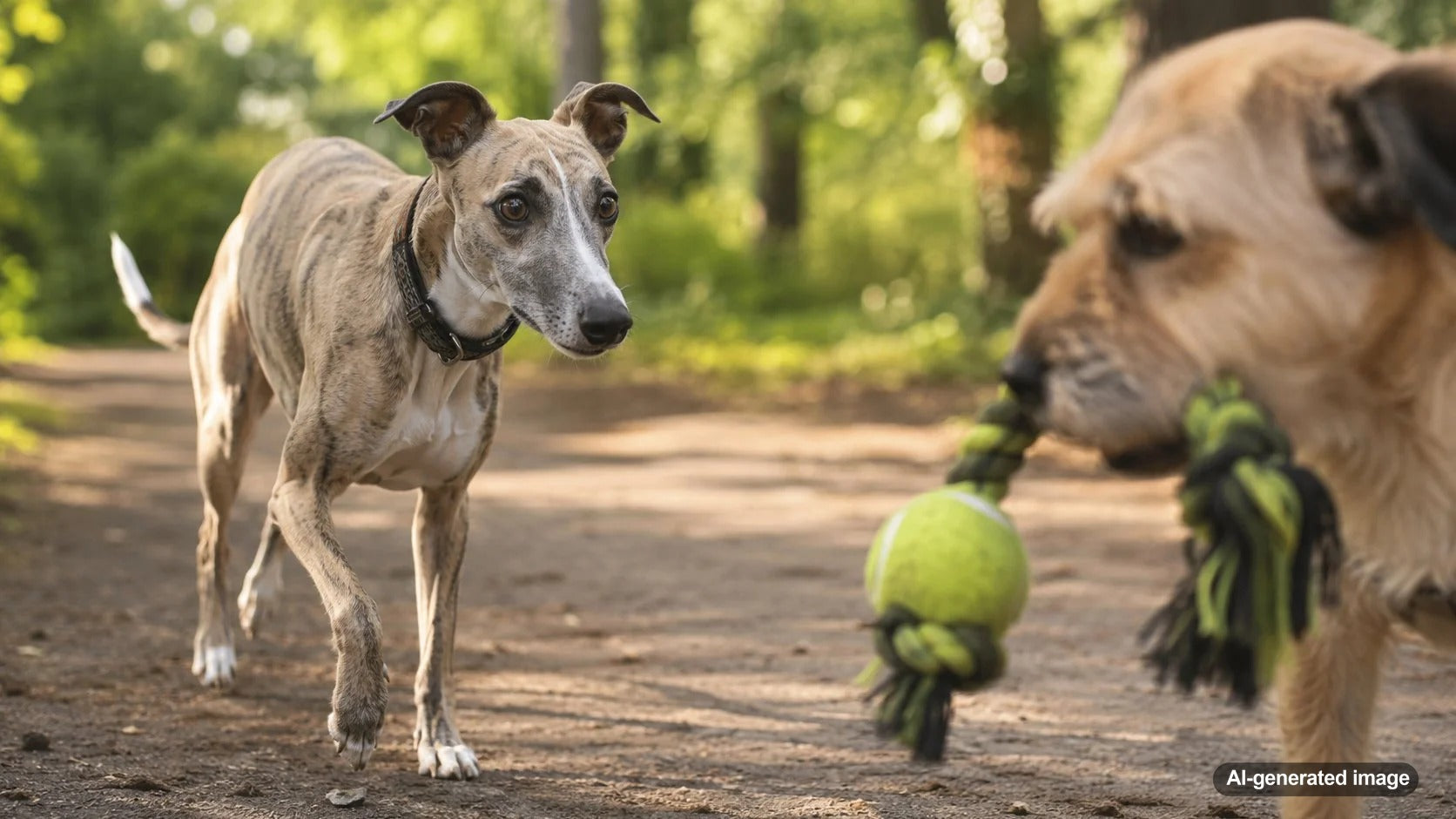
Your dog can be happily ignoring a toy for twenty minutes, only to decide it is suddenly the most fascinating object on earth the second another dog picks it up. This behavior is common, and it does not automatically mean your dog is jealous, dominant, aggressive, or incapable of sharing. Often, another dog's interest simply makes an ordinary toy seem more exciting, while social play, competition, learned habits, and the toy's perceived value can all influence what happens next.
Understanding the difference between playful toy swapping and genuine tension is important, especially in a multi-dog home or during playdates. The goal is not to make dogs share every treasured object. It is to create an environment where both dogs can play without feeling pressured to compete.
Why Another Dog Can Make a Boring Toy Look Amazing
Dogs pay close attention to what other dogs are doing. A ball sitting untouched on the floor may have little appeal, but a dog running around with that same ball suddenly adds movement, sound, competition, and social energy. The attraction may be less about owning that specific toy and more about joining whatever interesting activity is happening.
Some dogs also enjoy the interaction created by stealing or exchanging toys. One dog grabs the toy, the other follows, and a game of chase begins. If both dogs have loose bodies, take turns pursuing each other, pause naturally, and willingly re-engage, the toy may simply be a prop in a social game.
Context matters. A puppy who repeatedly grabs toys from an older dog may still be learning canine manners. A highly excitable dog may become fixated on whichever object creates the most action. A dog who normally ignores toys may become interested when another dog's enthusiasm makes the object seem valuable.
Wanting the Toy Is Not Always Resource Guarding
Resource guarding happens when a dog tries to maintain control of something they value and becomes uncomfortable when another dog or person approaches. Simply walking over and taking another dog's ball is not enough to label a dog a resource guarder.
Watch the entire interaction. Loose muscles, wiggly movement, play bows, relaxed mouths, voluntary breaks, and back-and-forth participation generally look very different from a dog who becomes still and tense over an object.
Watch for freezing over the toy, hovering over it, a hard stare, lip lifting, growling, snapping, frantic stealing, one dog repeatedly trying to escape with the toy, or one dog consistently ignoring the other's attempts to disengage. Do not punish a growl. A growl is useful communication that the dog is uncomfortable, and removing pressure is safer than forcing the interaction.
What to Do When Both Dogs Want the Same Thing
First, resist the temptation to reach between two tense dogs and grab the contested toy. If the interaction is escalating, calmly separate the dogs and remove access to the item once it is safe to do so.
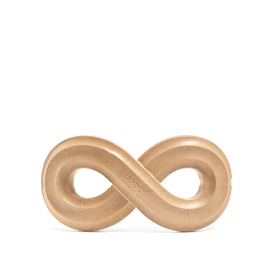
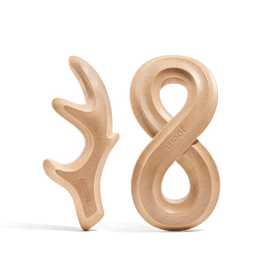
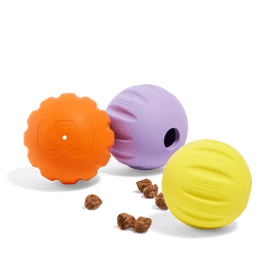
For everyday play, having multiple appealing toys can reduce pressure, although identical toys do not guarantee that each dog will politely choose one. Sometimes the object another dog possesses will remain more interesting simply because it is currently in use.
You can also teach useful skills separately from high-energy dog play. Practice cues such as drop it, leave it, come, and going to a mat when everyone is relaxed. Rewarding voluntary toy exchanges can teach a dog that releasing something does not always mean losing all the fun.
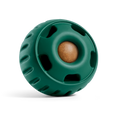
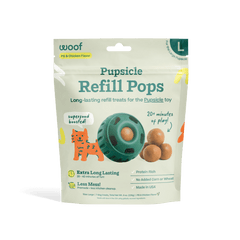
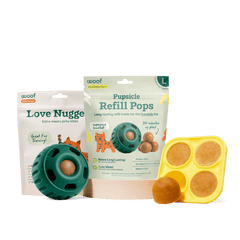
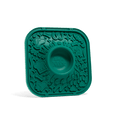
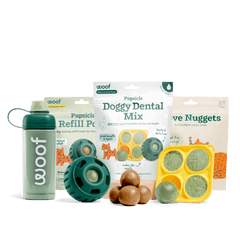
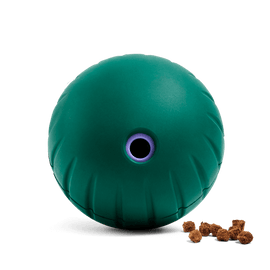
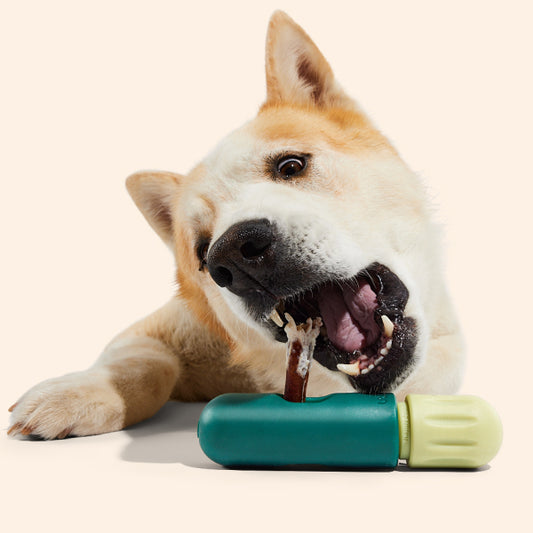
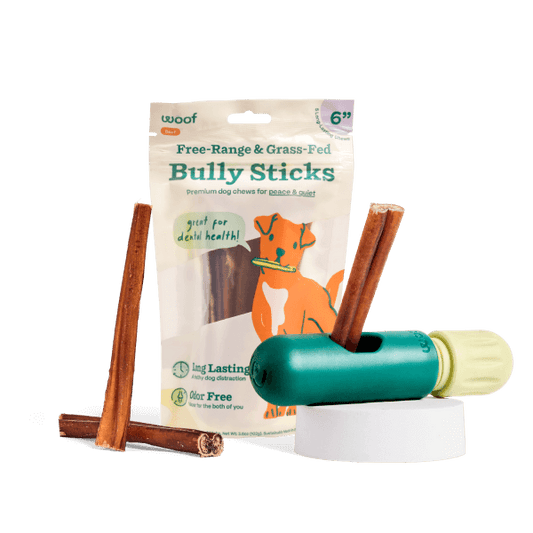
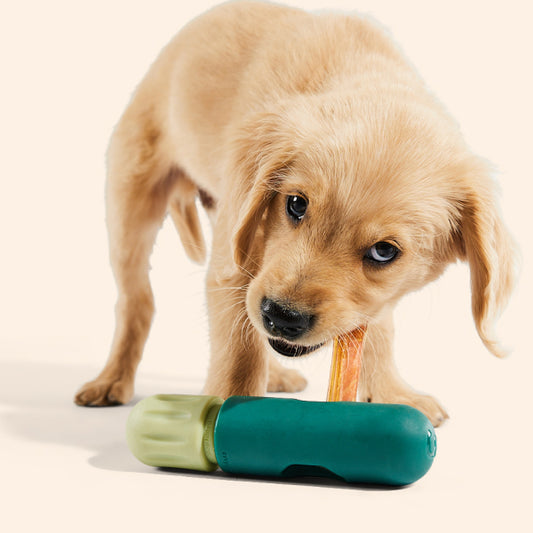
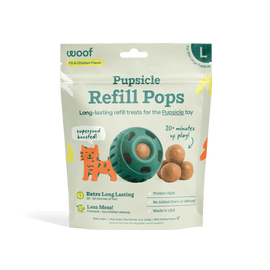
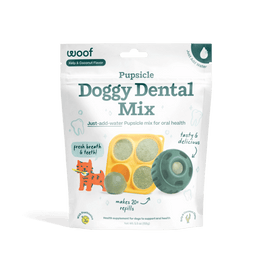
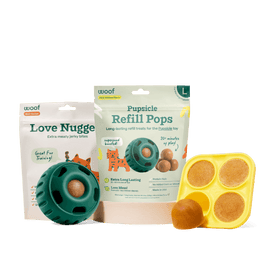
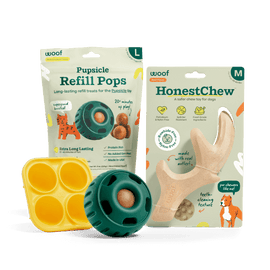
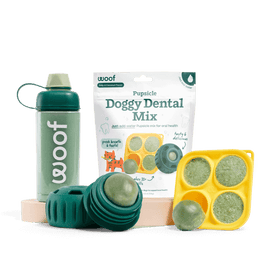
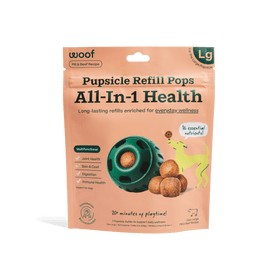
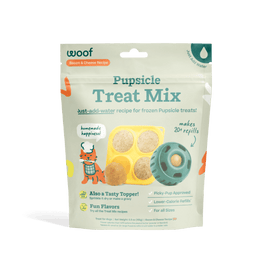
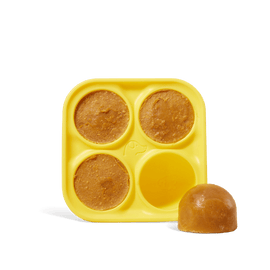
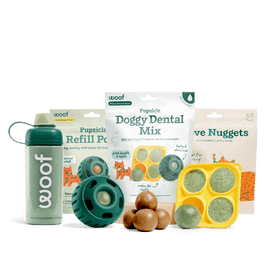
For dogs who become intensely competitive around food-filled toys or chews, give those items in separate areas. High-value enrichment does not need to be a group activity. Individual sessions with something like The Pupsicle can give each dog a satisfying activity without creating a contest over one prized object.
Give Each Dog Opportunities for Independent Enrichment
Dogs living together can benefit from shared play, but they also need chances to enjoy activities without another dog hovering nearby. Rotating toys, offering individual training sessions, and occasionally separating dogs for enrichment can make possession of an object feel less competitive.
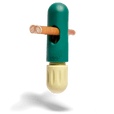
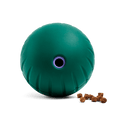
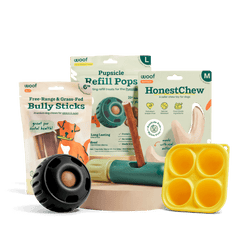
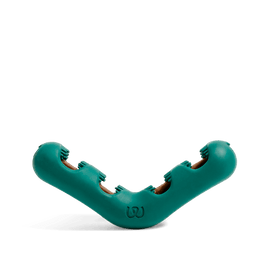
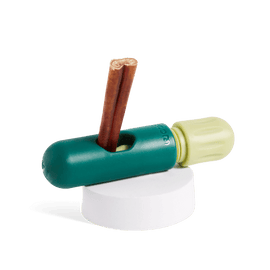
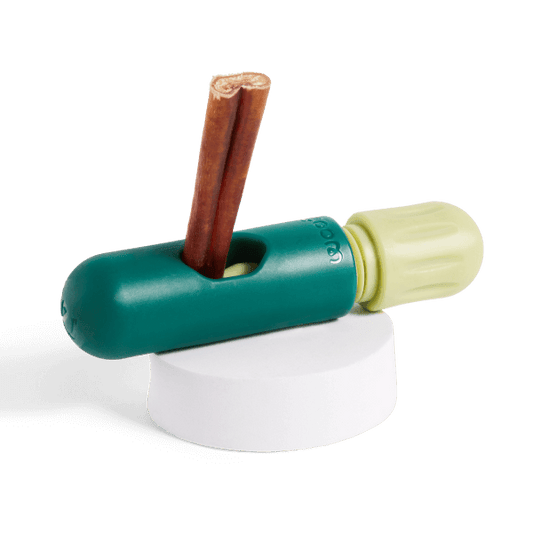
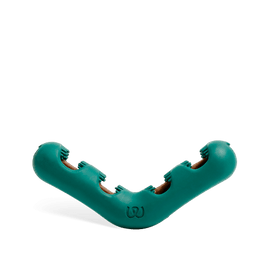
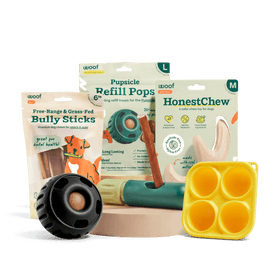
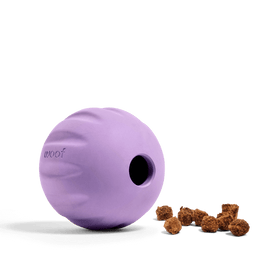
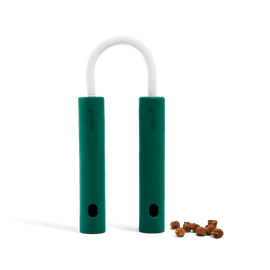
Interactive activities can also provide an outlet for dogs who are constantly looking for something to chase, investigate, or manipulate. For example, Nomchucks can turn treat-stuffed play into a puzzle activity. Whatever toy you choose, match it to your dog's size and chewing style, supervise appropriately, and remove damaged toys that could present a swallowing hazard.
When Toy Competition Needs Professional Help
If toy disagreements regularly involve growling, snapping, bites, fights, or a dog who seems unable to relax around valued objects, stop encouraging shared access to those items. Management can mean separate play areas, picking up especially valuable toys before dogs are together, or giving chews and food enrichment behind gates or closed doors.
A qualified trainer or veterinary behavior professional can help evaluate repeated guarding or conflict. If your dog's behavior changes suddenly, especially alongside pain, appetite changes, limping, sensitivity to touch, or other unusual symptoms, contact your veterinarian. A sudden behavior change can have factors beyond the toy itself.
Dog Parent FAQs
Is my dog jealous when another dog has a toy?
It can look like jealousy, but you cannot determine your dog's exact emotion from toy stealing alone. The other dog's attention may simply make the toy more interesting or trigger a desire to join the activity.
Should I let my dogs work out toy disagreements themselves?
Do not rely on dogs to settle escalating conflicts. If you see tension, guarding, repeated bullying, or one dog trying to escape, intervene safely by creating space and managing access to the item.
Why does my dog want the exact toy their sibling has when there are two identical ones?
The appeal may come from the other dog's interaction with the toy rather than the toy itself. Movement, scent, attention, and the possibility of chase can make the occupied toy seem more exciting.
Should dogs share high-value chews?
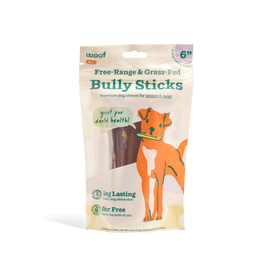
Dogs do not need to share valuable chews. Giving each dog their own chew in a separate, comfortable space can reduce competition and help everyone enjoy the activity peacefully.
The Bottom Line on the Toy Everyone Suddenly Wants
A dog wanting another dog's toy is often normal social behavior, not proof that something is wrong. Pay more attention to body language than to who technically had the toy first. Relaxed, reciprocal play can be perfectly healthy, while stiffness, guarding, intimidation, or escalating conflict means the dogs need more space and thoughtful management.
When each dog has plenty of individual enrichment, predictable boundaries, and opportunities to enjoy valuable things without competition, toy time can stay focused on what it should be: safe, engaging fun.


