






































































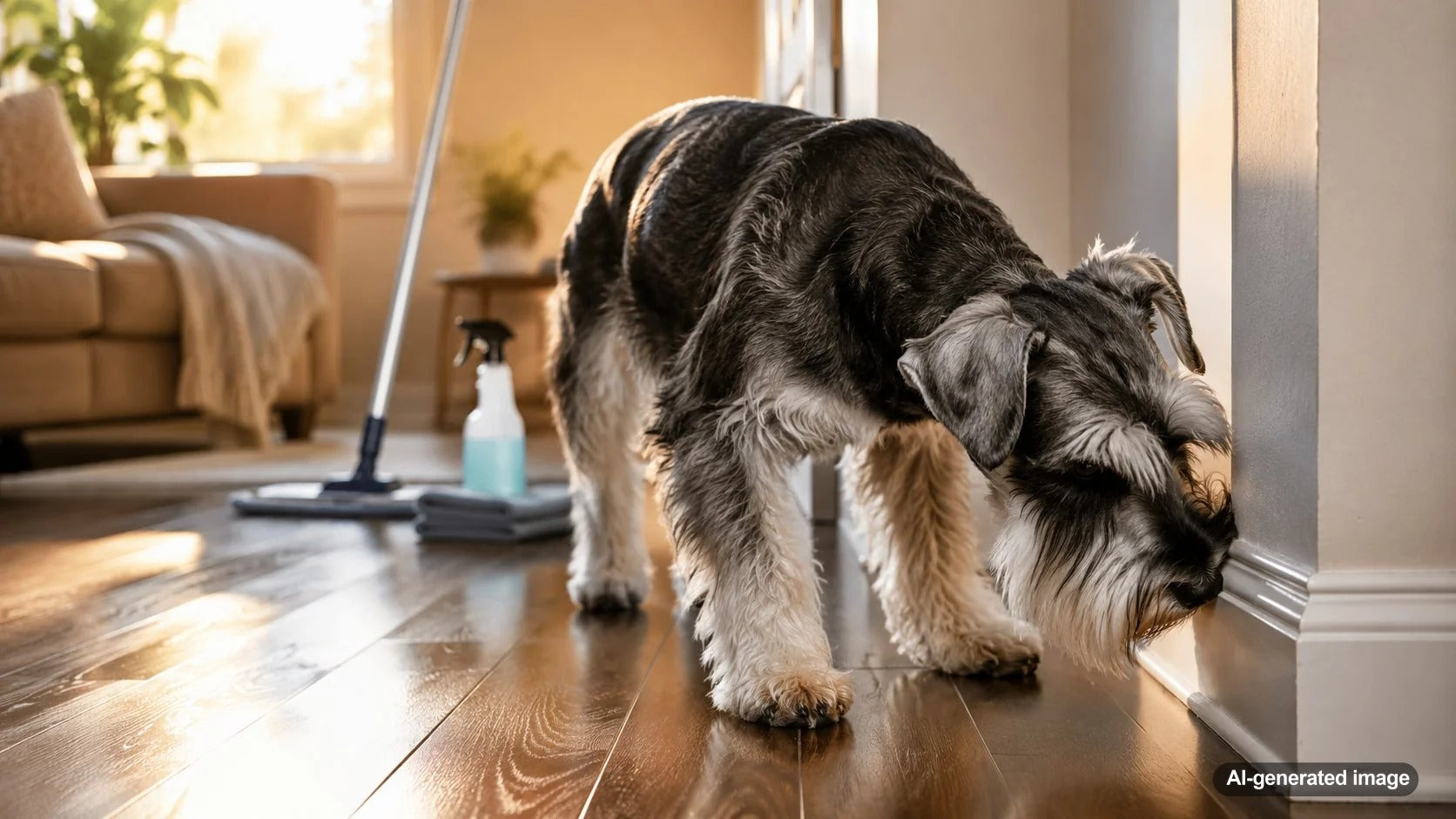
You finish wiping the counters, mopping the floors, and putting everything back in place, only for your dog to begin inspecting the house as though you secretly remodeled it. Their nose traces the baseboards, furniture legs, doorways, and every corner you just cleaned. This sudden sniffing marathon is usually normal because cleaning changes the scent map your dog uses to understand home.
To you, the room looks the same but smells fresher. To your dog, familiar odor layers have been removed, weakened, moved, or covered by entirely new ones. Sniffing is how your dog checks what changed and rebuilds their understanding of the space.
Quick answer: Your dog smells every corner after cleaning because their sense of smell is a primary source of information. Cleaning can erase familiar scents, spread odors to new places, and introduce the smells of sprays, cloths, vacuums, shoes, and moved furniture. Your dog is investigating those changes, not criticizing your cleaning skills.
Your Dog Experiences a Different Version of the Room
People usually recognize a room by sight. Dogs rely much more heavily on scent. A familiar corner may contain traces of your scent, your dog's own body oils, crumbs, outdoor odors, dust, another pet, or the spot where a favorite toy rested.
Cleaning disrupts that layered scent history. A freshly washed floor may smell strongly of cleaner to your dog even when you barely notice it. A vacuum can lift particles from the carpet and blow faint odors through the room. A damp cloth may carry a kitchen smell into the hallway. Moving a chair can expose an area that has been collecting scent for weeks.
Your dog may therefore inspect the entire route you cleaned, pausing longest where the scent change is greatest.
Why Corners Get So Much Attention
Corners, baseboards, and furniture edges act like collection points. Air movement, dust, hair, crumbs, and tiny scent particles can accumulate there. Dogs may also brush against these areas, drop toys beside them, or investigate them during their normal patrols.
When those concentrated scent spots are wiped or vacuumed, the difference can be especially noticeable. Your dog may sniff one corner repeatedly, move to the next, and then circle back to compare them. Some dogs also follow the exact path of a mop or vacuum because it created a new scent trail across the floor.
Cleaning Introduces More Smells Than It Removes
A clean house is not scent-free. It simply has a different scent mixture. Your dog may be detecting:
- Cleaning solution or disinfectant residue
- The cloth, mop pad, broom, or vacuum itself
- Scents transferred from one room to another
- Your hands and footsteps along the cleaning route
- Previously hidden odors under furniture
- Outdoor smells carried inside on equipment or shoes
This explains why switching products can trigger more investigation than using your usual cleaner. A new citrus, floral, pine, or unscented formula may still smell dramatically different to a dog.
Is Post-Cleaning Sniffing a Sign of Stress?
Usually, no. Relaxed investigative sniffing often includes a loose body, normal breathing, an unhurried pace, and the ability to move away when called. Your dog may inspect the room for several minutes and then settle as usual.
Look more closely when sniffing comes with pacing, trembling, hiding, excessive drooling, coughing, pawing at the face, vomiting, unusual lethargy, or trouble breathing. Move your dog to fresh air and contact your veterinarian if you suspect exposure to a cleaning product or notice concerning symptoms.
Some dogs are also sensitive to the noise and movement involved in cleaning. A vacuum, furniture rearrangement, or slippery wet floor can be more unsettling than the smell itself.
How to Clean Without Overwhelming Your Dog
Keep your dog in a comfortable, separate area while you apply cleaning products. Follow every label direction, ventilate the room, and do not allow your dog onto treated surfaces until they are completely dry. Store bottles, wipes, pods, powders, and buckets where curious noses and mouths cannot reach them.
Avoid assuming that a product is dog-safe simply because it smells natural. Essential oils and concentrated ingredients can still create risks. Ask your veterinarian when you are uncertain about a product you use regularly around your dog.
After cleaning, allow a calm inspection instead of repeatedly interrupting harmless sniffing. Your dog will often finish faster when given a chance to gather information without being rushed.
Helpful tip: Give your dog something appropriate to investigate while the cleaned room dries. Hide a few pieces of kibble in a towel fold, offer a supervised puzzle, or prepare The Pupsicle with a dog-appropriate treat. This can turn cleaning time into a predictable enrichment routine rather than a frustrating interruption.
Turn That Powerful Nose Into an Indoor Game
A dog who carefully checks every cleaned corner may enjoy simple scent games. Place a few small treats in easy locations while your dog waits in another room, then invite them to search. Begin with visible placements near furniture and gradually make the game more challenging.
You can also scatter part of a meal across a clean rug, hide treats inside open cardboard boxes, or place Love Nuggets along a short indoor search trail. Keep the activity supervised, account for the treats in your dog's daily food intake, and avoid hiding food near cleaning supplies or unsafe objects.
Puppies may search quickly and become distracted. Senior dogs may benefit from easier placements that do not require climbing, tight turns, or slippery footing. Scent hounds and experienced puzzle solvers may need a larger search area or more challenging hiding spots.
When the Sniffing Deserves More Attention
Contact your veterinarian if intense sniffing appears suddenly without an obvious environmental change, continues for long periods, interferes with sleep or eating, or accompanies a major behavior change. Repeatedly targeting one exact spot could also mean your dog detects food, pests, moisture, another animal's scent, or something hidden behind a wall or appliance.
A qualified trainer or veterinary behavior professional can help when searching becomes difficult to interrupt or seems connected to persistent anxiety. The goal is not to stop normal sniffing, but to understand when the behavior has shifted beyond ordinary investigation.
Dog Parent FAQs
Should I stop my dog from sniffing freshly cleaned floors?
You can allow sniffing once the surface is dry and the room is properly ventilated. Prevent licking and keep your dog away while products are being applied.
Why does my dog sniff more after I vacuum?
Vacuuming lifts trapped particles, moves air, exposes hidden areas, and leaves the vacuum's own scent trail. Your dog may be checking where those familiar odors went.
Can strong cleaner smells bother dogs?
Yes. Dogs may find strong fragrances overwhelming, and some cleaning ingredients can be harmful. Use products as directed, ventilate well, and ask your veterinarian about any safety concerns.
Does sniffing provide mental stimulation?
Yes. Searching and analyzing scents can be an engaging mental activity. Safe scent games are an easy way to support this natural behavior indoors.
The Bottom Line
Your dog smells every corner after the house is cleaned because the familiar scent landscape has changed. They are gathering information, checking important locations, and making the room feel understandable again. Give them a few safe minutes to investigate, practice careful cleaning habits, and consider channeling that curious nose into a simple enrichment game.


