






































































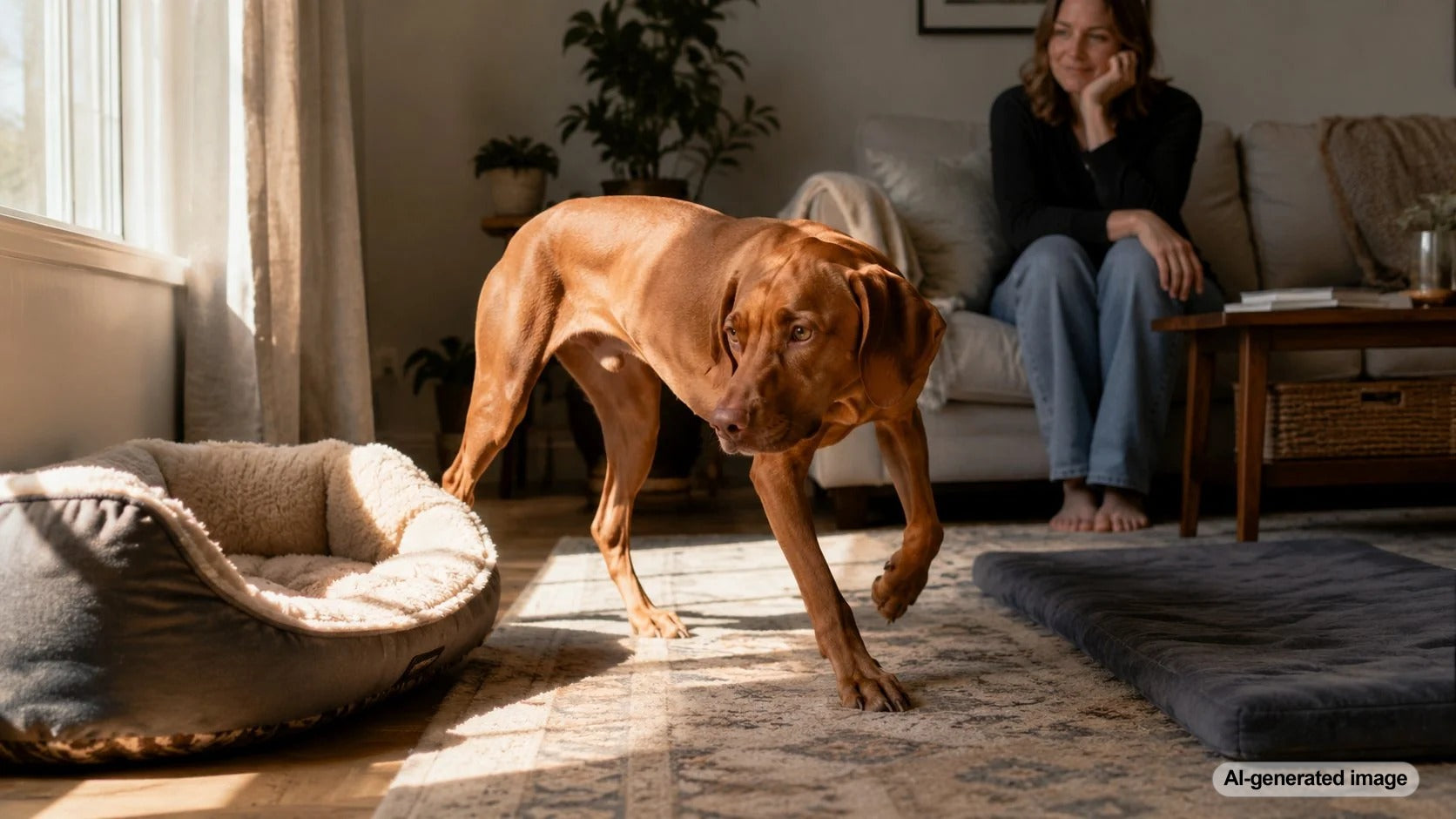
Your dog starts the night curled beside you, relocates to the rug, stretches out on the bathroom tile, and somehow ends up on the couch before sunrise. This hourly migration can look restless, but it is often a normal way for dogs to manage temperature, comfort, noise, and closeness to their people. The important distinction is whether your dog moves calmly and settles again or seems unable to get comfortable.
Dogs do not necessarily expect one sleeping surface to work all night. A soft bed may feel cozy at first, while a cooler floor becomes more appealing after body heat builds up. Household sounds, changing light, your own movements, and activity outside can also prompt a dog to choose a new location.
Quick answer: A dog that changes sleeping spots every hour is usually adjusting for temperature, physical comfort, security, or household activity. It is generally not concerning when your dog settles easily, breathes normally, and acts like their usual self during the day. Contact your veterinarian if the behavior is new or accompanied by panting, pacing, pain, confusion, coughing, digestive symptoms, or difficulty lying down.
They Are Searching for the Right Temperature
Temperature is one of the most common reasons dogs rotate between sleeping spots. A thick bed, blanket, or human mattress can hold warmth around the body. After resting there for a while, your dog may move to hardwood, tile, or another cooler surface.
Later, once they cool down, they may return to the bed or curl against you for warmth. This back-and-forth pattern is especially noticeable in large dogs, thick-coated breeds, flat-faced dogs, and dogs sleeping in warm rooms. Small, lean, short-haired, and older dogs may make the opposite journey, leaving a cool area for a warmer cushion.
Notice the surfaces your dog chooses. Moving calmly from a plush bed to cool tile and back again often points to ordinary temperature regulation rather than distress.
One Position Stops Feeling Comfortable
Just as people roll over or adjust a pillow, dogs change locations when pressure builds on one part of the body. A dog may start tightly curled, stretch onto one side, and later seek a firmer or softer surface.
Senior dogs and dogs with limited mobility may need more frequent adjustments because joints and muscles become uncomfortable after staying in one position. Watch how your dog gets up. Normal repositioning tends to look smooth and purposeful. Repeated attempts to lie down, stiffness, limping, trembling, vocalizing, or reluctance to use stairs deserve a conversation with your veterinarian.
Offering more than one resting option can help. Try a supportive bed in a quiet corner, a thinner mat nearby, and access to a safe cool floor. Your dog may prefer different surfaces at different points in the night.
They Are Following Sounds, Scents, and People
Dogs remain aware of their environment even while resting. A family member moving through the hallway, the refrigerator turning on, wildlife outside, or a delivery vehicle can make a new spot seem more interesting or secure.
Some dogs also want to track their favorite person. They may sleep beside you until you shift, then move somewhere with more space while staying close enough to hear you. Other dogs rotate between household members, doorways, and windows as though they are making quiet security rounds.
This behavior is usually relaxed rather than frantic. The dog gets up, checks the surroundings, chooses another place, circles once or twice, and settles again.
Your Movements May Be Disturbing Their Sleep
Your dog may love sharing the bed but dislike your kicking, blanket pulling, snoring, or frequent position changes. A dog that begins beside you and later moves to the foot of the bed, floor, or sofa may simply be protecting their sleep.
Make sure your dog has an easy alternative nearby. A separate bed next to yours lets them stay socially connected without being bumped. Avoid repeatedly calling them back onto the bed. Allowing your dog to choose a comfortable resting place can help everyone sleep more peacefully.
They May Need a Better Wind-Down Routine
Some dogs move frequently because they have not fully settled for the night. Puppies, highly alert dogs, and dogs that slept much of the evening may still have unused mental or physical energy. A predictable routine can make the transition to sleep easier.
Try this before bedtime:
1. Offer a calm potty break.
2. Dim the lights and reduce exciting play.
3. Provide water without encouraging a large meal.
4. Use a quiet enrichment activity earlier in the evening.
5. Guide your dog toward a familiar resting area without forcing them to stay there.
For dogs that benefit from a calming activity before the household settles, a supervised licking session with FlipMat can provide a focused transition from evening activity to quiet time. Finish the activity before bed, clean the mat, and let your dog choose where they want to sleep.
When Frequent Moving May Signal a Problem
The movement itself matters less than the behavior surrounding it. A comfortable dog changes places and quickly relaxes. An uncomfortable dog may repeatedly stand, circle, pant, stare, whine, stretch, or lie down only to rise again seconds later.
Contact your veterinarian if you notice:
• A sudden change in your dog's normal sleeping pattern
• Heavy panting in a comfortably cool room
• Difficulty standing, lying down, or climbing onto a familiar surface
• Coughing, labored breathing, vomiting, diarrhea, or excessive drooling
• A swollen or tense-looking abdomen
• Limping, trembling, sensitivity to touch, or unusual vocalizing
• Nighttime confusion, staring, getting stuck, or repetitive pacing
New nighttime restlessness in a senior dog is particularly worth mentioning to a veterinarian. Aging can bring mobility changes, increased bathroom needs, sensory changes, or cognitive issues that affect sleep. Do not assume a major change is simply part of getting older.
How to Make Sleeping More Comfortable
Give your dog choices rather than trying to enforce one perfect sleeping spot. Place beds away from drafts and busy walkways, but keep at least one option near the family. Use washable bedding, keep water accessible, and make sure senior dogs can reach their preferred areas without slippery floors or difficult jumps.
Observe patterns for several nights. Note the time, room temperature, chosen surface, and whether your dog settles immediately. You may discover that every move has a practical explanation, such as leaving the bed when it becomes warm or moving away when someone starts snoring.
Dog Parent FAQs
Is it normal for a dog to sleep in several places?
Yes. Many dogs rotate between beds, floors, couches, crates, and rooms based on temperature, comfort, noise, and proximity to their people.
Why does my dog move from the bed to the floor?
The floor may feel cooler, firmer, quieter, or less crowded. This is usually normal when your dog settles comfortably after moving.
Why is my senior dog suddenly restless at night?
Sudden restlessness may be related to discomfort, bathroom needs, medication effects, sensory changes, or cognitive changes. Ask your veterinarian about any new nighttime behavior.
Should I keep putting my dog back in their bed?
Usually not. Provide safe, comfortable options and allow your dog to choose unless a location is hazardous or off-limits.
The Bottom Line
A dog that moves to a new sleeping spot every hour may simply be fine-tuning the temperature, surface, space, and sense of security around them. Calm relocation followed by relaxed sleep is usually part of normal canine behavior. Pay closer attention when the movement looks urgent, uncomfortable, or dramatically different from your dog's usual routine.


