






































































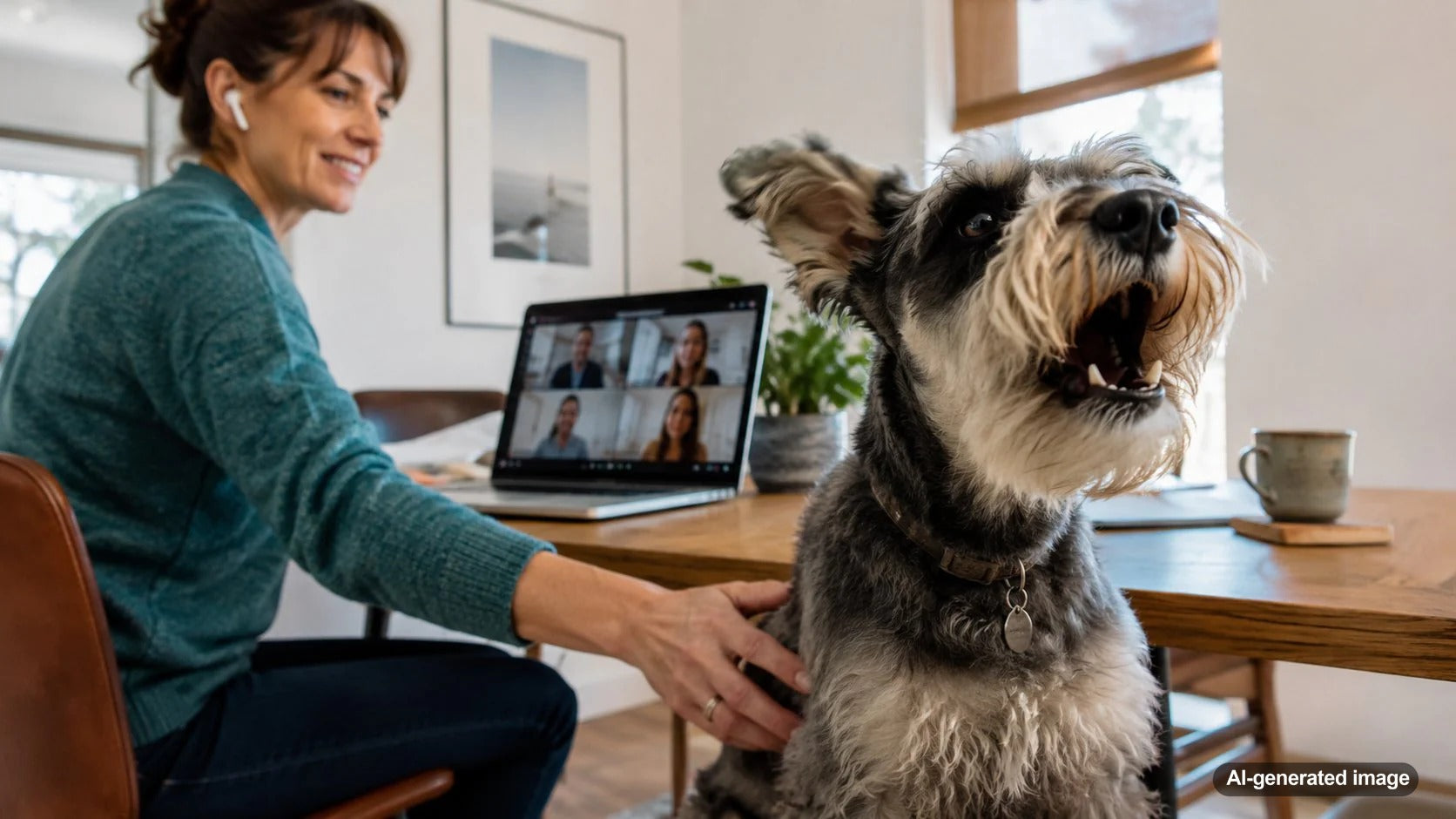
You sit down, open your laptop, say one tiny hello, and suddenly your dog has joined the meeting with a full-volume announcement. If your pup seems quiet all morning but finds their voice the moment you take a conference call, you are not imagining it. That perfectly timed bark is usually your dog responding to a change in attention, sound, routine, or excitement, not plotting to ruin your status update.
The funny part is that your dog may think they are doing something very reasonable. From their point of view, you are talking animatedly to no visible person, ignoring their excellent presence, and sitting in a predictable position that often means you are unavailable. For many dogs, that combination is confusing, exciting, or just a golden opportunity to ask for attention.
Why Your Dog Has a Conference Call Bark
Dogs are excellent pattern readers. They notice the laptop opening, the chair sliding, the headset going on, and the sudden shift from normal house energy to please-be-quiet energy. Once those clues stack up, your dog may anticipate that something is about to happen.
For some dogs, barking during calls is attention-seeking. You are talking, but not to them. You are using an interesting voice, making eye contact with a screen, and possibly laughing or gesturing. Your dog may try barking, pawing, whining, or nudging because those behaviors have worked before. Even a rushed hush, a treat tossed in panic, or eye contact can teach a clever pup that the conference call bark gets results.
Other dogs bark because they are reacting to sound. Speakerphone voices, notification chimes, delivery noises, hallway sounds, or the low rumble of a neighbor's car can all blend into the workday. Your dog does not know which sounds matter, so they may announce them all.
What Your Dog May Be Trying to Say
A conference call bark is not one single behavior. It can mean different things depending on the dog, the timing, and what happens right before the barking starts.
The attention bark often happens when you begin speaking or stop petting your dog. It may come with staring, pawing, toy dropping, or dramatic sighing. This bark usually says, "Excuse me, your focus appears to be in the wrong place."
The alert bark is sharper and may happen when your dog hears a voice through the computer, a doorbell, a delivery truck, or footsteps outside. This bark says, "I heard something, and everyone should know."
The boredom bark tends to appear after your dog has been under-stimulated. If your dog has not had enough sniffing, chewing, movement, or mental work, your call can become the most interesting event in the room.
The frustration bark may show up when your dog can see you but cannot access you. This can happen if they are behind a gate, in a crate, or separated from you during a meeting before they have learned that separation can be calm and rewarding.
Why Yelling Usually Makes It Worse
It is completely understandable to whisper-yell when your dog starts barking over your quarterly planning meeting. Unfortunately, many dogs hear that as participation. You bark, they bark, everyone is now in the same very loud conversation.
Scolding can also increase excitement or stress, especially if your dog is alerting or feeling unsure. Instead, aim to interrupt calmly, redirect quickly, and reward the behavior you actually want. The goal is not to convince your dog that calls are bad. The goal is to teach them that calls predict calm, rewarding, independent time.
A Pre-Call Routine That Helps
If your dog always barks five minutes into a meeting, start helping them ten minutes before the meeting begins. A predictable routine gives your dog a chance to succeed before the barking habit takes over.
Even a short walk, yard sniff, or hallway stroll can help your dog gather information and burn mental energy.
Simple needs can turn into noisy requests when you are suddenly unavailable.
Use a bed, mat, crate, or gated area where your dog already feels comfortable.
Choose licking, chewing, or puzzle play that keeps your dog busy without creating chaos under your desk.
For dogs who relax through licking, FlipMat can be a useful part of a work-from-home routine because it combines lick-time enrichment with slow-feeder style engagement. Spread a dog-safe favorite into the textured surface, set it up before the call starts, and supervise your dog while they enjoy it.
For dogs who need longer-lasting distraction, The Pupsicle can give your pup a focused treat toy activity while you handle your meeting. It is especially helpful for dogs who do better with a clear job than with being told to simply do nothing.
How to Teach a Better Meeting Habit
Start with a behavior your dog can already do, such as going to a mat, lying on a bed, or relaxing in a crate. Reward that behavior before you add the conference call trigger. Once your dog understands the spot, add small pieces of the routine: touch the laptop, reward calm. Put on the headset, reward calm. Say hello to an empty room, reward calm.
Keep practice sessions short. Puppies may only manage a few minutes at first. Senior dogs may need extra comfort, easier surfaces, or more frequent potty breaks. High-energy dogs may need movement before mental enrichment. Small dogs may bark because they are perched near a window and have a perfect view of every sidewalk emergency. Large dogs may simply have a bigger, more echo-friendly voice. The right plan depends on what is driving the bark.
Reward quiet before your dog erupts. If you wait until the barking starts, you may accidentally build a chain where your dog barks, then gets attention, then receives the good thing. Instead, pay calm behavior early and often, especially during the first few minutes of the call.
Common Mistakes Dog Parents Make
One common mistake is saving the special chew, mat, or puzzle until after the barking starts. That can teach your dog that noise opens the enrichment buffet. Set up the activity before the meeting begins.
Another mistake is expecting one big walk to solve every call. Physical exercise helps many dogs, but mental enrichment, sniffing, licking, chewing, and rest matter too. A tired dog is not always a calm dog if they are overstimulated or confused.
It is also easy to forget the environment. If your dog's bed faces the front window, your meeting may be competing with squirrels, delivery drivers, school buses, and neighborhood dogs. Closing blinds, using white noise, moving the bed, or choosing a quieter room may reduce the number of triggers your dog feels responsible for announcing.
When to Ask for Extra Help
Most conference call barking improves with routine, enrichment, and reward-based training. Still, some barking needs more support. If your dog suddenly starts barking more than usual, seems distressed, cannot settle, pants heavily, drools excessively, destroys items, eliminates indoors, growls, lunges, or panics when separated from you, check with your veterinarian or a qualified reward-based trainer.
Barking can be normal communication, but major changes in behavior can sometimes point to discomfort, anxiety, hearing changes, pain, or other concerns. A professional can help you sort out what is behavioral, what may need medical attention, and what plan is safest for your dog.
Dog Parent FAQs
Why does my dog bark only when I am on work calls?
Your dog may have learned that calls are a time when your attention changes. They may also react to your voice, computer sounds, or the fact that you are suddenly unavailable.
Should I give my dog a treat when they bark during a meeting?
Try to reward calm behavior before barking begins. If barking has already started, calmly redirect your dog first, then reward the quieter behavior you want to see next time.
Can enrichment toys help with call-time barking?
They may help many dogs by giving them a focused, satisfying activity. Licking, chewing, sniffing, and puzzle play can all support a calmer routine when introduced before the trigger.
Is my dog being bad on purpose?
No. Your dog is communicating, reacting, or repeating a behavior that has worked before. With practice, you can teach them that your calls are their cue to relax, lick, chew, or settle.
The Bottom Line on the Conference Call Bark
Your dog's conference call bark may be inconvenient, but it is also information. It tells you your dog needs a clearer routine, a better outlet, a calmer setup, or more practice with your workday cues. When you prepare before the call, reward calm behavior, and give your dog a job they understand, meetings can become less noisy for you and less confusing for your pup.


