






































































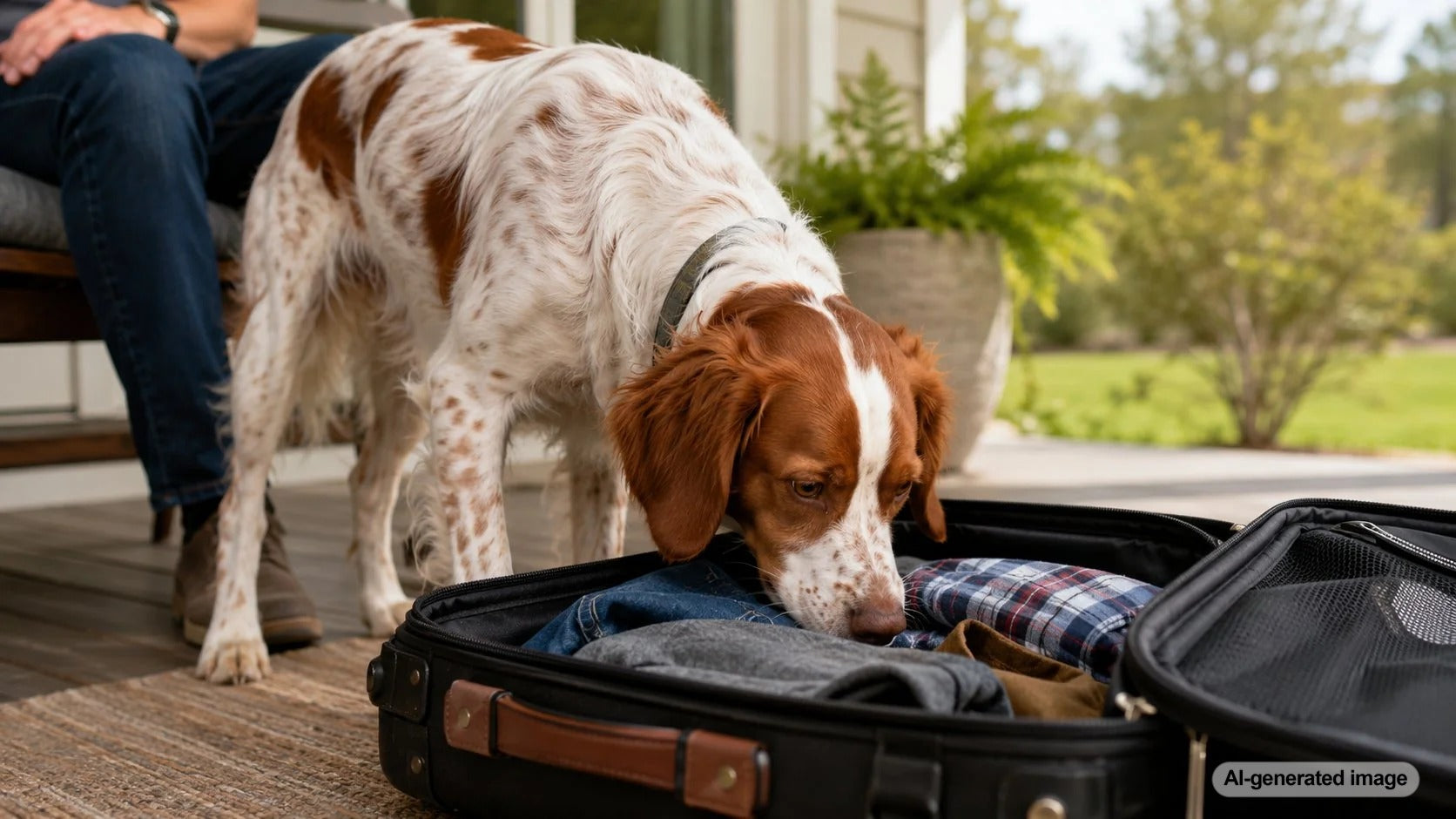
The moment your suitcase appears, your dog becomes a four-legged customs officer. Every pocket must be sniffed, every shirt inspected, and every packing cube examined for suspicious activity. This investigation is usually driven by a powerful combination of interesting scents, changes in your routine, and your dog's growing suspicion that the suitcase means something important is about to happen.
Your dog may not understand vacations, boarding reservations, or flight schedules, but they are remarkably good at noticing patterns. If the suitcase usually appears before you leave, it can become one of the clearest departure cues in your home.
Your Suitcase Is a Giant Scent Archive
Humans see a container for clothes. Dogs encounter a portable history book written in scent.
A stored suitcase may smell like a closet, basement, attic, hotel room, airport floor, car trunk, cleaning products, and every destination it has visited. Once you begin packing, it also collects the scent of your hands, clothing, shoes, toiletries, and travel snacks. A dog may slowly trace the seams, push their nose into corners, or repeatedly revisit one particular item because each area offers different information.
This does not necessarily mean your dog is searching for food or trying to climb inside. Sniffing is one of the primary ways dogs gather information about changes in their environment. A newly opened suitcase simply provides an unusually rich investigation.
Your Dog Has Learned What Packing Predicts
Dogs are excellent observers of routines. They may recognize a sequence that includes pulling the suitcase from storage, folding clothes, setting out shoes, gathering chargers, and moving around the house more quickly than usual.
Over time, the suitcase itself can become a predictor. One dog may respond by following you from room to room. Another may lie directly on the clothing, steal a sock, bring you a toy, or become unusually quiet. These behaviors can be attempts to join the activity, gain attention, or respond to uncertainty.
The reaction also depends on what the suitcase has predicted before. A dog who frequently travels with you may associate it with car rides and new adventures. A dog who usually stays behind may connect it with your absence.
Curiosity, Excitement, or Stress?
Look at your dog's entire body rather than judging the suitcase sniffing by itself.
- Loose muscles and a softly wagging tail
- Brief sniffing followed by normal activity
- Playful interest in clothing or packing materials
- The ability to settle nearby without constant monitoring
- Pacing, panting, trembling, whining, or excessive drooling
- Repeatedly blocking the suitcase or clinging to you
- Refusing a treat they would normally enjoy
- Destructive behavior, frantic scratching, or attempts to escape after you leave
Occasionally lying in an open suitcase can be funny and harmless. A sudden or intense behavior change deserves more attention. Contact your veterinarian or a qualified behavior professional if packing triggers severe distress, especially when the reaction includes panic, house soiling, vomiting, self-injury, or destructive escape attempts.
How to Make Packing Less Dramatic
Bring out the suitcase on ordinary days
Place the empty suitcase in the room while you remain home and continue with a normal activity. You might open it, place one shirt inside, and then walk away. Repeating low-key suitcase appearances can help weaken the automatic connection between luggage and a long absence.
Keep your routine as normal as possible
Maintain regular walks, meals, bathroom breaks, and rest periods while packing. A predictable schedule gives your dog familiar anchors when the rest of the house feels unusually busy.
Reward calm behavior
Instead of repeatedly pushing your dog away from the suitcase, create a comfortable station nearby. Reward them for resting on a bed or mat while you pack. Begin with short sessions and make the task easy enough that your dog can succeed.
Provide a separate enrichment activity
A longer-lasting licking activity can give your dog something appropriate to do while clothes and travel supplies are moving around. The portable On the Go Travel Kit is designed for enrichment during packing, travel days, vet visits, and other routine disruptions. Introduce any new item before the trip so your dog already understands how to enjoy it.
Avoid Turning the Suitcase Into a Forbidden Treasure
Constantly scolding your dog for approaching the luggage can make the suitcase even more exciting or concerning. Calmly redirect them instead. Keep medications, sharp grooming tools, plastic bags, chocolate, gum, and other unsafe items out of reach, and never zip a suitcase while your dog is inside or underneath the lid.
Puppies may grab clothing because movement and unfamiliar textures invite play. Power chewers may target zipper pulls, wheels, or straps. Senior dogs can become unsettled by sudden household changes, particularly if their vision, hearing, or cognitive function has changed. Adjust your setup for the dog in front of you rather than assuming every suitcase inspection has the same cause.
When Your Dog Is Traveling With You
If the suitcase predicts a shared adventure, your dog may be investigating because they are excited. Even enthusiastic travelers benefit from a calm packing routine.
Pack familiar food, medications, identification, waste bags, water supplies, bedding, and a few known enrichment items. A compact option such as the FlipMat Mini can support a familiar licking or slow-feeding routine away from home. Supervise enrichment, select portions appropriate for your dog, and avoid introducing several unfamiliar treats during a trip.
The Bottom Line
Your dog's suitcase investigation is rarely random. The bag is packed with fascinating smells and surrounded by a routine that may predict excitement, separation, or both. Watch your dog's body language, keep packing sessions low-key, and provide a calm alternative activity before concern begins to build.
The goal is not to stop every sniff. A short inspection is normal dog behavior. You are simply helping your dog learn that the mysterious box of clothes does not require a full emotional emergency.
Dog Parent FAQs
Why does my dog lie inside my suitcase?
The suitcase smells strongly like you, offers a cozy enclosed space, and sits at the center of your attention. Some dogs may also be seeking interaction when they notice that packing predicts a change.
Can dogs tell that you are going on vacation?
Dogs may not understand the concept of a vacation, but many learn that luggage, clothing changes, keys, and other repeated cues predict a departure.
Should I let my dog sniff my luggage?
Brief, supervised sniffing is generally fine. Remove unsafe objects and redirect chewing, digging, or attempts to guard the suitcase.
How can I tell whether my dog has separation anxiety?
Concerning signs can include intense pacing, panting, vocalizing, destruction, house soiling, or escape attempts linked to being left alone. Ask your veterinarian or a qualified behavior professional for guidance.


