






































































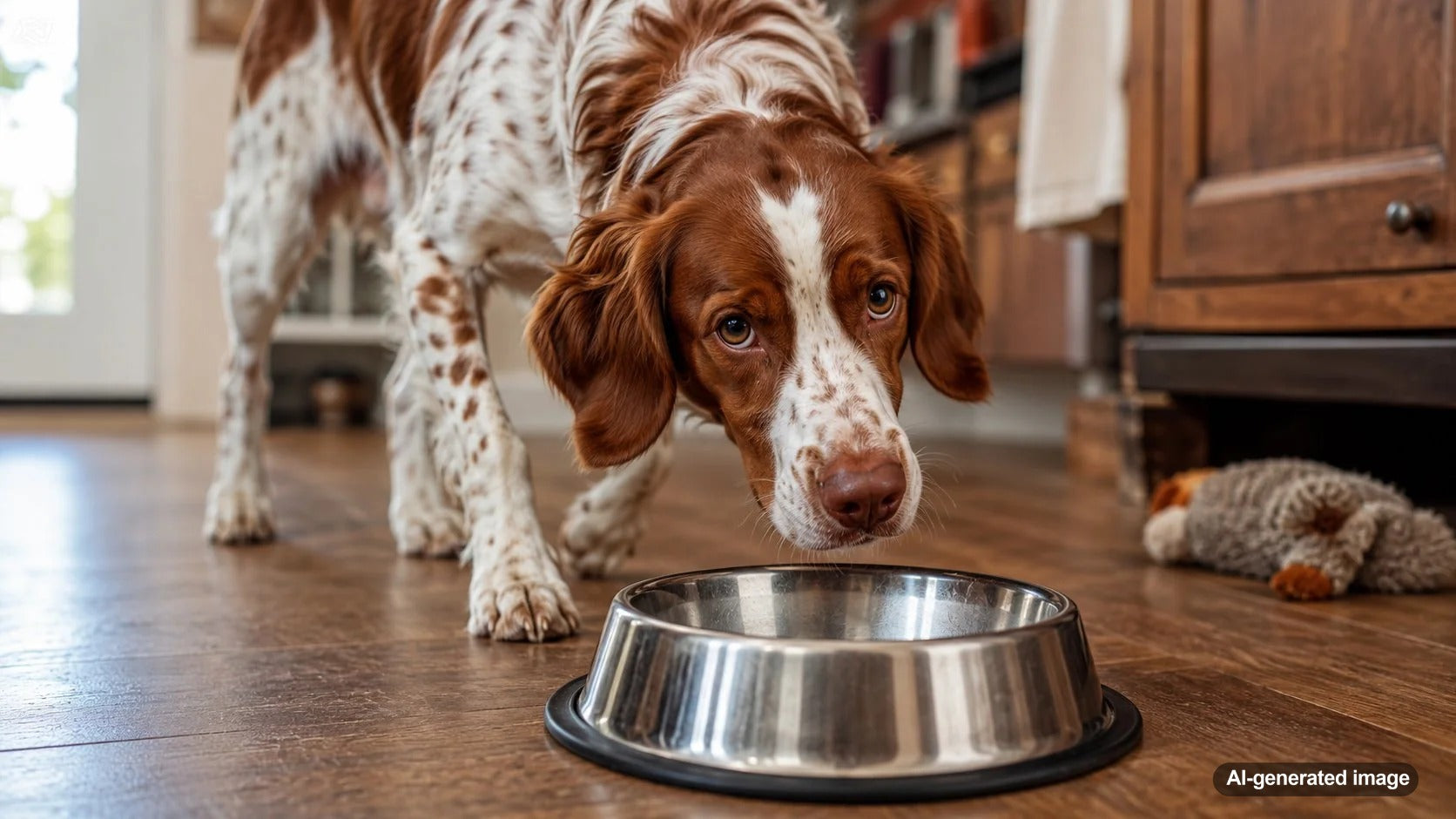
Your dog finishes dinner, walks away, and then circles back to inspect the empty bowl. A few minutes later, another inspection takes place, followed by one last hopeful sniff just in case a piece of kibble has magically appeared. This repeated bowl checking is usually a normal mix of habit, scent, food motivation, and the simple belief that checking again might pay off.
Dogs do not view an empty bowl as conclusively as people do. To your dog, it is a place that regularly produces something valuable. Returning to it is a low-effort behavior with a potentially delicious reward, especially if an extra bite has appeared there before.
The Bowl Still Smells Interesting
A bowl that looks spotless to you may contain a rich map of smells for your dog. Tiny crumbs, food oils, saliva, and scent trapped around the rim can remain long after the visible meal is gone. Your dog's nose may detect enough information to make another investigation worthwhile.
This is especially common with wet food, toppers, broth, or strongly scented kibble. Dogs may lick the sides, push the bowl across the floor, or check underneath it because odor has collected in places their tongue did not reach during the first pass.
Wash food bowls after meals rather than continually adding fresh food to a bowl that has already been licked. Regular cleaning helps control residue and gives you a clearer picture of whether your dog is checking for scent or genuinely asking for another meal.
Your Dog Has Learned That Checking Can Work
Dogs repeat behaviors that have produced rewards. If you have ever responded to an empty-bowl inspection by adding a few pieces of kibble, offering a treat, or sharing something from the kitchen, your dog may have learned a simple pattern: check the bowl, look at the human, and see what happens.
The reward does not need to appear every time. In fact, occasional success can make a behavior surprisingly persistent. A dog may perform three, five, or ten checks because the next visit could be the lucky one.
Watch the entire sequence. Does your dog sniff the bowl and leave calmly, or check the bowl before staring at you, pawing your leg, or walking toward the food container? The second pattern is often less about forgotten food and more about a well-practiced request.
Mealtime May Feel Too Short
Some dogs can empty a standard bowl in seconds. Their calories may be appropriate, but the activity ends before they have had much opportunity to sniff, search, lick, or problem-solve. The dog returns because the most exciting part of the evening disappeared almost immediately.
Slowing the experience can make mealtime feel more complete. You can divide the meal between two activities, scatter a portion of dry food in a safe area, use kibble for a brief training session, or place an appropriate portion in an interactive feeder.
The Walkabout turns compatible kibble or treats into a rolling slow-feeder activity. Its adjustable opening allows dog parents to match the challenge to the food size, while the unpredictable movement encourages sniffing, movement, and problem-solving instead of rapid gulping.
Routine Makes the Bowl an Important Place
Dogs notice patterns remarkably well. The sound of a cabinet opening, the location of a scoop, and the time you usually prepare dinner can all become meaningful signals. The bowl sits at the center of that predictable routine, so checking it can be similar to checking whether a familiar event is about to happen again.
Puppies may revisit because they are still learning the household schedule. Highly food-motivated breeds and dogs with a history of uncertain access to food may check more persistently. Senior dogs may also rely heavily on familiar routines, although new confusion, pacing, or major behavioral changes should be discussed with a veterinarian.
A consistent feeding schedule can reduce uncertainty. Serve measured meals at roughly predictable times, avoid rewarding repeated demands with random extras, and give your dog a clear transition into the next activity, such as a potty break, a calm walk, or rest time.
Give the Food-Seeking Instinct Somewhere Else to Go
Searching for food is natural canine behavior. Domestic dogs receive meals conveniently, but many still enjoy working through the sequence of locating, investigating, and consuming food. An empty-bowl check may simply be the only food-searching opportunity available in the room.
Try creating a more satisfying routine without making every meal difficult. A dog who gets frustrated easily may need a simple slow feeder, while an experienced puzzle solver may enjoy a moving toy. For soft food or a thin spread, the FlipMat offers two challenge levels so licking and slow feeding can be adjusted to the dog.
Supervise new enrichment activities, choose an appropriate size, and stop if your dog begins biting, tearing, or trying to swallow pieces of the feeder. Enrichment should create focused engagement, not frustration or unsafe chewing.
When Repeated Bowl Checking May Matter
Occasional bowl checking is usually harmless. A sudden or intense increase in food-seeking behavior is different, particularly when it appears with physical or behavioral changes.
Weight loss despite normal or increased eating, vomiting, diarrhea, excessive thirst or urination, a swollen abdomen, unusual restlessness, weakness, stealing or eating nonfood objects, or a major change from your dog's normal appetite.
Growing puppies, very active dogs, pregnant or nursing dogs, and dogs recovering from certain situations may have different energy needs. Medications and health conditions can also affect appetite. Do not increase portions dramatically based only on bowl checking. Ask your veterinarian whether your dog's food, daily amount, body condition, and feeding schedule remain appropriate.
What to Try First
Start by observing rather than immediately refilling the bowl. Confirm that everyone in the household is following the same feeding plan, since dogs are excellent at requesting a second breakfast from someone who missed the first one.
Measure the full daily portion, account for treats, and note how quickly meals disappear. If your dog eats in seconds, redirect some of the meal into training or a slow-feeding activity. After eating, pick up and wash the bowl, then guide your dog into a predictable post-meal routine.
If the repeated checking remains relaxed and your dog maintains a healthy weight, normal energy, and normal bathroom habits, it is probably just an optimistic habit. Your dog is not confused by the empty bowl. Your dog simply knows that checking costs nothing, and sometimes humans are wonderfully easy to persuade.
Dog Parent FAQs
Does checking an empty bowl mean my dog is still hungry?
Not necessarily. Food scent, routine, fast eating, boredom, and learned begging can all cause repeat checks. Use your dog's measured portion and body condition rather than bowl checking alone to judge food needs.
Should I give my dog more food after the bowl is empty?
Avoid automatically adding food. Check the recommended portion with your veterinarian and include treats in the daily total. Random refills can reinforce repeated checking.
Why does my dog lick an empty bowl for several minutes?
Food oils and tiny particles may remain on the surface. Some dogs also find repetitive licking relaxing. Wash the bowl after the meal and offer an appropriate licking activity at another time.
Can a slow feeder stop my dog from checking the bowl?
It may help when the behavior is connected to very fast meals or a lack of stimulation. It will not address a medical cause of increased appetite, so contact your veterinarian if the change is sudden or accompanied by other symptoms.


