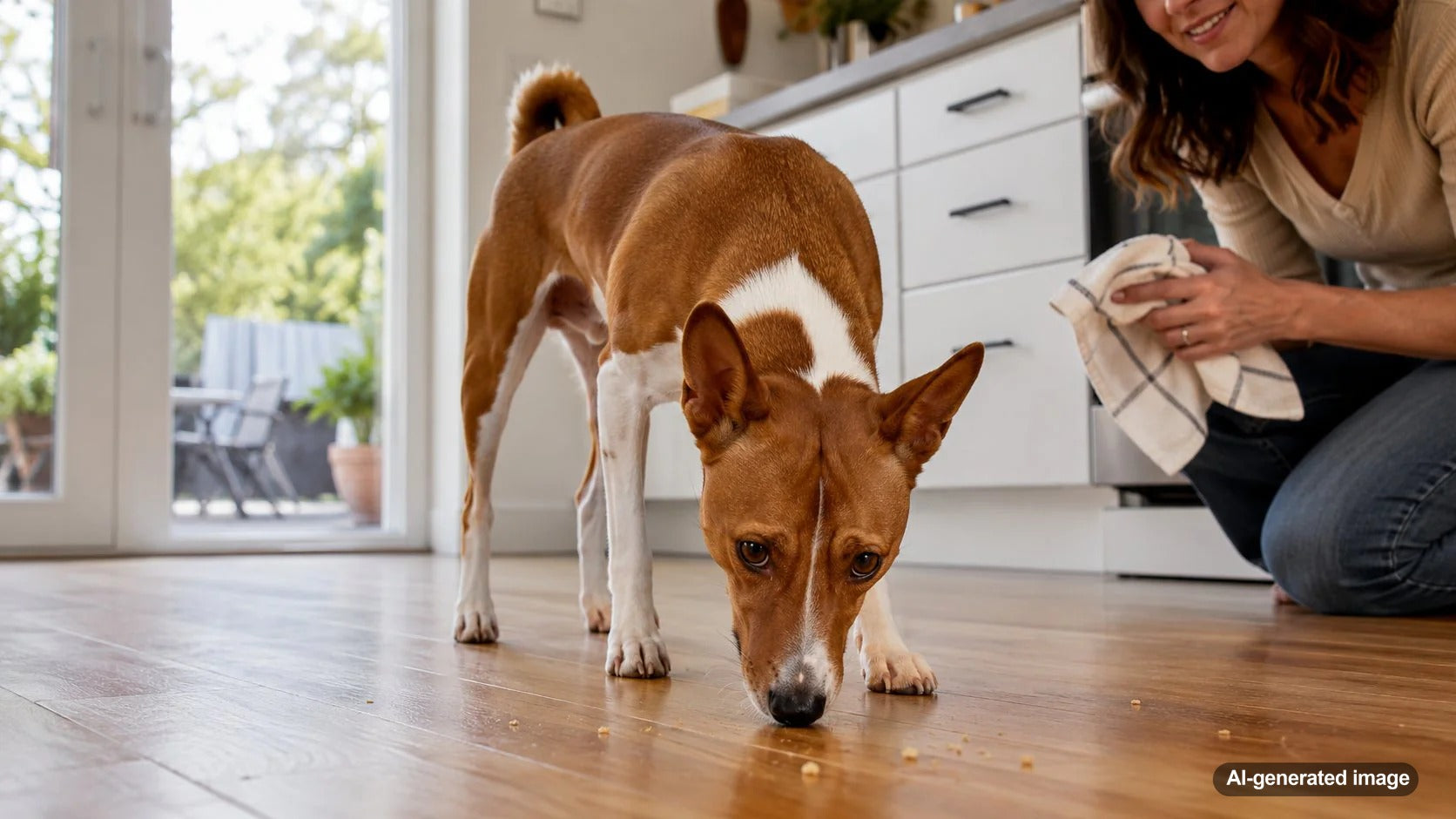
If you have ever turned around from cooking dinner only to find your dog stationed under your feet like a tiny sanitation crew, you are not imagining it. For many dogs, the kitchen floor feels like a constantly updated buffet of opportunity, even when nothing visible is there. Crumbs, scents, and routine habits all come together to create what feels like a full-time job worth reporting for duty every day.
Most dogs are not being picky or silly here. They are responding to powerful instincts, learned rewards, and a space that consistently pays out small wins in the form of food remnants and smells.
Why Your Dog Believes the Kitchen Floor Is a Full-Time Job
The kitchen is one of the most rewarding environments in a home from a dog’s perspective. Food preparation creates constant scent trails, even when you cannot see anything on the floor. Dogs experience smell far more intensely than humans, so what looks clean to you may still be full of interesting signals to them.
Reinforcement also plays a big role. If a dog has ever found a crumb, dropped vegetable, or spilled drop of sauce, they quickly learn that the kitchen floor occasionally pays off. That unpredictable reward schedule is especially powerful and can turn casual sniffing into a routine patrol.
Puppies often intensify this behavior because they are still learning boundaries and rely heavily on exploration through licking and sniffing. Senior dogs may also become more floor-focused if their activity levels decrease and food becomes a primary source of stimulation.
What Owners Often Miss
One of the most common misunderstandings is assuming the behavior is about hunger. In most cases, dogs are not actually hungry. They are stimulated, curious, or following habit loops that have been reinforced over time.
Another overlooked factor is timing. The kitchen floor becomes most interesting right after cooking, during snack time, or when children are present. These moments create predictable opportunities, which dogs quickly learn to anticipate.
Some owners also underestimate how long scent lingers. Even after sweeping, residue from oils, sauces, or baked goods can remain detectable to a dog for hours.
How It Shows Up in Real Life
You may notice your dog hovering during meal prep, pacing near the oven, or immediately returning to the same spot after you move them away. Some dogs even develop specific routes they patrol, especially in open-concept kitchens where food activity is frequent.
In multi-dog homes, competition can increase the intensity. One dog may act as the “primary inspector” while another follows behind to double-check the work.
Smaller dogs often focus on high-traffic drop zones near chairs, while larger breeds may scan wider areas or stand directly under counters. Puppies tend to move in bursts of sniffing and licking, while older dogs may settle into longer stationary waits.
How to Redirect the Behavior Without Stress
The goal is not to eliminate curiosity but to give it a better outlet. Dogs need mental engagement, especially during high-trigger times like cooking or eating.
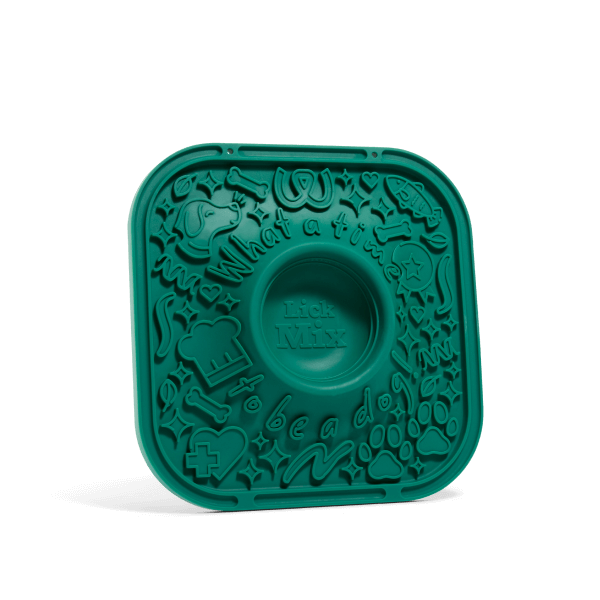
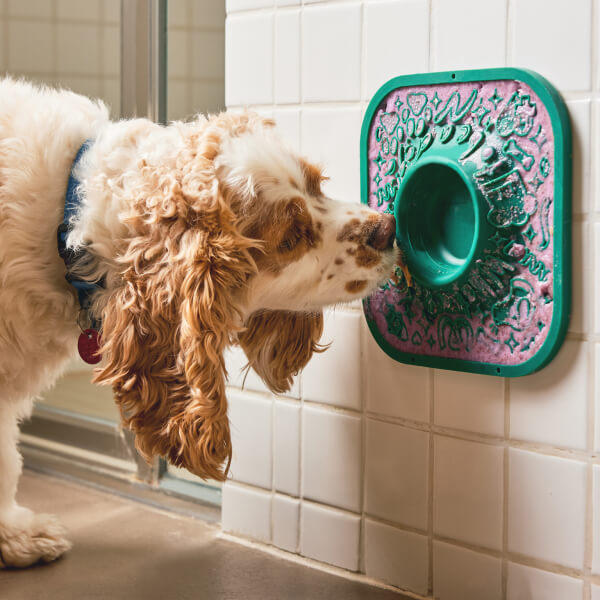
One of the most effective tools is structured enrichment that replaces floor scavenging with intentional licking or chewing. A product like The LickMat can help shift focus by offering a controlled surface for licking that satisfies the same sensory drive without reinforcing floor searching. Adding a spread or mix can make it even more engaging and predictable.
For longer distraction periods, The Pupsicle Starter Pack can help redirect attention during meal prep or cleanup. It keeps dogs occupied with a task that rewards focus rather than scavenging.
Chewing can also help reset the behavior loop. Durable options like HonestChew give dogs a safe outlet for their natural urge to work their jaws, which often reduces wandering kitchen patrol habits.
When It Might Signal Something More
Occasional floor interest is normal, but persistent or intense behavior may sometimes point to boredom, anxiety, or nutritional imbalance. If a dog is constantly fixated on non-food particles or seems distressed when prevented from scavenging, it is worth discussing with a veterinarian or trainer.
Sudden changes in appetite, excessive licking of surfaces beyond the kitchen, or signs of gastrointestinal discomfort should always be evaluated by a professional.
Building a Better Post-Meal Routine
Dogs thrive on predictability. Creating a simple routine after meals can reduce kitchen floor focus over time. This might include a short walk, a chew session, or a lick-based enrichment activity that signals the kitchen is no longer the center of attention.
Consistency matters more than intensity. A short daily routine is more effective than occasional long sessions because it replaces the expectation of scavenging with something more rewarding and reliable.
Dog Parent FAQs
Why does my dog only do this in the kitchen?
The kitchen has the strongest food associations in the home, making it the most rewarding place for scent-driven behavior.
Is my dog actually hungry?
Usually no. Most dogs are responding to smell, habit, or learned reward patterns rather than true hunger.
Can I stop the behavior completely?
You can reduce it significantly by removing reinforcement opportunities and offering structured enrichment instead.
Does age affect this behavior?
Yes. Puppies explore more, adults often form habits, and seniors may rely more on scent-driven routines due to lower activity levels.