






































































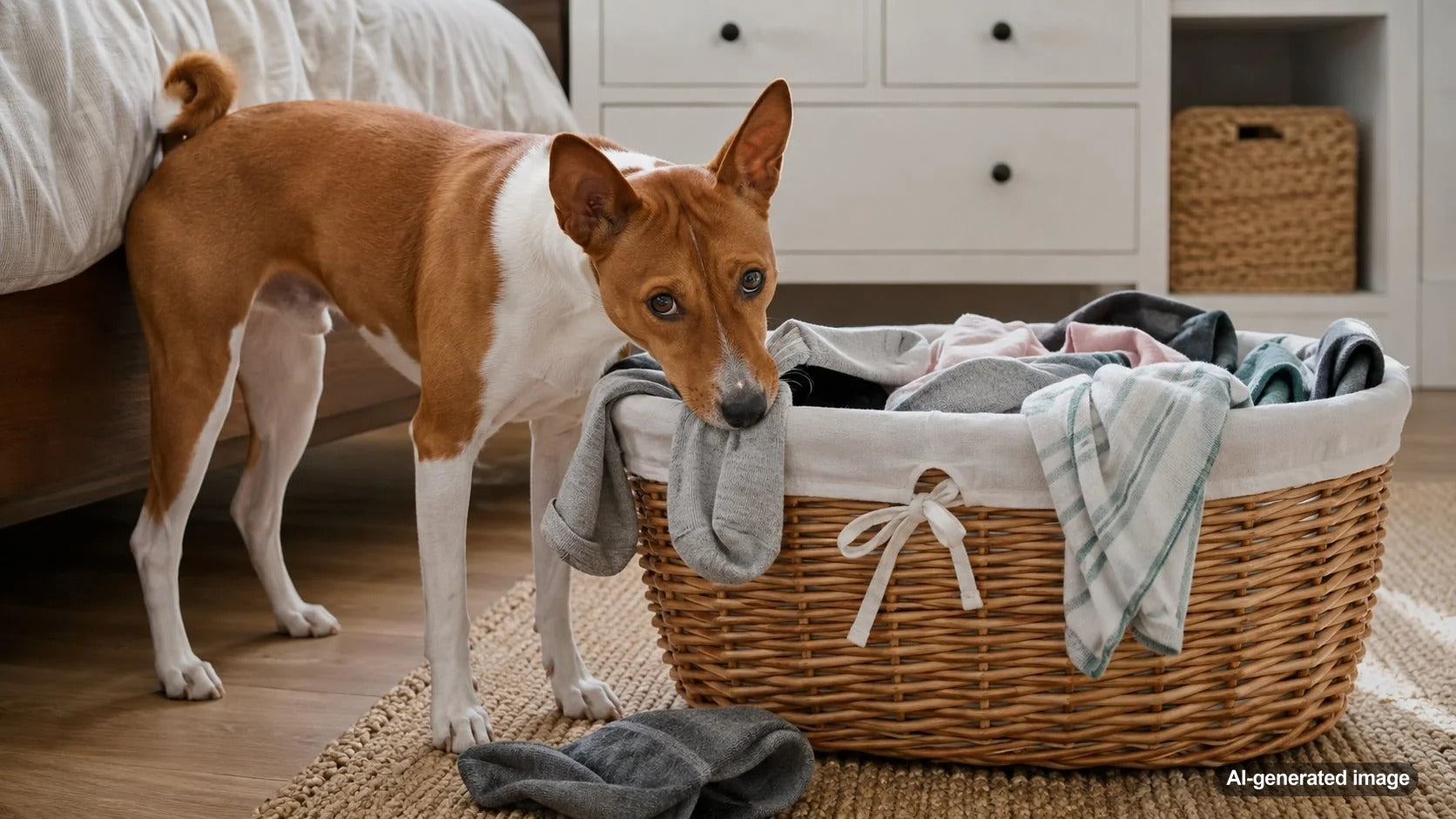
You put a basket of laundry on the floor for thirty seconds, turn around, and suddenly your dog is proudly trotting through the house with a sock like they just uncovered buried treasure. For some dogs, dirty laundry is unusually exciting because it combines several things they already love: strong familiar smells, soft textures, opportunities to carry or chew, and a very reliable way to get their human's attention. The laundry basket may look ordinary to you, but to your dog's nose and brain, it can be a concentrated collection of interesting information and potential entertainment.
That does not mean your dog is being spiteful, trying to embarrass you, or carefully selecting the most expensive item in the basket. Laundry stealing is often much simpler. Your dog may be following scent, satisfying an urge to investigate or chew, looking for something to do, or repeating a behavior that has accidentally become a fantastic game.
Your Laundry Smells Much More Interesting to Your Dog
Dogs experience a huge part of their world through scent. A shirt you wore all afternoon, a pair of socks from a walk, or a towel you used after exercising carries far more odor information than freshly washed fabric. Those familiar smells can make worn clothing especially interesting to a dog who likes investigating anything connected to their favorite people.
This helps explain why some dogs consistently choose dirty socks, underwear, workout clothes, or pajamas instead of grabbing a clean towel sitting nearby. The appeal is not necessarily the object itself. The scent is part of what makes it valuable.
Some dogs simply sniff or curl up on laundry. Others carry pieces around the house, toss them, lick them, or begin chewing. That distinction matters because carrying your T-shirt is mostly an inconvenience, while swallowing pieces of fabric can become a serious safety concern.
The Laundry Basket Can Become a Ready-Made Brain Game
Dogs are natural investigators. Sniffing, scavenging, searching, chewing, and manipulating objects are normal canine behaviors, and when dogs do not have enough appropriate opportunities to use those behaviors, they may invent their own activities.
A basket packed with overlapping scents and soft objects offers variety every time your dog visits. Digging past a towel to find a sock can even provide a small search-and-reward experience. Puppies and young dogs may be particularly enthusiastic because exploring objects with their mouths is common, but energetic adults can become devoted laundry hunters too.
If laundry raids tend to happen during quiet afternoons, while you are working, or shortly before the dog's usual walk or play session, consider whether boredom is contributing. Adding a sniffing game, food puzzle, training session, or appropriate chew before the usual stealing window may give that energy somewhere better to go.
Sometimes You Accidentally Make Sock Stealing More Fun
Picture the classic scene: your dog grabs a sock, you gasp, your dog runs, and suddenly everyone is sprinting through the living room. From the dog's perspective, stealing one tiny piece of fabric just caused their human to stop everything and start an exciting game.
Repeated often enough, the sequence itself can become rewarding. Your dog may begin grabbing laundry because they have learned what happens next.
Instead of chasing, stay as calm as the situation allows. For dogs without resource guarding concerns, teaching a positive trade can be useful: offer something your dog values, reward the release, and quietly remove the stolen item. Practice with safe toys before you need the skill during an actual sock emergency.
Give Chewers Something Better Than Fabric
For some dogs, stealing and chewing are tightly connected. A soft sock is easy to grab, but it is not designed to withstand dog teeth and can tear into swallowable pieces. If your dog regularly seeks objects to gnaw, provide durable, dog-appropriate options and rotate them so they stay interesting.
For enthusiastic chewers, an option such as the HonestChew can give your dog a designated object for chew time instead of leaving them to improvise with clothing. Whatever chew or enrichment toy you choose, select an appropriate size for your dog and supervise according to the product instructions and your dog's chewing style.
Remember that enrichment does not need to mean constant high-energy play. Sniffing for hidden treats, working through a food puzzle, practicing a few cues, licking, and settling with an appropriate chew can all add useful variety to a dog's day.
How to Make the Laundry Basket Less Tempting
The easiest stolen sock to manage is the one your dog never gets. Use a hamper with a secure lid, place baskets behind a closed door, and avoid leaving piles of clothing at dog level. This is especially important for puppies, persistent scavengers, and dogs with a history of swallowing objects.
At the same time, teach skills that help when management fails. Practice "leave it" around safe, low-value objects and reinforce your dog for choosing to disengage. Practice "drop it" or trading during relaxed games. Rewarding the behavior you want is usually more productive than repeatedly creating confrontations over forbidden objects.
If your dog stiffens, freezes, growls, snaps, or becomes defensive when you approach a stolen item, do not turn the situation into a tug-of-war. Resource guarding deserves a more careful approach, and a qualified trainer or veterinary behavior professional can help you build a safer plan.
Dog Parent FAQs
Why does my dog steal dirty socks specifically?
Dirty socks carry concentrated human scent and are lightweight, soft, and easy to grab. For some dogs, that combination makes them more appealing than clean clothing.
Should I chase my dog when they steal laundry?
Usually not. Chasing can accidentally turn stealing into a rewarding game. When it is safe to do so, use a calm trade or trained drop cue instead.
Can boredom make a dog steal clothes?
Yes. Dogs sometimes create their own entertainment when they need more appropriate opportunities to sniff, search, chew, lick, play, or interact with you.
What if my dog actually eats socks or fabric?
Contact your veterinarian if your dog swallows or may have swallowed fabric. Non-food items can become lodged in the digestive tract and may require prompt medical care.
The Bottom Line on Your Laundry-Loving Dog
Your dog probably does not see the laundry basket as a collection of chores. They see an intensely scented pile of objects connected to their people, packed with possibilities for sniffing, carrying, chewing, exploring, and perhaps starting a game. Once you understand what makes laundry rewarding, you can meet the same needs in safer ways.
Keep tempting fabric out of reach, avoid rewarding theft with a dramatic chase, build reliable trade and leave-it skills, and make appropriate enrichment part of your dog's everyday routine. With fewer opportunities to practice sock stealing and better things available to do, the laundry basket can gradually become much less legendary.


