






































































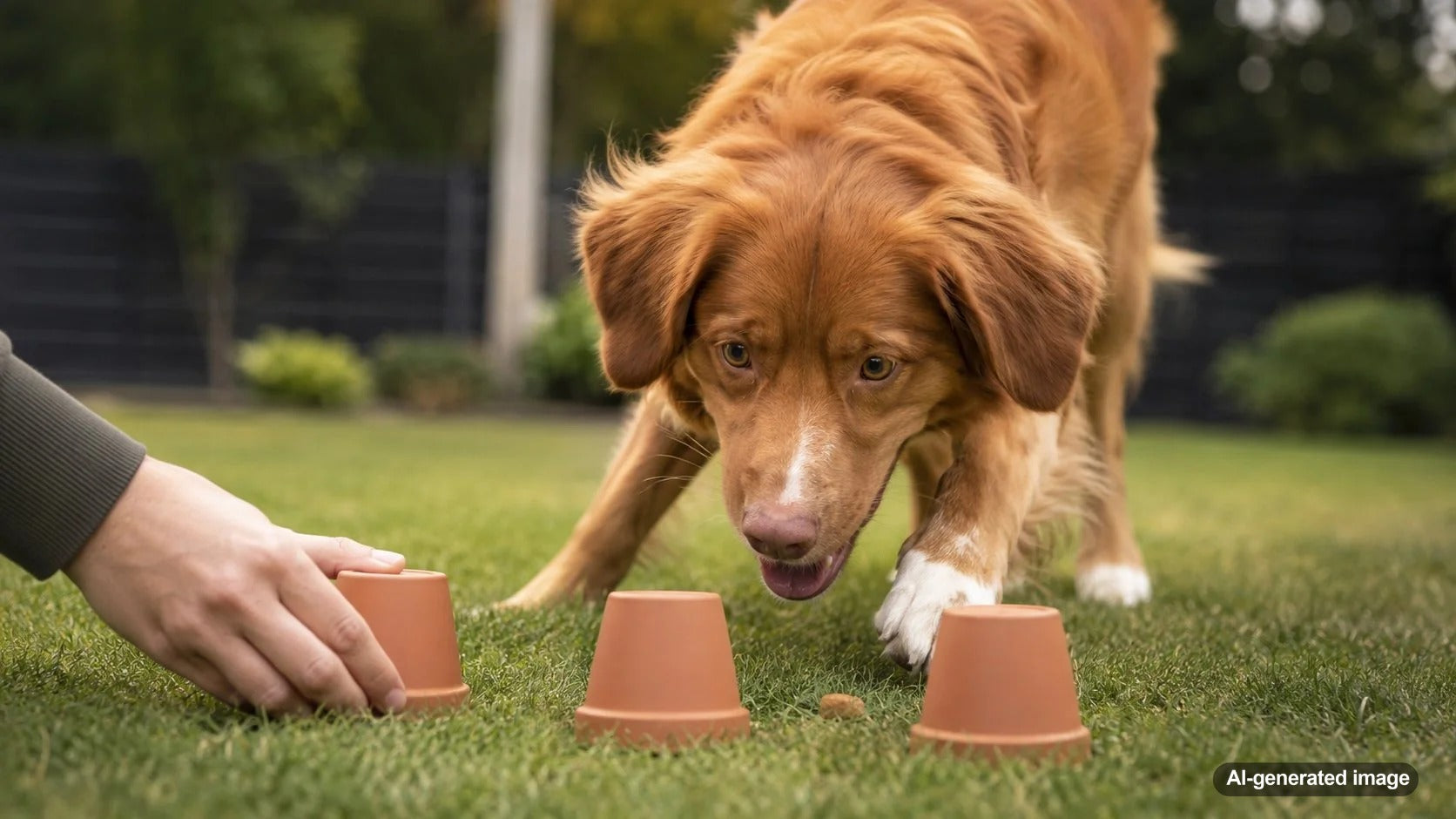
Some dogs enthusiastically tackle complicated food puzzles, while others walk away the moment dinner requires too much detective work. Dogs who favor easy food games are not lazy or less intelligent. They may simply enjoy activities that provide clear instructions, frequent rewards, and a comfortable balance between effort and payoff.
A successful food game should make your dog curious, not confused. When treats appear often enough to keep the game moving, your dog learns that interacting with the toy works. That sense of control can make enrichment more inviting and help turn a one-time experiment into a routine your dog happily repeats.
Easy Wins Keep the Reward Within Reach
Food games ask a dog to exchange effort for something valuable. If a piece of kibble rolls out after one nudge, the connection between action and reward is obvious. If the dog must push three sliders, lift a lid, and rotate a compartment before receiving anything, that connection may be harder to discover.
Dogs also differ in how long they will experiment without a payoff. One dog may happily paw, sniff, and flip a puzzle for several minutes. Another may sniff once, stare at their person, and leave. A third may switch from problem-solving to barking, chewing the toy, or throwing it across the room. These responses offer information about the current difficulty level, not a verdict on the dog's intelligence.
Confidence Matters More Than Complexity
Repeated success teaches a dog to keep trying. This is especially useful for puppies learning how food toys work, recently adopted dogs adjusting to a new home, and cautious dogs that hesitate around unfamiliar objects. An easy game lets them investigate without feeling pressured.
Previous experience matters too. A dog who has practiced rolling treat dispensers may quickly understand another moving toy. A dog accustomed only to eating from a bowl may need food placed beside the toy, then loosely inside it, before being asked to move anything. What looks obvious to a person may be a completely new skill for the dog.
Easy wins can also support calmer play. When the reward feels achievable, many dogs remain focused instead of escalating into frantic pawing or destructive biting. The goal is engaged effort, not maximum difficulty.
Age, Body Shape, and Comfort Change the Game
Difficulty is not only mental. A senior dog may understand a puzzle perfectly but find repeated crouching, pawing, or chasing uncomfortable. A flat-faced dog may struggle to reach food in deep compartments, while a small dog may have trouble moving a heavy feeder. Puppies are still developing coordination and may become distracted before completing several steps.
Use a non-slip surface so the game does not slide away, and choose openings that allow your dog to reach the food safely. For older dogs, consider raised or stationary licking activities that require less bending and chasing. If a dog suddenly stops engaging with familiar food games, drops food, chews on only one side, excessively drools, or shows an appetite or behavior change, contact your veterinarian. Dental discomfort, pain, vision changes, or other health concerns can affect participation.
How to Find Your Dog's Just-Right Difficulty
- Begin with visible food. Let your dog watch you place several treats where they can be reached with one sniff, lick, nudge, or roll.
- Reward the first interaction. Early success helps your dog understand what makes the food appear.
- Change one variable. Add fewer treats, close one compartment, thicken a spread, or reduce the dispensing opening. Avoid changing everything at once.
- Watch the whole dog. Loose movement and steady investigation usually indicate productive engagement. Repeated barking, frantic biting, avoidance, or looking away may mean the game needs to be easier.
- Finish while interest remains. Short, satisfying sessions can be more useful than continuing until the dog becomes tired or frustrated.
If your dog likes movement with adjustable challenge, the Walkabout is a rolling slow-feeder puzzle ball with a dial that can be adjusted for kibble or treat size. Begin with a setting that releases food readily, then narrow it gradually if your dog stays relaxed and interested.
Dogs who prefer licking over chasing may enjoy the FlipMat, a dual-sided lick mat and slow feeder with two challenge levels. Starting on the simpler side can make the food easy to locate while still encouraging slower, more engaging eating.
Common Ways Food Games Become Too Hard
Owners sometimes increase difficulty because a dog finishes quickly, but speed does not automatically mean the activity failed. A five-minute game that leaves your dog satisfied can be more valuable than a twenty-minute struggle. Enrichment should add choice and enjoyment, not create an endurance test.
Other common problems include using treats that are too large to dispense, packing food too tightly, introducing a noisy moving toy without preparation, or offering the game when a dog is overly hungry. Test the setup yourself before serving it. If the food barely comes out when you shake or move the toy, your dog may have little reason to continue.
Dog Parent FAQs
Should every dog progress to difficult food puzzles?
No. The best difficulty is the one that keeps your dog safely engaged without causing frustration. Some dogs remain happiest with simple, predictable games.
How can I tell whether my dog is enjoying a food game?
Look for voluntary returns to the activity, relaxed movement, steady sniffing or licking, and brief pauses followed by more investigation. Frantic biting, persistent barking, avoidance, or abandoning the game may signal that an adjustment is needed.
Is it okay if my dog solves the game very quickly?
Yes. Finishing quickly can still provide sniffing, licking, movement, and a satisfying success. Increase difficulty only if your dog appears eager for a greater challenge.
Let Success Be the Enrichment
The purpose of a food game is not to prove how clever your dog is. It is to create an enjoyable opportunity to sniff, lick, move, explore, and make something rewarding happen. When easy wins keep your dog confident and interested, easy may be exactly the right level.


