






































































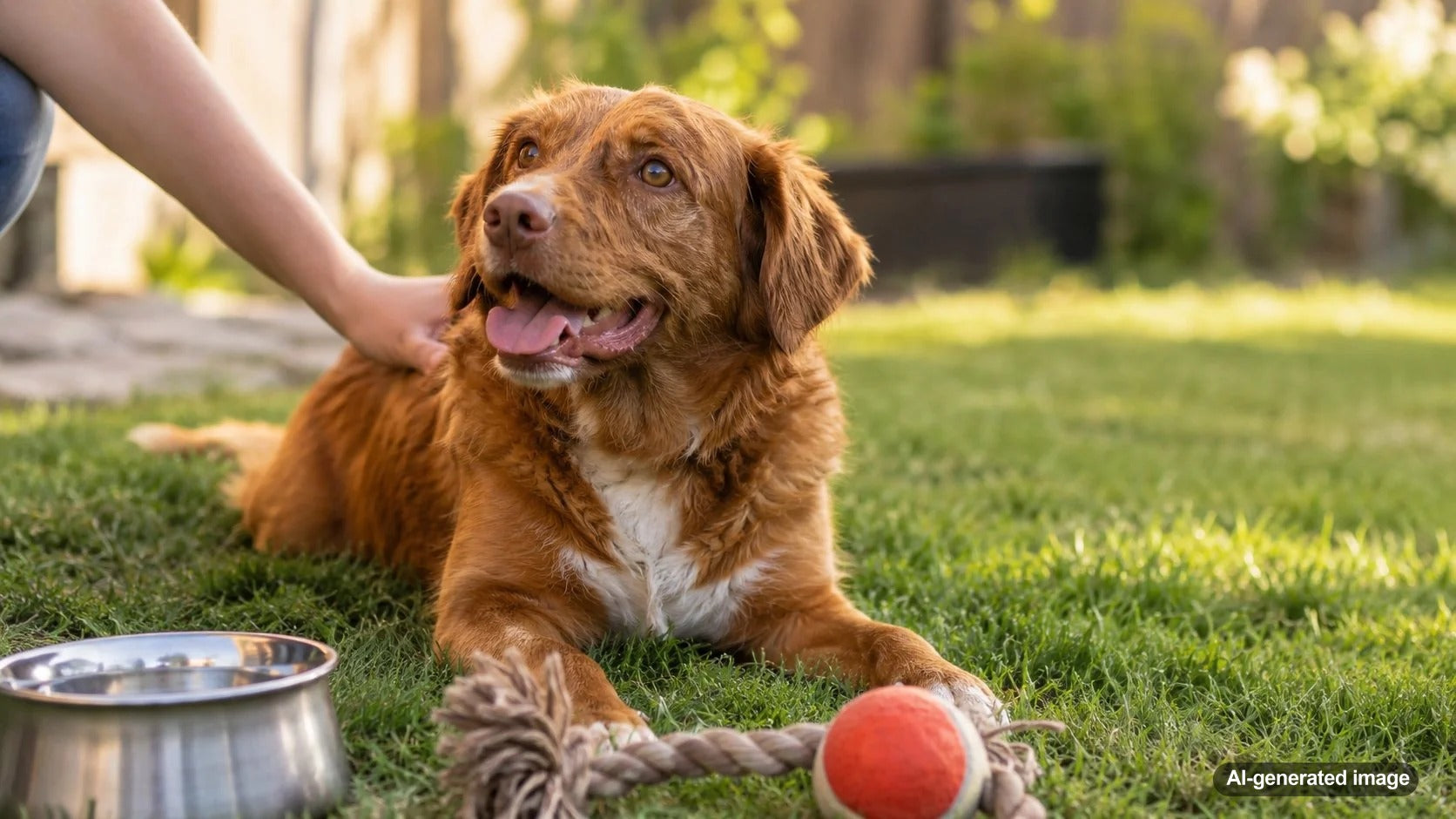
A great play session does not always end when the ball gets put away. Some dogs remain revved up, racing through the house, grabbing sleeves, barking for another throw, or pestering everyone in sight. These dogs may be physically tired but still need help shifting from exciting activity into genuine rest.
A predictable wind-down routine can support that transition. It gives your dog a clear sequence of cues that play is ending and calmer behavior is beginning, rather than expecting an overstimulated pup to suddenly switch themselves off.
Why Play Can Leave a Dog More Energized
Exercise and play are important, but not every activity produces immediate calm. Fast games such as repeated fetch, chasing, wrestling, or tug can keep a dog highly focused on movement. When the game ends abruptly, the dog's body may be tired while their brain is still expecting the next chase, throw, or tug.
This is especially noticeable in puppies, adolescent dogs, intense working breeds, and dogs that become highly focused on toys. A young dog may look as though they need more exercise when they are actually overtired. Continuing the game can sometimes make the zooming, nipping, barking, and inability to listen even stronger.
Dogs also differ in how quickly they recover from excitement. One dog may drink some water and fall asleep. Another may need 15 or 20 minutes of gradually calmer activities before they can relax.
Signs Your Dog Has Not Settled After Play
A dog that needs help winding down may continue bringing you toys, jump on people, mouth hands or clothing, pace between rooms, bark for attention, or race around without much purpose. Some dogs begin grabbing inappropriate objects because they are searching for another outlet.
Watch the overall pattern rather than one isolated behavior. Loose, playful movement is different from frantic movement that keeps escalating. A dog that cannot respond to familiar cues, repeatedly collides with furniture, becomes increasingly rough, or struggles to pause may be too aroused for more high-energy play.
Take a break earlier if your dog appears fatigued, excessively pants despite resting in a comfortable temperature, limps, seems painful, or behaves unusually. Sudden changes in stamina, movement, breathing, or behavior should be discussed with your veterinarian.
A Simple Post-Play Wind-Down Routine
The exact sequence matters less than consistency. Repeating the same transition after play helps the routine itself become meaningful. A phrase such as "all done," followed by putting the toy away and beginning a calm activity, can eventually become a useful signal.
Use Calming Enrichment as a Bridge
Licking and appropriate chewing can give your dog something constructive to do while the environment becomes quieter. The goal is not to create another frantic challenge. Choose an activity your dog can enjoy without repeatedly throwing, chasing, or demanding your participation.
For dogs who love fetch, the Fly n' Feed can help create a natural transition because it shifts from an active flying game to textured lick-mat enrichment. Ending the throws and moving into supervised licking makes the change in pace easier to understand.
Another option is The Pupsicle, which provides a longer-lasting licking activity that can be offered in a quiet resting area. Include any treats or fillings in your dog's daily food allowance, choose ingredients that are appropriate for your dog, and supervise enrichment until you know how your dog uses it.
Common Wind-Down Mistakes
Playing until complete exhaustion: More activity is not always the answer. Overtired puppies and excitable dogs can become wilder instead of sleepier.
Ending at peak intensity: Taking the toy away immediately after the fastest part of the game may leave your dog expecting another round. Reduce the intensity before declaring the game finished.
Accidentally restarting play: Chasing a dog who steals a sock, speaking excitedly, or repeatedly throwing the toy "one last time" can reward persistent demands.
Using the resting area as punishment: A bed, crate, or pen should feel safe and comfortable. Guide your dog there calmly instead of using it only after unwanted behavior.
Expecting instant stillness: Settling is a skill. Reward moments when your dog lies down, softens their body, rests their head, or calmly engages with an appropriate activity.
Adjust the Routine for Your Dog
Puppies often need shorter play sessions and more frequent naps than owners expect. Senior dogs may benefit from gentler play, a slower cooldown, and a comfortable resting surface. Large or athletic dogs may need a brief walking cooldown, while small dogs may transition well with a short sniffing game indoors.
Power chewers need enrichment matched to their chewing style and should always be supervised with edible chews or toys. Dogs that guard toys or food may require a customized plan from a qualified trainer rather than having items removed by hand.
If post-play behavior regularly includes growling, snapping, prolonged panic, destructive behavior, or an inability to recover, contact your veterinarian and a qualified reward-based behavior professional. A routine can support everyday settling, but it is not a replacement for medical or behavioral care.
Dog Parent FAQs
How long should a dog wind down after play?
Many dogs settle within 10 to 30 minutes, but the right length depends on the dog's age, play intensity, environment, and individual temperament.
Do zoomies mean my dog needs more exercise?
Not necessarily. Zoomies can occur after excitement, stress, bathing, or restraint, and overtired puppies may become especially wild. Look at the full routine before adding more exercise.
Should I put my dog in a crate after play?
A crate can be part of a calm routine when your dog already views it as a safe resting place. Do not force a distressed dog into a crate or use confinement as punishment.
Can I teach an adult dog to settle?
Yes. Adult dogs can learn a mat, bed, or settle routine through short practice sessions and rewards for genuinely relaxed behavior.
A Calmer Finish Makes Play More Complete
Play does not have to end in chaos. By lowering the intensity gradually, offering a calmer outlet, and repeating the same post-play steps, you can help your dog practice moving from excitement into rest. The best routine is simple enough to use consistently and flexible enough to match the dog in front of you.


