






































































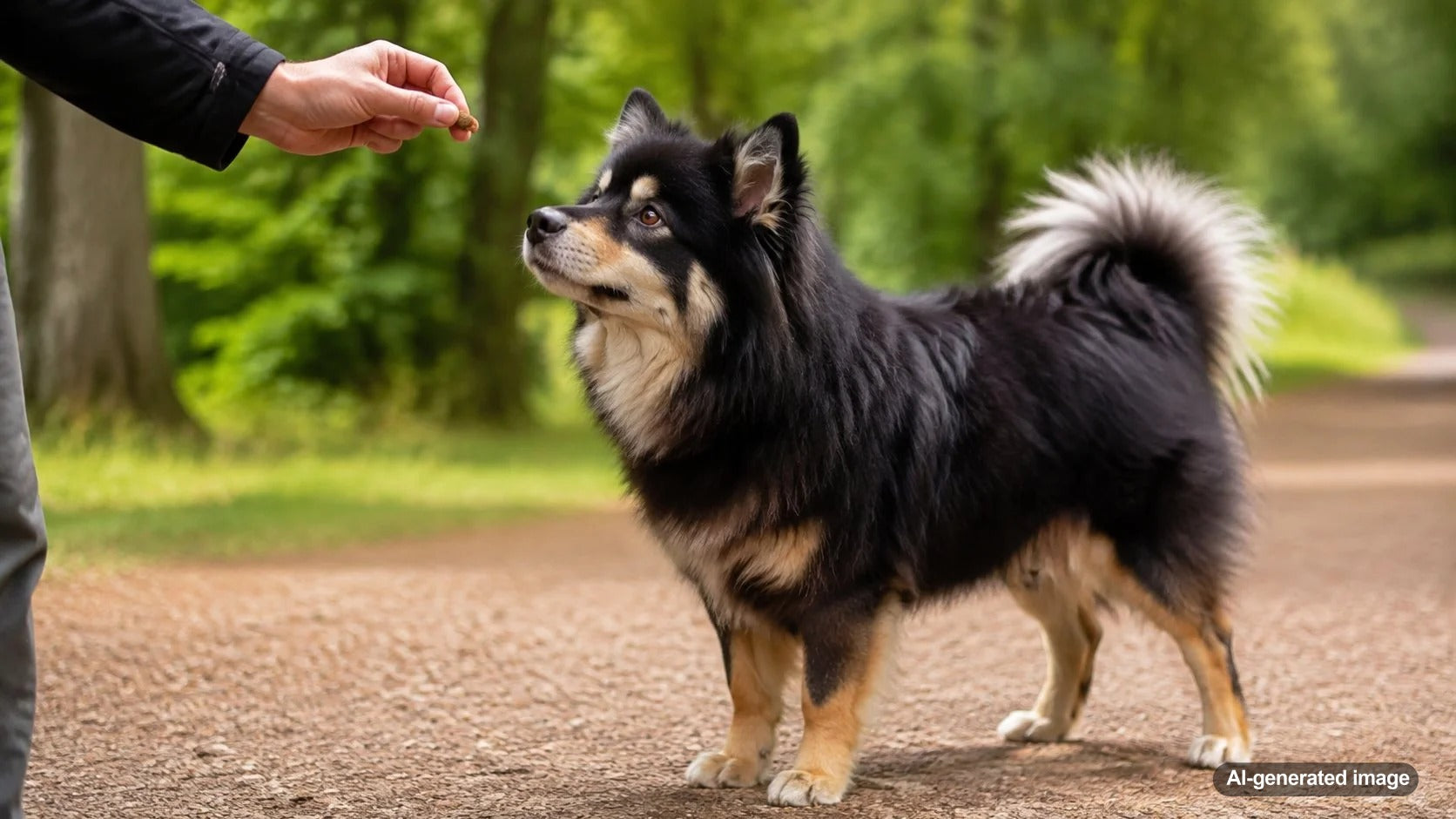
Your dog knows how to sit, but five minutes before dinner, you would never guess it. They bounce, stare at your treat hand, grab too quickly, or cycle through every trick they know. For some dogs, a very small snack before training takes the edge off that frantic hunger and makes it easier to think, listen, and respond.
This does not mean every distracted dog needs more food. A small snack may improve focus when hunger is making a food-motivated dog overexcited, but timing, environment, reward quality, and the difficulty of the task still matter.
Hunger Can Motivate a Dog, but Too Much Can Create Noise
Food motivation is useful in positive reinforcement training. A dog who wants the reward has a reason to repeat behaviors such as checking in, walking beside you, or settling on a mat. However, more hunger does not always produce better learning.
An extremely hungry dog may fixate on the food rather than the cue. You might see intense staring at the treat pouch, pawing, barking, jumping, hard treat-taking, or rapid-fire guessing. The dog is technically motivated, but that motivation has become so strong that it competes with careful observation and self-control.
A few pieces of regular kibble or several tiny treats may reduce that urgency without making the rest of the rewards uninteresting. Think of it as taking the sharp edge off, not serving a second meal.
The Snack May Become a Helpful Context Cue
Dogs learn patterns quickly. If a small snack is consistently followed by a calm, short training session, the sequence itself can signal what happens next: eat a bite, orient toward the person, and work together.
The first few pieces can also reward simple behaviors your dog already knows. Ask for a hand target, eye contact, or four paws on the floor, then begin the harder lesson. These easy wins help establish a rhythm before distractions or frustration build.
Small, easy-to-deliver rewards such as Love Nuggets can be useful when you need quick reinforcement without interrupting the session for a long chewing break. Break rewards into appropriately sized pieces when needed, especially for small dogs.
How to Tell Whether Hunger Is Affecting Focus
Try changing only one variable. On one day, begin a brief session at the usual time. On another comparable day, offer a small portion of the dog's normal meal five to fifteen minutes beforehand. Use the same room, cues, reward type, and session length.
- Your dog takes food gently instead of snapping at it.
- They can look away from the reward and back toward you.
- They pause long enough to process familiar cues.
- They make fewer frantic guesses or demand barks.
- They recover more easily after a mistake.
If your dog becomes sluggish, loses interest in rewards, or wanders away, the snack may be too large or unnecessary. Some dogs work best before a meal, while others are more comfortable after a few bites. Observation matters more than following a universal schedule.
Build a Better Pre-Training Snack Routine
Use part of the regular meal
Set aside a small handful of measured kibble rather than automatically adding extra calories. You can use several pieces as the opening snack and the remainder as training rewards. This is particularly helpful for puppies, small dogs, and dogs whose daily calorie needs leave little room for extras.
Keep rewards tiny and frequent
A training reward only needs to be large enough for the dog to notice and enjoy. Tiny pieces let you reinforce more repetitions without turning a ten-minute lesson into a major feeding event. Higher-value rewards can be reserved for difficult behaviors or distracting environments.
Start somewhere easy
A snack cannot compensate for an overwhelming setting. Practice indoors before moving to the yard, sidewalk, or busy park. If your dog will not respond to a familiar cue, increase distance from the distraction or make the task simpler.
Let eating become enrichment
For dogs who arrive at training revved up, dispensing a small portion of kibble through a slow, interactive activity may create a smoother transition. The Walkabout turns kibble or treats into a rolling puzzle, although it is best used before training only if it leaves your dog pleasantly engaged rather than more excited.
Common Mistakes to Avoid
Do not withhold food for an unusually long period just to make a dog more eager to work. Training should remain comfortable and positive. Avoid using a large snack that removes all interest in rewards, and do not keep adding treats without accounting for their calories. As a general habit, most daily nutrition should come from a complete and balanced diet, with treats kept to a modest portion of total intake.
Also avoid assuming that every focus problem is hunger. A dog may be distracted because the environment is too intense, the cue is unclear, the session is too long, or they need exercise, rest, a bathroom break, or distance from something stressful.
Sudden appetite changes, unusual weakness, trembling, vomiting, diarrhea, excessive thirst, weight changes, or a major shift in behavior deserve a conversation with your veterinarian. Dogs with diabetes, digestive conditions, food allergies, prescription diets, or other medical needs should follow a veterinarian-approved feeding and treat plan.
Dog Parent FAQs
Should I train my dog before or after a meal?
Many dogs train well before a meal, but dogs who become frantic around food may focus better after a few bites. Avoid vigorous activity immediately around a large meal, and test short sessions to find the timing that suits your dog.
How much should the pre-training snack be?
Start with only a few pieces of kibble or tiny treats. The goal is to reduce urgency without filling your dog up. Include the snack in the dog's measured daily food and treat allowance.
What if my dog is not interested in food during training?
Your dog may be full, stressed, distracted, or simply motivated by something else. Try a quieter location, a more appealing safe reward, a favorite toy, praise, or permission to sniff. Never force a dog to eat.
Can puppies have a small snack before training?
Yes, part of a puppy's measured meal can be used for a short lesson. Puppies need age-appropriate feeding schedules and tire quickly, so keep sessions brief and ask your veterinarian about nutrition or meal timing concerns.
The Bottom Line on Snacks and Focus
A small snack is not a concentration hack for every dog. It is a simple experiment for dogs whose hunger turns useful enthusiasm into frantic behavior. Use a measured portion, begin with an easy success, train in a manageable environment, and let your dog's response guide the routine. The best timing is the one that helps your dog feel comfortable, think clearly, and enjoy learning with you.


