






































































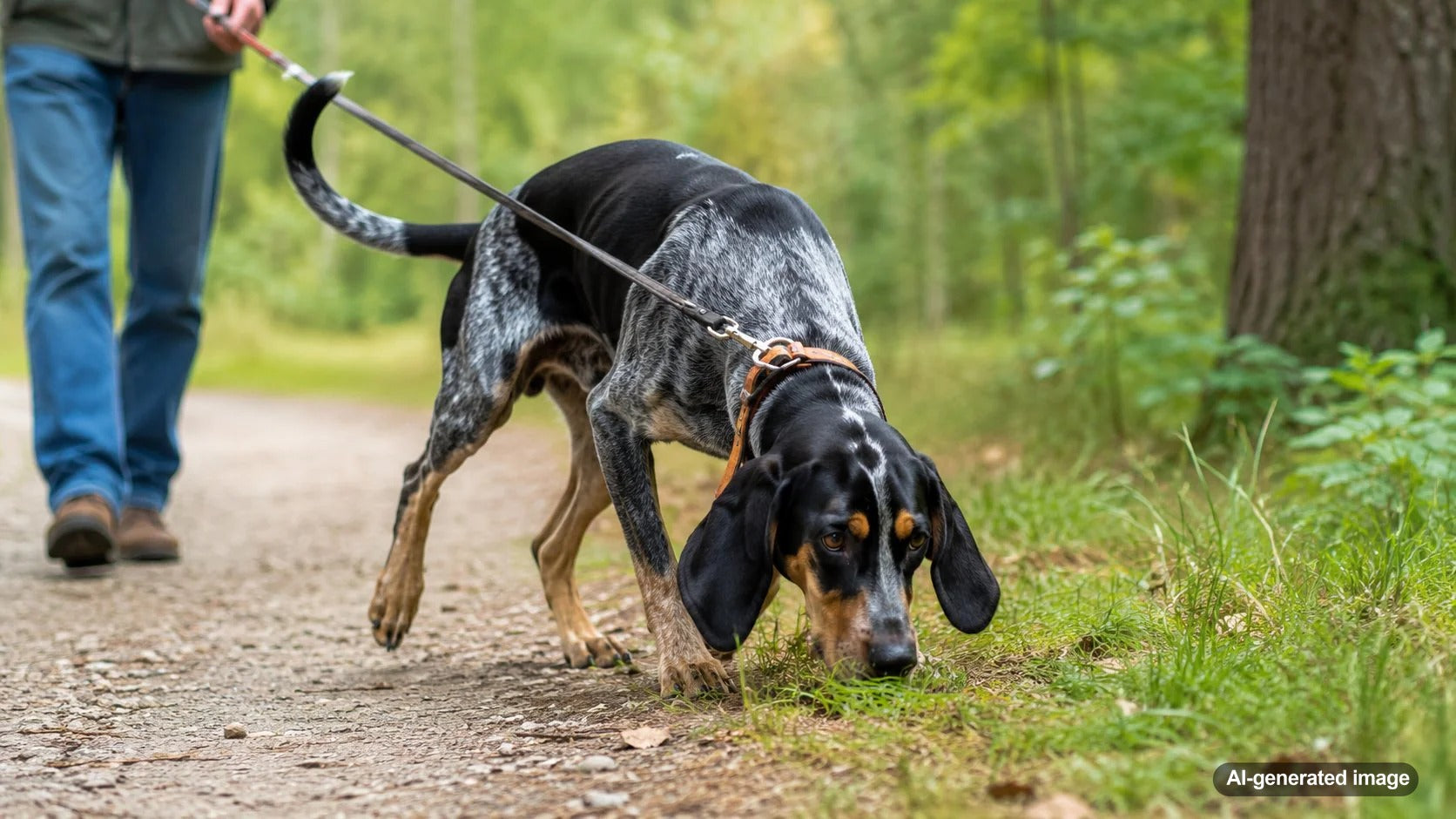
One moment, your scent hound is trotting beside you like the perfect walking partner. The next, their nose hits the ground, their ears switch off, and you might as well be calling them from another zip code. It can feel personal, but your Beagle, Basset Hound, Bloodhound, Coonhound, Dachshund, or other scent-driven dog has not suddenly forgotten who you are.
They have found information that is extraordinarily rewarding to investigate. A patch of grass can hold the scent of another dog, a rabbit trail, spilled food, wildlife, or dozens of people who passed through hours earlier. For a scent hound, following that trail is not a minor distraction. It is a deeply natural job.
Why Their Nose Takes Over
Scent hounds were developed to follow odor over distance, often while working independently from a person. That history matters. Many were expected to stay with a trail even when the handler was far behind, so constantly checking in with a human was not always the most useful trait.
On a modern neighborhood walk, that independence may look like a dog leaning into the leash, zigzagging across the sidewalk, stopping suddenly at a mailbox, or refusing to lift their head from one fascinating patch of weeds. Your dog may still hear you. The scent is simply more valuable at that moment than a familiar cue that has not been heavily reinforced around distractions.
Wind and moisture can make the experience even more intense. Damp ground often holds odor well, while moving air can carry interesting scents across a trail. Your hound may raise their head to sample airborne odor, circle to locate its direction, and then drop their nose once they find the track.
Sniffing Is Not Wasted Walking Time
Dog parents sometimes judge a walk by distance or speed. A scent hound may get significant mental enrichment from slowly examining one block, even if you barely cover half a mile.
Sniffing gives dogs a way to gather information and make choices. Allowing appropriate sniffing can be part of a satisfying daily routine, especially for dogs who spend much of the day indoors. The goal is not to stop your hound from using their nose. The goal is to teach them that checking in with you also pays.
How to Become Relevant Again
Reward voluntary check-ins
Do not wait until your dog is completely absorbed in a trail. During easier parts of the walk, mark and reward any moment when your dog looks toward you without being asked. A quick glance, a turn of the ear, or a step in your direction can earn praise and a small treat.
Bite-sized rewards such as Love Nuggets are useful because you can deliver them quickly without interrupting the walk for long. Keep portions small and account for training treats in your dog's daily food intake.
Practice before the nose is fully engaged
Start attention work indoors, then move to a quiet driveway or low-distraction sidewalk. Say your dog's name once. When they turn toward you, mark the response and reward it. Gradually practice around more interesting smells.
Repeating a name five or six times teaches a dog that the first few calls do not matter. If your dog cannot respond, create more distance from the distraction or use a better reward instead of raising your voice.
Use sniffing as the reward
Food is not the only thing your hound wants. Access to a scent can be a powerful reward. Ask for a brief check-in, a few loose-leash steps, or a hand target. Then say "go sniff" and allow your dog to investigate the interesting spot.
This changes the lesson from "humans always stop the fun" to "paying attention to my person helps the fun continue."
A Practical Walk Routine for Scent Hounds
- Begin calmly: Ask for one easy behavior before leaving, such as eye contact or a hand target.
- Offer an early sniff break: Let your dog decompress and gather information instead of demanding perfect heel position immediately.
- Practice short focus intervals: Ask for three to ten attentive steps, reward, and release your dog to sniff again.
- Change direction playfully: Turn before the leash becomes tight, encourage your dog to follow, and reward when they catch up.
- Finish with an easy win: End with a cue your dog knows well rather than testing recall beside the most exciting smell of the day.
After the walk, a food puzzle can give a dog another appropriate outlet for searching and problem-solving. The Walkabout turns kibble or treats into a rolling slow-feeder activity, which can help scent-driven dogs continue using their brains at home.
Common Mistakes That Make Walks Harder
Pulling your dog away from every smell: Constantly denying sniffing can increase frustration and make scents feel even more valuable.
Using low-value rewards in difficult places: Dry kibble may work in the kitchen but lose its appeal near a fresh rabbit trail. Match the reward to the challenge.
Testing off-leash recall too soon: Scent hounds can cover ground quickly once they find a trail. Use a secure fenced area or an appropriately handled long line while building recall. Do not rely on an unproven recall near roads, wildlife, or open land.
Making every walk a training session: Dogs also need chances to explore without being quizzed every few seconds. A realistic routine includes both structure and freedom.
Dog Parent FAQs
Are scent hounds harder to train?
They are not less intelligent, but their strongest rewards may be environmental. Training often improves when sniffing access, high-value food, and short sessions are used strategically.
Should I let my scent hound sniff everything?
Allow plenty of safe sniffing, but set boundaries around roads, trash, unknown substances, private property, and areas where wildlife or other dogs may create risk.
Why does my hound ignore treats outside?
The environment may be too stimulating, the reward may be too low in value, or your dog may be stressed. Begin farther from the distraction and practice in easier locations.
Can scent games improve our walks?
They may help give your dog an appropriate outlet for nose work while strengthening communication. Try simple treat searches, box searches, or hidden-toy games at home.
The Bottom Line
Your scent hound is not forgetting you. They are doing exactly what generations of hounds were designed to do: notice an odor, locate its path, and follow it with determination. Respect that instinct, reward connection before distractions become overwhelming, and make sniffing part of the training plan. Walks can then feel less like a battle between you and the nose and more like a shared adventure.


