






































































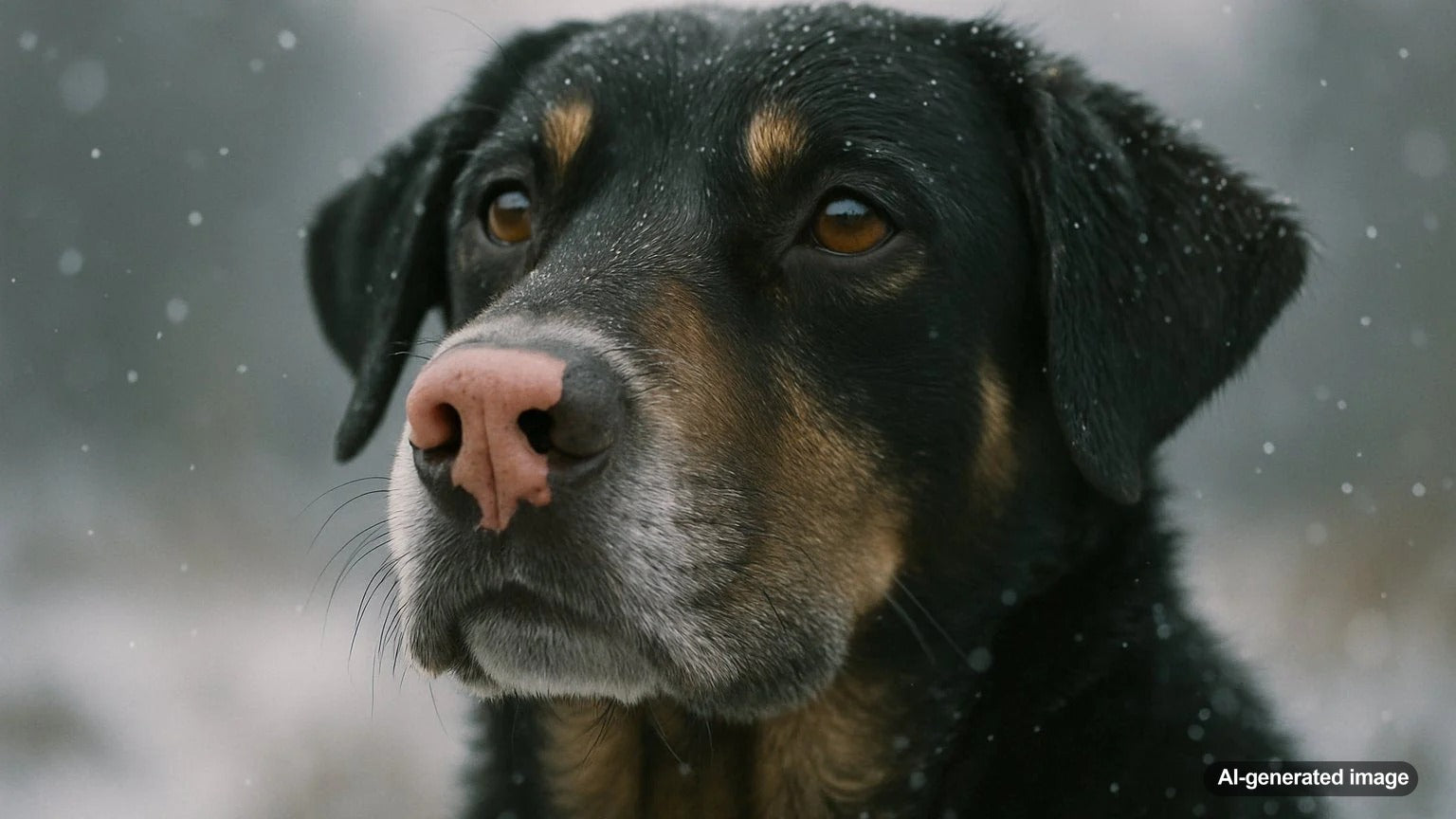
Have you noticed your furry friend’s snout taking on a new shade — maybe a stripe of pink, a lighter patch of brown, or what once was a jet-black nose now fading into soft dusk tones? It can feel weird, even alarming, when the unmistakable feature of your dog’s face seems to be changing on you.
Let’s unpack this together so you can relax — and help your pup feel comfortable, too.
What is “snow nose” (and how is it different from “Dudley nose”?)
“Snow nose” (also called “winter nose” or medically, hypopigmentation of the nasal planum) refers to when a dog’s normally dark-colored nose lightens to shades like pink or light brown — often seasonally. In contrast, a “Dudley nose” is a term used when a dog whose breed defaults to dark-pigmented nose leather instead has a lighter-colored nose — often permanently. Both are essentially pigment-loss phenomena, but snow nose tends to be temporary and seasonal, while Dudley nose often reflects a lifelong pattern.
Why is my dog’s nose changing color?
There are a few likely reasons your pup’s nose is shifting in tone — some benign, some worth watching. Here’s what we know:
1. Seasonal pigment changes. With snow nose, shorter daylight hours and cooler temps seem to contribute to reduced melanin production in the nose. That’s why it’s most often seen in fall/winter.
2. Genetics and breed predisposition. Some dogs are more likely to show these changes — breeds like Siberian Husky, Golden Retriever, Labrador Retriever and Bernese Mountain Dog often show snow nose. The Dudley nose variant may link to certain pigment genes — for example mutations in the TYRP1 gene can interfere with pigment production.
3. Age and pigmentation enzyme activity. As dogs age, the enzyme systems that produce pigment (like tyrosinase) can change, resulting in lighter nose leather over time.
4. Plastic bowls or materials. Some research and anecdotal reports suggest that dogs who habitually eat or drink from plastic bowls may show nose lightening due to minor chronic irritation.
5. Underlying health concerns. While most color changes are harmless, if there are additional signs like sores, crusting, bleeding, itching or a smooth shiny nose, these may point to deeper issues like autoimmune skin disease, cancer or infections.
When to relax — and when to get concerned
If your dog’s nose simply changed in color, but everything else is fine — the texture, wetness, cobbled surface and your pup’s behaviour are normal — then you likely have a case of snow nose or Dudley nose, and nothing to worry about. In fact, most dogs with snow nose are completely healthy and the change is only cosmetic.
On the other hand, if you notice the following signs, it’s time to consult a veterinarian:
- the nose surface has become smooth and shiny instead of its usual cobbled leather look
- there are cracks, bleeding, scabs or crusting
- your dog is pawing at or rubbing the nose constantly
- there’s discharge, sneezing or other nasal symptoms.
These signs could indicate conditions like Discoid Lupus Erythematosus (DLE), which can cause pigment loss plus sores and must be treated by a vet.
How to help your dog’s nose stay happy (even with pigment changes)
Even if the pigment shift is harmless, there are good care habits that make life easier for your pup and give you peace of mind:
?? Sun-protection matters. A lighter nose means less pigment to shield against UV rays, so when your dog’s nose is pink or pale, consider a dog-safe sunscreen or shaded walks.
??? Eat from better bowls. If you suspect plastic bowls may be contributing, swap to stainless-steel or ceramic to reduce potential irritation.
?? Maintain good nose moisture. A dry, cracked nose can become more than cosmetic. Use a dog-approved balm for the nose if you see rough patches, especially in winter or after outdoor adventuring.
?? Monitor the color with the seasons. With true snow nose, pigment usually returns as days lengthen and temperatures rise. If the nose stays pale year-round or continues fading, touch base with your vet so they can rule out other causes.
How you and your pup can enjoy more nose-safety with gear that supports enrichment
While nose color changes themselves don’t usually affect your dog’s sniffer or play habits, you can turn this moment into an opportunity to gear up for happier, more enriched outdoor time — and keep that nose in top form while you’re at it! Think active play with durable gear for unpredictable outdoor conditions, and calm-down enrichment for low-sun, indoor days.
For example, when you and your pup head out into the yard or park and the nose is showing signs of lightening, a product like the Flyball gives you a robust fetch tool that also doubles as a treat-puzzle — helping your dog engage deeply and keep busy. On chillier days or after a sun-exposed outing, the Walkabout slow-feeder puzzle ball gently encourages movement indoors and reduces direct sun exposure while still giving your dog a workout.
And when you’re in quiet mode, maybe scratching that curious nose and watching your pup recharge, reward them with tasty training bites like Woof Puzzle Treats — air-dried chicken training treats sized to fit go toy crates, helping you shift from outdoor play to calming enrichment without letting the nose go neglected.
Remember: a changing nose color doesn’t mean the fun stops. It just means you become a little more attentive — and that’s a win for you both.
The bottom line
Your dog’s nose might just be going through a pigment mood-shift — something common, mostly harmless, and often seasonal. If it’s just the color changing, and your pup is acting like their usual self, you’re likely witnessing the benign phenomena of snow nose or a Dudley nose. Keep the sun protection in mind, monitor texture and behavior, and stay connected to your veterinarian if anything seems off.
When in doubt, treat your dog’s nose the way you treat their paw pads after a hike: check-in, moisturize, shield from harsher conditions, and ring in some playful enrichment with gear that supports happy health. After all, every nose — in every shade — tells a part of your pup’s story. ??


