






































































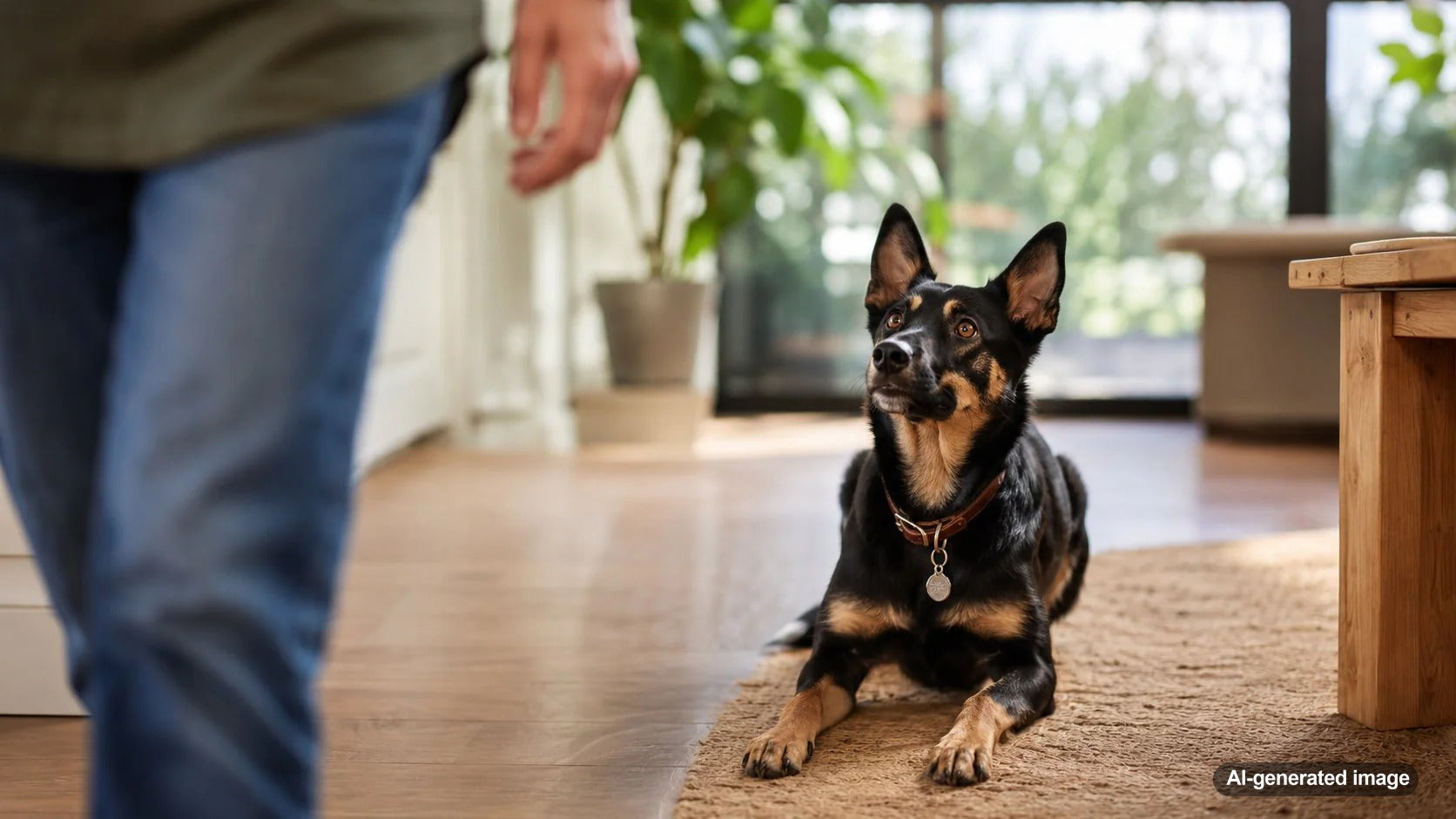
If your Border Collie, Australian Shepherd, Corgi, Sheltie, Cattle Dog, or other herding breed seems to track you from room to room like you are the most fascinating creature on earth, you are not imagining it. Herding breeds were developed to notice movement, predict patterns, and stay connected to the people guiding the work. So when your dog watches every step, head tilt, cabinet opening, or sneaker grab, it is often their brilliant working brain saying, "Something is happening, and I am ready."
That watchful stare can feel adorable, intense, flattering, or a little much, depending on whether you are cooking dinner, trying to use the bathroom alone, or wondering why your dog knows you are leaving before you touch your keys. The behavior is usually normal for these breeds, but it is also a clue. Your dog may need more mental work, clearer routines, calmer ways to settle, or a healthier outlet for all that focus.
Why herding breeds are so tuned in
Many dog breeds enjoy being near their people, but herding dogs often take togetherness to a professional level. These dogs were selected for jobs that required constant attention: watching livestock, noticing tiny shifts in direction, responding to a handler from a distance, and making fast decisions around movement.
That is why your dog may notice the smallest details. You reach for your walking shoes, and they are at the door. You stand up during a movie, and they pop awake. You open the fridge, and they appear behind you with perfect timing. To a herding dog, everyday life is full of signals.
Some breeds use more "eye," meaning a strong, fixed gaze that helps influence livestock. Border Collies are especially known for this. Other herding breeds may be more likely to use body pressure, barking, circling, or heel-nipping instincts. The exact style varies, but the theme is the same: movement matters.
What your dog may be trying to figure out
When a herding breed watches you, they may not be asking one simple question. They may be running a whole mental checklist.
They might be wondering whether you are about to start a routine, offer food, go outside, invite play, leave the house, or move in a way that feels exciting. Herding dogs are often excellent pattern learners, so they may connect details you barely notice. The jacket that means errands. The laptop closing that means a walk. The baby gate opening that means guests are coming in.
This can look like loyalty, and often it is. It can also be anticipation, boredom, habit, anxiety, or a lack of an assigned job. A dog who simply follows you with a loose body and can relax when asked is usually different from a dog who cannot settle, pants, whines, blocks doorways, chases feet, or becomes frantic when separated.
When watching becomes herding
The line between "my dog is attentive" and "my dog is herding the household" can be surprisingly thin. Herding behavior in a home may show up as stalking the cat, circling children, barking when people run, nipping at ankles, body-blocking guests, chasing bikes through the fence, or trying to control where everyone stands.
Owners sometimes mistake this for protectiveness or disobedience, but many herding dogs are not trying to be bossy in a human way. They are responding to movement with instincts that feel incredibly natural to them. The problem is that human homes are full of movement that dogs should not control.
- They stare, stalk, or freeze before chasing people, pets, cars, scooters, or bikes.
- They nip at heels, sleeves, pant legs, or fast-moving kids.
- They bark at every movement outside the window.
- They become restless or destructive when the day is too quiet.
- They struggle to settle unless they are physically exhausted.
If your dog is chasing cars, nipping hard, showing fear, guarding, panicking when left alone, or suddenly changing behavior, check in with your veterinarian or a qualified positive-reinforcement trainer. Big behavior changes can have medical, emotional, or training-related causes.
Give that busy brain a job before it invents one
A herding breed does not always need more miles. Many need more thinking. Long walks are wonderful, but if your dog comes home and immediately stares at you like the shift is not over, they may need enrichment that asks them to lick, sniff, solve, wait, chew, or work calmly for rewards.
Try building small jobs into the day. Ask for a sit before opening the door. Scatter a few pieces of kibble in the grass for sniffing. Practice "place" while you cook. Reward eye contact, then reward looking away and relaxing. Teach a hand target so your dog has a simple cue to follow instead of guessing what movement means.
For dogs who need a satisfying distraction during busy household moments, The Pupsicle can be a helpful part of an enrichment routine. It gives dogs a longer-lasting licking and treat-play activity, which may help redirect that laser focus into something calmer and more appropriate while you answer emails, prep dinner, or welcome guests.
Use calm routines, not just tiring routines
It is tempting to solve herding-dog intensity with more fetch, more running, and more excitement. Physical exercise matters, but high-speed play can sometimes leave an already motion-sensitive dog even more wired. Many herding breeds benefit from a mix of movement and decompression.
A simple calm routine could look like this: walk, sniff time, water break, five minutes of training, then a licking or chewing activity in the same cozy spot each day. Repetition helps your dog understand that the job is finished and rest is next.
A lick mat can be especially useful for dogs who watch every move because licking gives them a focused, repetitive task. Woof's FlipMat works as both a lick mat and slow feeder, so it can support calmer enrichment, slower eating, and a predictable settling ritual after activity.
Training that helps herding breeds relax
Start with skills that create clarity. "Place," "leave it," "wait," "touch," "find it," and a reliable recall can all help redirect intense focus. Keep sessions short and upbeat. Herding dogs often learn quickly, but they can also become frustrated if the work is repetitive or confusing.
Practice around easy movement first. Ask a family member to walk slowly while your dog earns rewards for staying on a mat. Later, practice with faster movement at a distance. Do not begin with kids sprinting through the living room or bikes flying past the fence. Set your dog up to win before making the challenge harder.
Training treats should be small enough that your dog can eat and refocus quickly. Bite-sized rewards like Love Nuggets can fit naturally into short practice sessions where you are rewarding calm attention, recall, or settling around everyday motion.
What owners often misunderstand
The biggest misunderstanding is thinking the stare means your dog is being "creepy," stubborn, or needy on purpose. In many herding breeds, watching is simply part of how they process the world. Another common mistake is waiting until the dog is already chasing, barking, or nipping before stepping in.
It is easier to guide the first flicker of focus than to interrupt the full herding sequence. If your dog locks onto a jogger, cat, child, or passing car, create distance, use a cheerful cue, and reward disengagement early. You are not trying to punish the instinct. You are teaching your dog what to do with it.
Dog Parent FAQs
Why does my herding dog stare at me so much?
Your dog may be watching for movement, cues, routines, or the next activity. Herding breeds were developed to notice small changes and stay connected to their handler, so staring can be part instinct, part habit, and part communication.
Is it bad if my herding dog follows me everywhere?
Not always. If your dog is relaxed and can settle when needed, following may simply be normal attachment and breed tendency. If they panic when separated, cannot rest, whine, bark, or seem distressed, ask your veterinarian or a qualified trainer for guidance.
How do I stop my dog from herding kids or guests?
Manage the environment first, especially around fast movement. Use gates, leashes, or a safe resting spot, then train calm behaviors around low-level movement before practicing around bigger distractions. Never allow nipping to become a game.
Do herding breeds need more exercise than other dogs?
Many need plenty of exercise, but mental stimulation and calm routines are just as important. Puzzle play, sniffing, training, licking, chewing, and structured rest can help meet needs without turning every day into a marathon.
The bottom line on your watchful little coworker
Herding breeds watch your every move because their brains were built for attention, teamwork, and movement. That intense focus is one of the things people love most about them, but it works best when it has direction. With clear training, smart enrichment, safe outlets, and repeatable calm routines, your dog can go from household supervisor to happy, balanced companion.


