






































































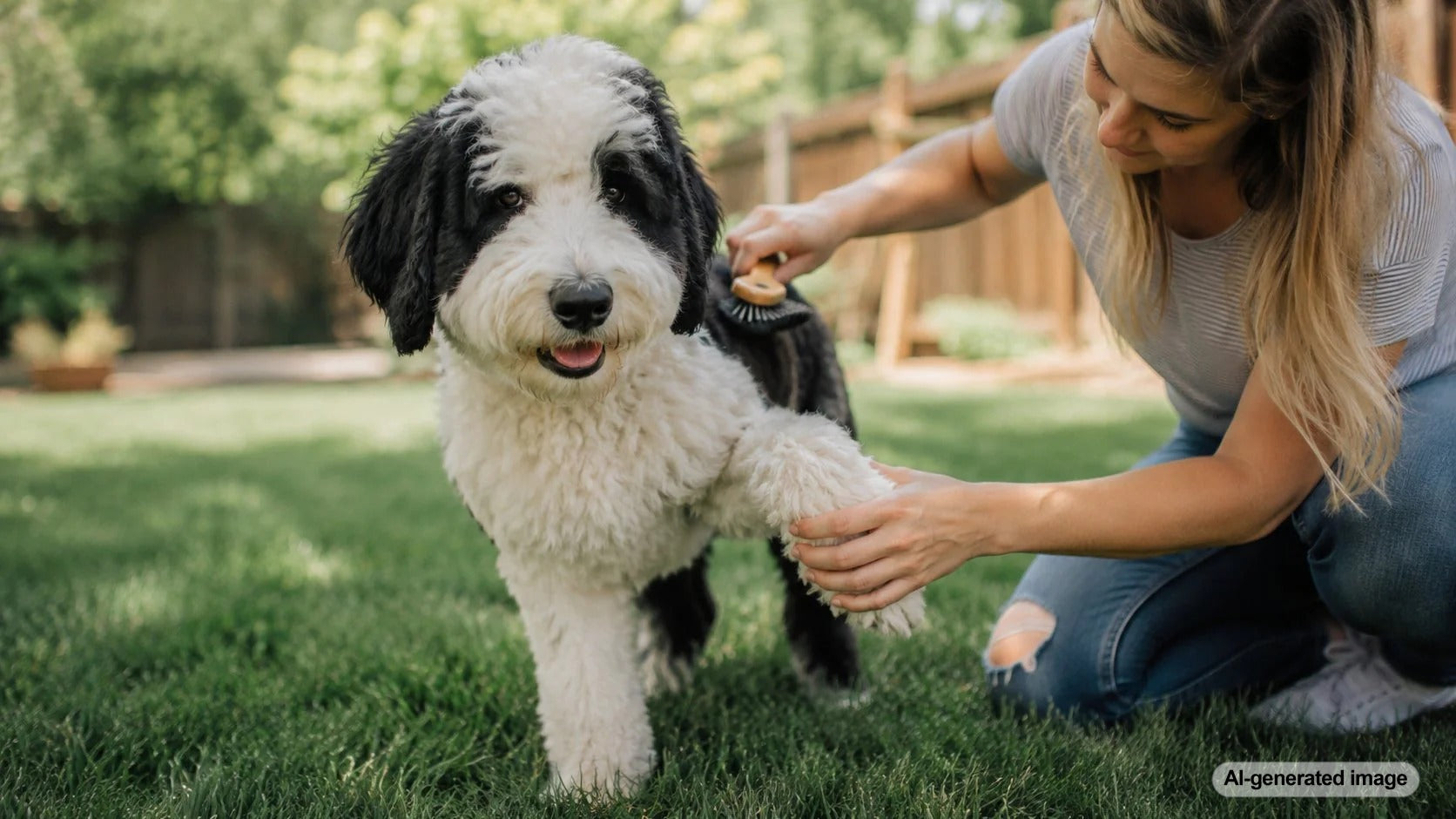
Doodles are famous for their soft curls, fluffy teddy-bear faces, and magical ability to collect every leaf, burr, crumb, and mystery sidewalk treasure in their coat. But here is the part many new Doodle parents learn the hard way: grooming is not just something you do when the coat gets long. It is a skill your dog needs to practice long before the first big haircut, because brushing, bathing, drying, paw handling, ear cleaning, face trimming, and nail care can feel strange or stressful to a dog who has never been gently introduced to them.
That is especially true for Goldendoodles, Labradoodles, Bernedoodles, Aussiedoodles, and other curly or wavy-coated mixes. Their coats can mat close to the skin, especially behind the ears, under the collar, around the legs, in the armpits, and near the tail. By the time a Doodle truly needs a full groom, the process may already involve tangles, tugging, noise, restraint, and a long appointment. Practice helps your dog learn that grooming is normal, predictable, and worth staying calm for.
Why Doodle Coats Make Early Practice So Important
Doodle coats vary a lot. One puppy may have loose waves, another may have dense curls, and another may have a mixed coat with a fluffy body, softer face, and tighter hair around the ears or legs. That variety is part of the charm, but it also means there is no one-size-fits-all grooming schedule.
Curly coats often need more frequent brushing because loose hair can get trapped instead of falling away. Wavy coats may look lower maintenance, but they can still tangle in friction areas where the harness, collar, legs, or tail rub during normal movement. Even a puppy coat that seems easy can change as the adult coat starts coming in, which is when many Doodle parents suddenly notice mats appearing faster than expected.
Grooming practice gives you a head start before the coat becomes harder to manage. A puppy who has already learned to accept a brush near the chest, a comb behind the ears, and gentle paw handling is usually better prepared for real grooming than a dog who meets all of those sensations for the first time during a full appointment.
Grooming Is a Behavior Skill, Not Just a Coat Chore
Many owners think grooming problems are about the brush. Sometimes they are really about the dog feeling surprised, trapped, overstimulated, or unsure what is being asked. A Doodle who mouths the brush, spins away, flops over, paws at your hand, or tries to leave may not be dramatic. They may simply need smaller steps.
Think of grooming practice like teaching sit, stay, or leash walking. You would not expect a puppy to walk politely through a busy park on day one. In the same way, it is a lot to expect a young Doodle to stand still while a stranger handles their face, feet, ears, tail, belly, and coat with tools that tug, buzz, blow air, or make noise.
Start by rewarding calm moments, not finished grooms. Touch one paw, then reward. Lift an ear, then reward. Show the brush, touch the coat once, then reward. Over time, the dog learns that grooming signals good things, not a battle.
The Best Time to Practice Is When Your Dog Does Not Actually Need It Yet
The easiest grooming session is the one where you are not racing against mats. If your Doodle is already tangled, both of you may feel pressure. You may brush longer than your dog can handle, and your dog may learn that grooming means discomfort. Early practice keeps the emotional stakes low.
Try tiny sessions when your dog is relaxed but not exhausted. After a walk, after dinner, or during a calm evening routine can work well for many dogs. Keep the session short enough that your dog can succeed. For some puppies, that may be 30 seconds. For others, it may be three minutes.
A Simple Grooming Practice Routine for Doodles
You do not need to turn your living room into a grooming salon. A few simple practice habits can make a big difference when repeated consistently.
Gently touch one area your groomer will handle, such as paws, ears, chest, chin, tail, or belly. Reward your dog for staying relaxed.
Use one or two light brush strokes, then pause. Focus on calm cooperation, especially in tangle-prone spots like behind the ears and under the collar.
Ask for one second of stillness on a mat, towel, or low-slip surface. Gradually build duration only when your dog is comfortable.
Let your dog hear clippers, a dryer, running bath water, or nail tools from a distance while pairing the sound with treats or calm enrichment.
For dogs who get wiggly or worried, licking can be a useful part of the routine because repetitive licking may encourage settling. A product like FlipMat can be helpful during low-stress handling practice because it gives your dog something soothing to focus on while you touch paws, brush a small section, or practice calm body handling. Use it as a support tool, not a way to force your dog through something they are scared of.
What Doodle Parents Often Misunderstand About Mats
Mats are not just a cosmetic problem. Tight mats can pull on the skin, hide irritation, trap moisture, and make grooming uncomfortable. They often form in places owners do not notice at first, like under the ears, between the back legs, around the harness area, and near the base of the tail.
Another common misunderstanding is that brushing the top layer is enough. A Doodle can look fluffy on the outside while tangles are forming closer to the skin. That is why many groomers recommend using a comb after brushing to check whether the coat is truly tangle-free. If the comb catches, slow down and work gently. If a mat is tight, painful, close to the skin, or widespread, ask a professional groomer for help rather than cutting into it yourself.
How to Make the First Professional Groom Less Overwhelming
A first full groom can involve a lot: being on a table, hearing dryers, meeting new people, having the face handled, feeling clippers, getting bathed, and standing for longer than usual. Practice at home cannot recreate every part of the salon, but it can make many pieces feel familiar.
Before the first appointment, practice short car rides if your dog gets travel-nervous. Touch the paws and ears daily for just a few seconds. Let your dog stand on a towel or mat while you reward calm behavior. Introduce bath sounds without immediately bathing. Brush common friction spots regularly, even when the coat looks fine.
You can also ask your groomer whether they offer a puppy intro, mini appointment, face-feet-sanitary trim, bath-only visit, or meet-and-sniff session. Not every salon offers the same options, but shorter, positive early visits may help some puppies build confidence before they need a longer groom.
Using Enrichment to Support Grooming Practice
Grooming practice works best when your dog feels safe, not cornered. Enrichment can help create a calmer setup by giving your dog a predictable job. For example, you might use a lick mat while touching paws, a small training treat after each brush stroke, or a chew after a short successful session.
For longer-lasting distraction during a pre-groom routine, The Pupsicle can be part of a calm enrichment plan before brushing, after bath time, or while your dog settles after an appointment. It is not a replacement for training or professional grooming, but it can help make the whole routine feel less like a big event and more like a normal part of the day.
Keep supervision in mind with all toys, treats, chews, and grooming tools. Choose the right size for your dog, follow product directions, and remove anything that becomes damaged or unsafe.
Dog Parent FAQs
When should I start grooming practice with my Doodle?
Start as early as possible with gentle, short sessions. Even young puppies can practice paw touches, ear handling, calm brushing, and standing still for a few seconds.
How often should I brush my Doodle?
It depends on coat type, length, activity level, and how easily your dog mats. Many curly or wavy Doodles need brushing several times a week, and some need daily attention in high-friction areas.
What if my Doodle hates the brush?
Go smaller. Show the brush, reward, and put it away. Then try one gentle touch with the back of the brush, reward, and stop. If your dog is fearful, reactive, or biting, ask a qualified trainer, groomer, or veterinarian for guidance.
Can I just wait until my Doodle needs a haircut?
Waiting can make grooming harder because your dog may face the longest, strangest, most uncomfortable version of grooming first. Practice helps make the real appointment feel more familiar.
Should I cut mats out at home?
Be very careful. Mats can sit close to the skin, and cutting them out can accidentally injure your dog. For tight, painful, or widespread mats, contact a professional groomer or veterinarian.
The Bottom Line on Doodle Grooming Practice
Doodles need grooming practice before they need grooming because their coats grow faster than their confidence if you leave everything until the first big appointment. The brush, comb, bath, dryer, nail tools, and face handling all become easier when your dog has met them in small, positive ways first.
Start tiny, reward often, watch your dog's comfort level, and build a routine you can repeat. Your future self, your groomer, and your fluffy Doodle will all be grateful for the practice.


