






































































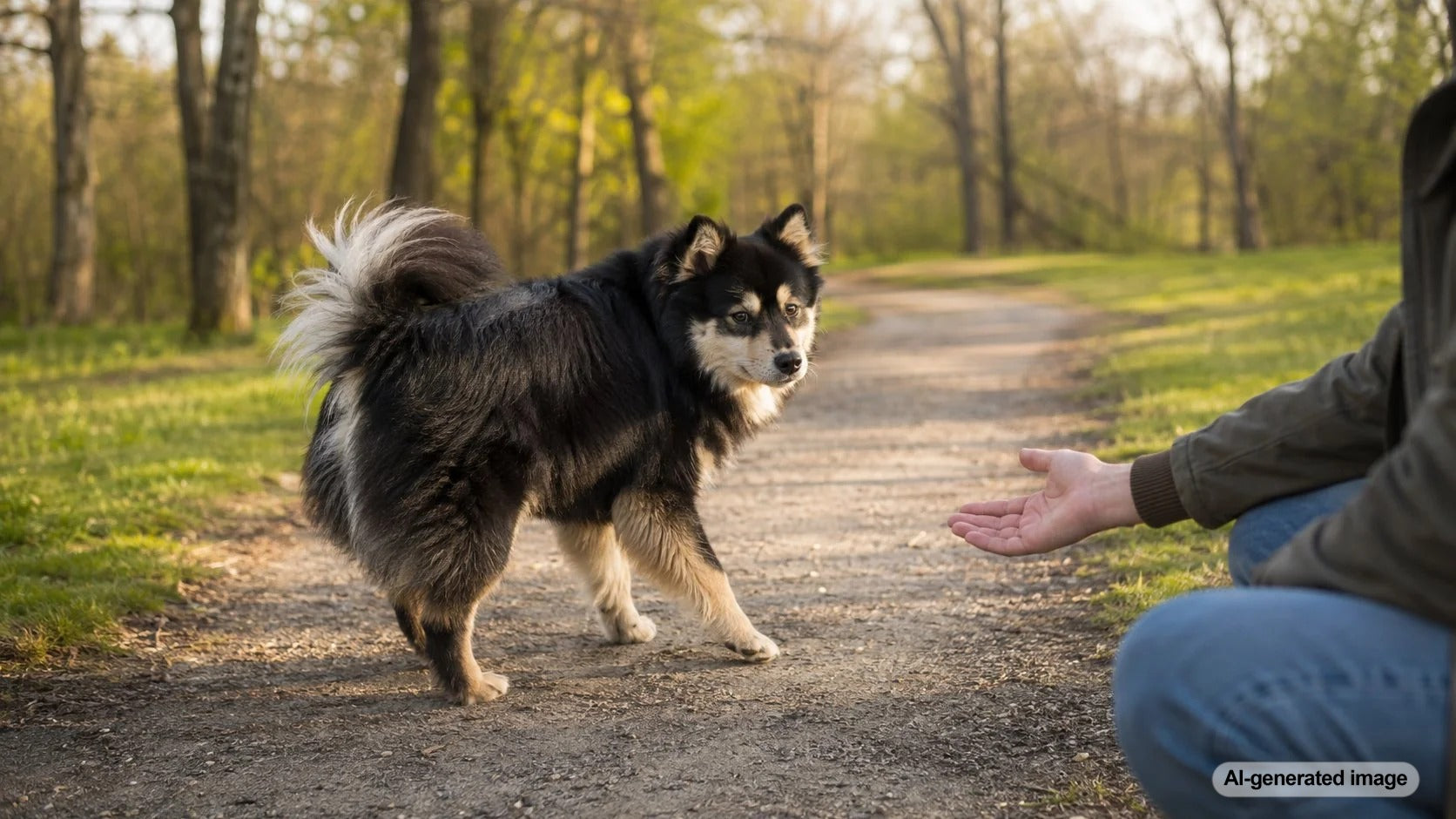
Your dog leans into your hand, enjoys a few scratches, and then suddenly gets up and walks across the room. Before you can wonder whether you did something wrong, your pup circles back and presses against your leg again. Dogs sometimes walk away from affection and come right back because they are regulating the interaction, responding to a distraction, changing positions, or simply asking for a brief pause.
This back-and-forth behavior usually does not mean your dog loves you any less. In many cases, it shows that your dog feels safe enough to make choices, take space, and return when ready.
Affection Is Not an All-or-Nothing Experience for Dogs
People often interpret affection as a continuous activity. If a dog approaches for petting, we assume the dog wants the interaction to continue until we decide it is over. Dogs tend to communicate in smaller moments. They may want three chest scratches, a quick sniff around the room, and then another minute beside you.
Think of the behavior as conversational rather than contradictory. Walking away can mean, "Give me a second," while returning can mean, "I still want to be near you." Respecting both parts of that exchange can make physical affection feel safer and more predictable.
Common Reasons Dogs Walk Away and Return
They are taking a sensory break
Petting creates physical stimulation. Repeated rubbing, enthusiastic pats, hugging, or touching sensitive areas can become overwhelming even when a dog initially enjoys it. Puppies and excitable dogs may need frequent pauses because they are still learning how to regulate arousal.
They heard or smelled something
A dog's attention can shift toward a sound in the hallway, food in another room, movement outside, or an interesting scent that people cannot detect. After checking the environment, the dog may return to continue the social interaction.
They are adjusting for comfort
Your dog may be warm, cramped, or uncomfortable in the original position. Large dogs sometimes move simply because lying against a person puts pressure on a hip or shoulder. Senior dogs may reposition more frequently because stiff joints make one posture uncomfortable after a short time.
They want proximity without petting
Some dogs show love by staying nearby rather than being continuously handled. A dog may return and lie at your feet, rest with their back against you, or sit within arm's reach. That is still social connection. The dog may be asking for companionship instead of another round of head pats.
They have learned that returning restarts attention
If every return earns warm praise, scratches, or a treat, the pattern can become rewarding. This is not manipulation. It is ordinary learning: the dog discovered that approaching you produces a pleasant response.
Read the Whole Dog, Not Just the Exit
The dog's body language before leaving, while away, and upon returning offers more information than the movement alone. A relaxed dog may have soft eyes, a loose mouth, naturally positioned ears, and fluid movements. When that dog returns with a wiggly body or calmly settles nearby, the break was probably routine.
- Turning the head away repeatedly
- Lip licking when no food is present
- Yawning during active petting
- Flattening the ears or tucking the tail
- Becoming suddenly still or stiff
- Showing the whites of the eyes
- Leaving repeatedly when a certain area is touched
A wagging tail does not automatically mean a dog is comfortable. Look at the speed and looseness of the entire body. If your dog returns but remains stiff, crouched, or watchful, pause the touching and allow more room.
Try the Three-Second Petting Test
Pet your dog gently for about three seconds, then stop and rest your hands. Watch what happens next. If your dog leans closer, paws softly at you, nudges your hand, or turns a favored body part toward you, you can offer another short round.
If the dog looks away, shakes off, moves elsewhere, or simply remains still without asking for more, let the interaction end. This quick pause gives your dog a clear opportunity to choose. Many dogs prefer strokes along the chest, shoulders, or side of the body over hands reaching directly above the head.
Children should learn this pause-and-check approach too, with close adult supervision. Dogs need undisturbed places for sleeping, chewing, and eating, even when they are normally affectionate.
Offer Connection That Does Not Require Constant Touch
Affection can include a relaxed walk, gentle training, sniffing games, quiet companionship, or enrichment beside you. A dog who moves away from petting may happily settle nearby with The Pupsicle, an interactive treat toy designed to keep dogs engaged through licking. This creates a shared calm moment without requiring physical contact.
You can also reward voluntary check-ins during daily routines. A small Love Nugget can reinforce calm approaches during training, but avoid offering food every time your dog steps away and returns unless you intentionally want to teach that pattern. Attention, a soft greeting, or permission to settle beside you may be enough.
When a New Change Deserves Attention
A dog who has always taken short affection breaks is usually expressing a personal preference. A sudden change is different. Contact your veterinarian if your normally cuddly dog begins avoiding touch, flinches, cries, growls when handled, struggles to rise, limps, hides, loses appetite, or reacts strongly when one body area is touched. Pain, skin irritation, dental discomfort, illness, or another physical problem may change how a dog responds to affection.
If the behavior includes fear, snapping, or escalating defensiveness, stop forcing contact and seek help from a qualified reward-based trainer, veterinary behaviorist, or other credentialed behavior professional.
Dog Parent FAQs
Does walking away mean my dog is rejecting me?
Usually not. Your dog may simply need a pause, want a new position, or prefer being near you without continuous petting.
Why does my dog return as soon as I stop petting?
Stopping gives your dog control over the interaction. Returning, leaning in, or nudging your hand can be a request for another brief round of affection.
Should I follow my dog when they walk away?
Let your dog choose whether to return. Following and restarting contact can remove the space your dog was trying to create.
Why does my dog leave when I hug them?
Many dogs find restraint or close face-to-face contact uncomfortable. Try gentle chest or shoulder strokes and allow your dog to move freely.
Let Your Dog Set the Rhythm
The most meaningful affection is not measured by how long your dog stays under your hand. It comes from noticing what your dog communicates and responding with respect. When your dog walks away and comes right back, welcome the return, soften the interaction, and let your pup help decide what connection looks like.


