






































































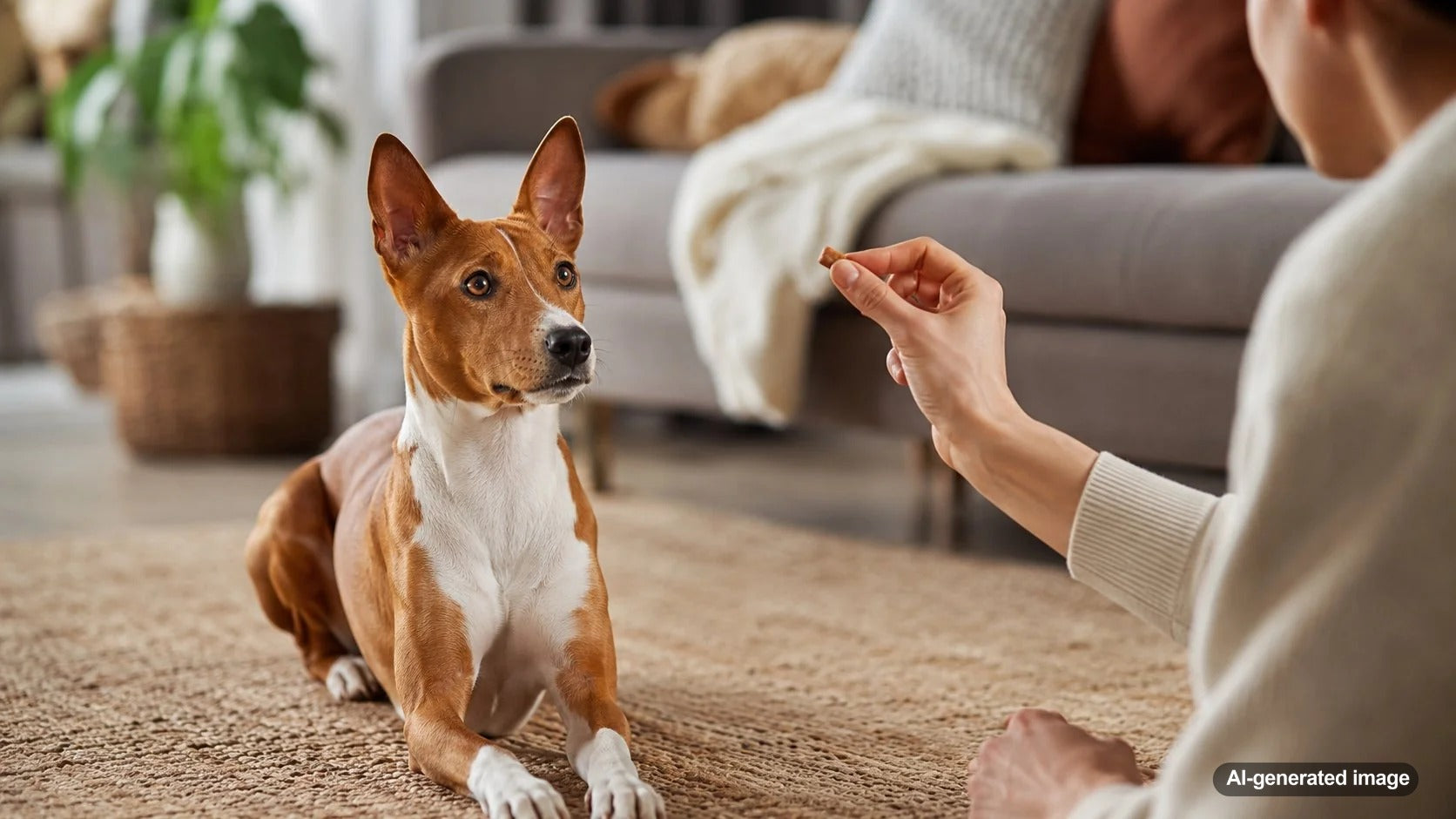
You ask for a sit, and your dog stares at the treat pouch. You try a simple training exercise, and suddenly every interesting smell in the room seems more important than you. Food can play a surprisingly useful role in focus, but the answer is not simply to keep your dog hungry or hand out snacks whenever attention wanders.
For some dogs, a small amount of food can take the edge off food fixation and make it easier to settle into an activity. For others, training shortly before a regular meal makes food rewards more motivating. The useful question is not whether dogs should always eat before focusing, but what level of hunger helps your dog stay comfortable, motivated, and able to think.
Hunger and Motivation Are Not Exactly the Same Thing
A little appetite can make food an excellent training reward. In fact, many dogs are particularly interested in food rewards before their normal mealtime. But there is a difference between being pleasantly ready for a treat and being so food-focused that the dog can barely concentrate on anything except getting the reward.
You may see that difference in real life. A comfortably motivated dog notices the treat, responds to a cue, eats the reward, and is ready for the next repetition. An overly food-fixated dog may paw at your hand, jump toward the treat pouch, stare continuously at the food, grab treats roughly, whine, or rush through behaviors without really listening.
If that sounds familiar, experimenting with a small portion of the dog's normal meal before training may be worthwhile.
A Snack Can Sometimes Function as a Reset
Imagine trying to teach something new five minutes before your dog's eagerly anticipated dinner. Some dogs become fantastic students. Others seem to have one thought: FOOD.
For that second group, giving a small portion of the planned meal first may reduce the frantic edge without removing all interest in rewards. You might offer part of breakfast, take a short break, and then use another portion of the meal for training.
This does not require adding an entirely new snack to the day. Kibble from your dog's regular food allowance can often be reserved for training, while higher-value treats can be saved for difficult behaviors or distracting environments.
Sometimes the Opposite Works Better
This is where dog parents need to experiment rather than follow a universal rule. Plenty of dogs train beautifully before meals because their appetite makes food rewarding. A dog who just finished a full dinner may decide your piece of kibble is thoroughly unimpressive.
Try observing your dog at different points in the routine. Is focus better shortly before breakfast? After a small portion of breakfast? Midday? Before dinner?
You are looking for the sweet spot where your dog wants the reward but can still think about the task required to earn it.
Use Small, Fast Rewards for Training
Training rewards do not need to resemble a full snack every time. Small pieces work well because dogs can eat them quickly and return their attention to the activity.
This is especially useful when practicing several repetitions. Ten enormous treats can turn a short lesson into a significant amount of extra food, while tiny rewards allow you to reinforce behavior without repeatedly interrupting the flow of training.
Woof's Love Nuggets are bite-sized training treats that can fit naturally into reward-based sessions. Whatever reward you choose, consider its size, how quickly your dog can eat it, and how much food your dog receives throughout the rest of the day.
Try Turning Part of a Meal Into the Activity
Sometimes there does not need to be a separate line between eating and enrichment. Instead of putting the entire meal into a bowl, you can use part of it for training, scent games, or food puzzles.
Ask for a few easy behaviors and reward them with kibble. Scatter part of the meal in an appropriate area for a sniffing game. Or place compatible kibble or treats into an interactive feeder such as the Walkabout, which rolls and wobbles as dogs work to release food.
This approach can turn food into an opportunity for problem-solving while helping you keep track of how much your dog is actually eating.
Watch the Dog in Front of You
The ideal routine can vary significantly. Puppies may do better with shorter, frequent training sessions because they are still developing attention and impulse control. Highly food-motivated dogs may work happily for regular kibble, while picky dogs may need a more appealing reward.
Some dogs are motivated more strongly by play, sniffing, access to the outdoors, praise, or a favorite toy. Food is extremely convenient for training, but it does not have to be your dog's only reward.
Also pay attention to changes. A dog who normally loves food but suddenly refuses treats, loses interest in meals, vomits, has diarrhea, seems painful, or shows another significant change should not simply be labeled distracted or picky. Contact your veterinarian for guidance.
Do Not Confuse Overexcitement With Hunger
A dog who cannot focus is not necessarily hungry. They may be tired, overstimulated, worried, frustrated, excited, or simply facing a task that is too difficult for the environment.
Suppose your puppy responds perfectly to their name in the living room but ignores you at a crowded park. A pre-training snack probably will not make the park less exciting. Moving farther from people and dogs, practicing an easier skill, and rewarding successful attention may be much more productive.
Likewise, if your dog is bouncing around after an exciting play session, a few quiet minutes may be more helpful than additional food.
Build a Simple Food-and-Focus Routine
Start with an easy experiment. On one day, schedule a short training session shortly before a normal meal. On another day, give a small portion of the meal first and train afterward. Keep the location, exercises, and rewards reasonably similar.
Notice whether your dog can respond without fixating on the food, take rewards comfortably, and return attention to you after eating. That information is more useful than assuming every dog learns best at the same hunger level.
Once you find a rhythm that works, consistency can make training easier. Your dog begins to recognize that listening, thinking, and engaging with you lead to rewarding experiences.
The Goal Is Focus, Not Maximum Hunger
Training should feel like a game your dog understands, not a test of how hungry they can become. Appetite can increase the value of food rewards, but more hunger is not automatically better.
Some dogs are sharpest before meals. Others do better after taking the edge off with a little food. Still others need fewer distractions, a tastier reward, an easier task, or simply a break.
Pay attention to your dog's response, keep rewards appropriately sized, and consider using portions of regular meals during training and enrichment. Once you find your dog's individual sweet spot, getting that bright-eyed "What are we doing next?" attention can become much easier.
Dog Parent FAQs
Should I feed my dog before training?
It depends on the dog. Many dogs are motivated by training shortly before a scheduled meal, while some highly food-focused dogs may concentrate better after eating a small portion first.
Can I use my dog's kibble as training treats?
Yes, if your dog finds the kibble rewarding enough. Using part of a regular meal for training can also make it easier to manage overall food intake.
Why does my dog stop listening even when I have treats?
The environment may be too distracting, the task may be too difficult, or the reward may not be valuable enough at that moment. Try an easier exercise in a less distracting setting and build gradually.
Does my dog need a snack every time we train?
No. The goal is to find the routine that helps your individual dog stay motivated and comfortable. A separate snack may not be necessary, especially if you use part of your dog's regular meal for rewards.


