






































































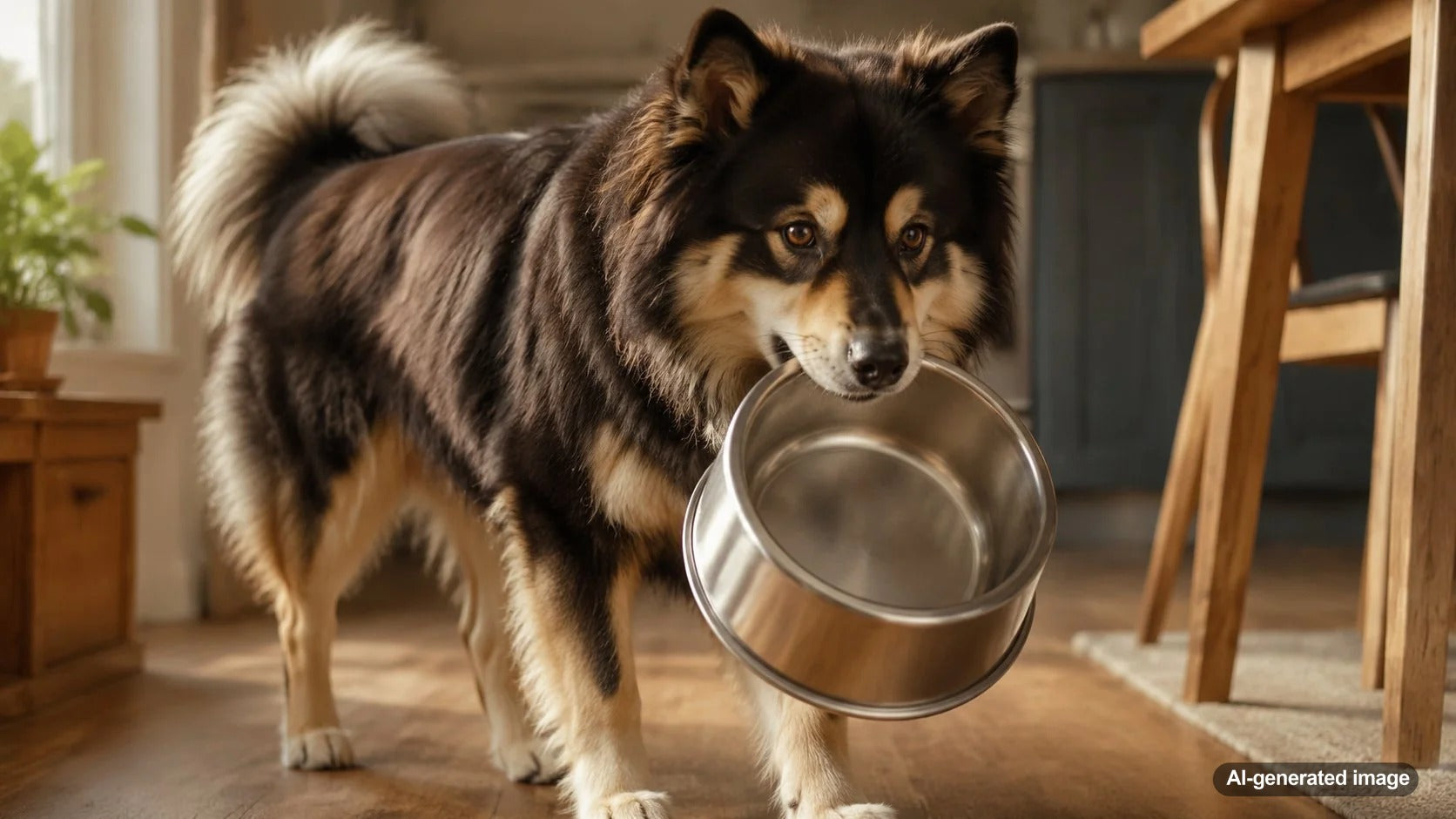
Dinner is finished, the last piece of kibble is gone, and your dog proudly picks up the empty bowl as if it is tonight's most valuable possession. This quirky habit is usually harmless and may mean your dog wants more food, enjoys carrying objects, is seeking attention, or has learned that the bowl starts an entertaining interaction. The timing, body language, and way your dog handles the bowl can help you understand the most likely explanation.
Some dogs carry the bowl to their person. Others relocate it to a bed, drop it noisily on the floor, lick it in another room, or parade around with it before settling down. Those small differences matter because bowl carrying is not one behavior with one universal meaning.
Why Your Dog May Pick Up an Empty Bowl
The bowl still smells rewarding
An empty bowl may not seem interesting to you, but your dog's nose can detect traces of food and fat left on its surface. A dog may carry the bowl somewhere comfortable to continue licking it, much as they might relocate a favorite chew. Bowls with rims or textured bases can trap especially tempting crumbs.
Your dog is asking for more
Bringing you the bowl can function like placing an order for seconds. If you have added extra food after seeing this behavior, your dog may have learned a simple pattern: pick up bowl, approach human, receive something tasty. This does not necessarily mean your dog needs more calories. Check the feeding amount against your dog's food instructions and ask your veterinarian if you are unsure about portions, body condition, or persistent hunger.
Carrying things is fun
Some dogs simply enjoy having an object in their mouth. Retrievers may be especially inclined to carry household items, but dogs of any breed or mix can develop the habit. Puppies also investigate objects with their mouths and may turn a lightweight bowl into an impromptu toy once dinner is over.
The behavior gets a reaction
A metal bowl clattering across the kitchen is difficult to ignore. If carrying it makes people laugh, talk, chase, or offer a treat, the reaction can reinforce the behavior. Even saying "drop it" with excitement may provide the attention your dog hoped to receive.
Your dog wants to change locations
A dog may move a bowl away from foot traffic, another pet, a noisy appliance, or a slippery floor. Pay attention if your dog looks tense, eats faster when another animal approaches, freezes over the bowl, or carries it to an isolated area. These behaviors can reflect discomfort or resource guarding rather than playfulness.
Read the Whole Scene, Not Just the Bowl
A loose body, soft face, normal appetite, and playful trot usually point toward a harmless habit. Context becomes more important when the behavior is new, intense, or accompanied by other changes.
Watch what happens immediately before and after the bowl is lifted. A dog who carries it directly to you and looks toward the food container may be requesting more. A dog who takes it to a rug may prefer a stable, quieter eating surface. A dog who drops it and bows may be inviting play. Repeated licking, chewing, or swallowing pieces of the bowl calls for intervention because damaged material can injure the mouth or become a swallowing hazard.
What to Try If You Want the Bowl Carrying to Stop
Use a stable bowl. Choose an appropriately sized, food-safe bowl with a nonslip base. A heavier bowl may reduce sliding and make casual carrying less rewarding. Inspect it frequently for cracks, sharp edges, or bite damage.
Create a quiet feeding station. Place the bowl on a nonslip mat in a low-traffic area. In multi-dog homes, feed dogs separately so each dog can eat without social pressure. Do not reach for a bowl if your dog stiffens, growls, guards it, or appears worried. Contact a qualified trainer or veterinary behavior professional for guidance.
End meals consistently. When your dog walks away and is clearly finished, calmly collect the bowl and wash it. Avoid turning retrieval into a chase. If your dog already has the bowl, offer a calm cue such as "drop" and trade for an appropriate toy rather than forcibly taking it.
Do not reward repeated requests with extra meals. Measure daily food and treats so you know how much your dog receives. If bowl delivery always produces a refill, the habit is likely to continue.
Give Object-Oriented Dogs a Better Job
If your dog seems ready for another activity after eating, redirect that energy into supervised enrichment. A sniffing game, short training session, or food puzzle can provide a more suitable outlet than flipping and chewing a dinner bowl.
For dogs who benefit from slower, more active meals, the Walkabout turns kibble or appropriately sized treats into a rolling slow-feeder game with an adjustable opening. Introduce any new feeder gradually, supervise the first sessions, and include the food used in your dog's normal daily portion.
If you want a separate post-meal settling routine, The Pupsicle offers interactive licking and treat play. Choose an appropriate size, supervise use, and count fillings or Pops as part of the day's treats rather than an automatic second dinner.
Dog Parent FAQs
Does carrying the bowl mean my dog is still hungry?
Possibly, but not always. Consider portion size, body condition, activity level, treats, and whether the behavior has previously earned extra food. Ask your veterinarian about ongoing hunger or weight changes.
Why does my dog bring the empty bowl directly to me?
Your dog may be requesting more food, showing you an interesting object, or repeating a behavior that gets attention. Your response history often provides the best clue.
Should I let my puppy play with the food bowl?
It is safer to provide a purpose-made puppy toy. Bowls can crack, develop sharp edges, trap a jaw, or break into swallowable pieces when chewed.
When is bowl carrying a behavior concern?
Seek professional help if it involves guarding, growling, frantic repetition, destructive chewing, or swallowing non-food material. Contact your veterinarian when it appears alongside pain, digestive symptoms, appetite changes, or other unusual behavior.
The Bottom Line
Most post-meal bowl carrying is a funny combination of food scent, learned communication, play, and an enjoyment of carrying objects. Observe the full routine, remove unsafe bowls calmly, and give your dog a more appropriate activity when needed. If the habit changes suddenly or arrives with physical or behavioral warning signs, your veterinarian or a qualified behavior professional can help you determine what is going on.


