






































































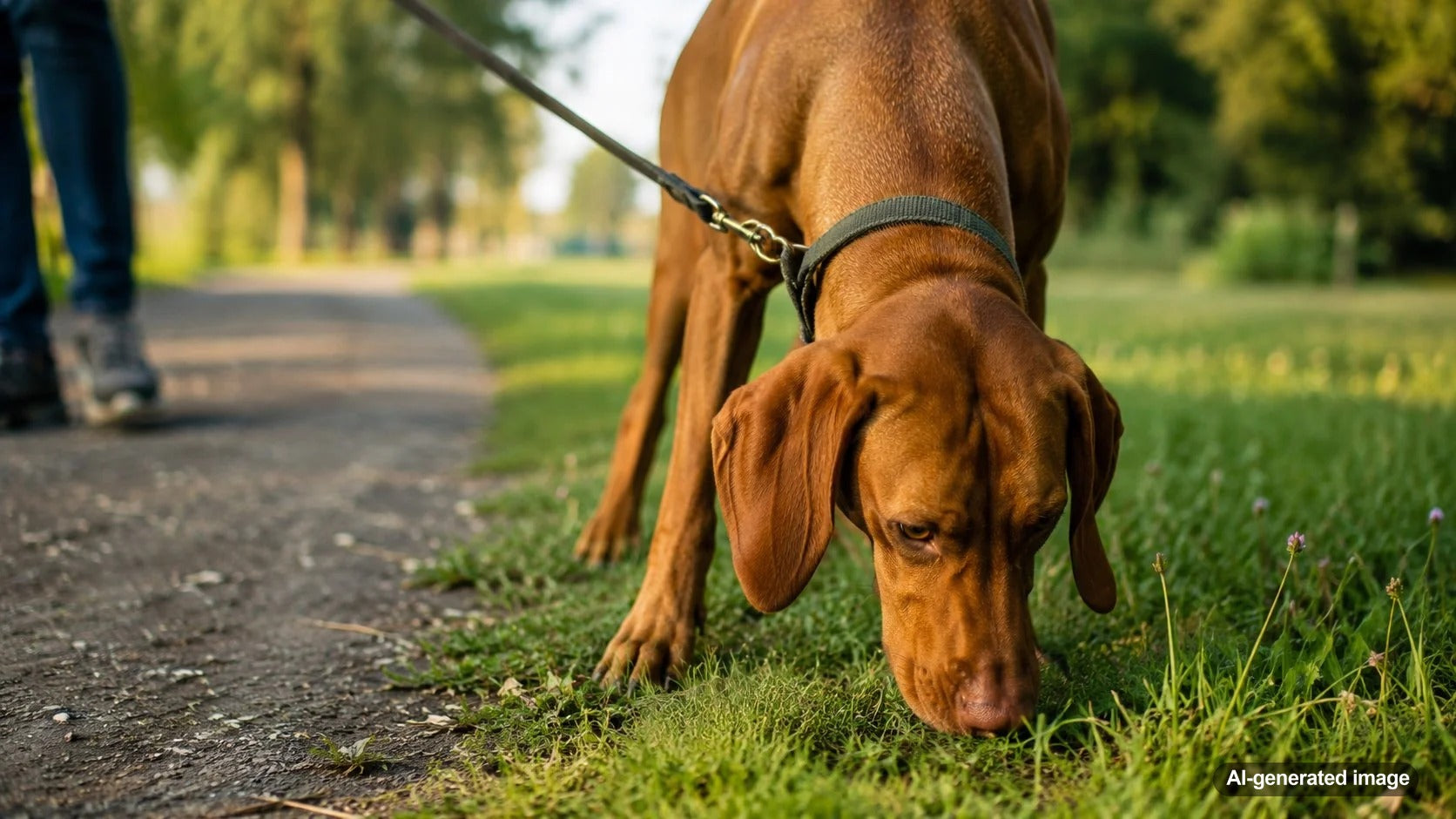
A fast run may leave your dog panting, but it does not always leave them ready for a nap. Some dogs come home from vigorous exercise more alert, excitable, or eager for another round of action. A slower outing filled with interesting smells can engage the brain differently, helping many dogs transition from busy exploration to genuine relaxation.
This does not mean running is bad or that sniffing should replace appropriate physical exercise. Dogs usually benefit from both. The key is understanding that physical exhaustion and mental satisfaction are not the same thing.
Sniffing Is Real Work for a Dog's Brain
To a person, a fire hydrant may look like a brief interruption on the way around the block. To a dog, it can hold layers of information about other animals, recent activity, food, weather, and changes in the neighborhood.
Your dog is not simply detecting one smell. They are separating scents, following their direction, deciding which ones matter, and comparing them with previous experiences. That combination of investigation and decision-making can be mentally demanding even when your dog is moving at a leisurely pace.
This helps explain why a 20-minute sniff-focused walk may produce a calmer dog than a longer outing spent marching quickly past every tree. Distance is only one way to measure a walk. The quality of the sensory experience matters too.
Running Can Tire the Body While Raising Arousal
Running, fetch, and energetic play can be excellent outlets for healthy dogs. However, fast movement often involves excitement, anticipation, chasing, and repeated bursts of action. A dog may finish the activity physically tired while their nervous system is still in go mode.
You might see this when a dog comes inside and immediately races through the house, grabs a toy, mouths at hands, barks for attention, or struggles to lie down. The activity was not necessarily a mistake. The dog may simply need a gradual transition from high-energy movement to a quieter state.
Sniffing can provide that transition. A few minutes of slow exploration near the end of a walk may help your dog shift away from speed and toward thoughtful investigation.
What a Sniff-Focused Walk Looks Like
A sniff walk does not require a special trail or an hour of free time. Choose a safe route, keep the leash comfortably loose when possible, and let your dog pause at appropriate spots. Your dog can choose much of the pace while you continue to manage safety and manners.
- Begin with a few minutes of regular walking so your dog can move their body.
- Choose a calm area with grass, trees, or other safe surfaces to investigate.
- Allow longer sniffing pauses instead of encouraging constant forward motion.
- Use a cheerful cue such as "let's go" when you need to move away from one spot.
- Finish with several slow minutes before returning home.
You do not have to let your dog pull toward every scent or investigate unsafe objects. Sniffing freedom still needs boundaries around traffic, unknown food, animal waste, lawn chemicals, and areas where dogs are not permitted.
How to Extend the Calm Routine at Home
Some dogs benefit from a second low-key activity after coming inside. Offer water, reduce household excitement, and give your dog a comfortable place to decompress. A sniff-and-search game can continue the mental enrichment indoors: scatter a small portion of kibble across a clean rug, hide treats in easy locations, or place food in an interactive toy.
For dogs that enjoy working with food, the Walkabout turns kibble or treats into a rolling foraging game. The adjustable opening lets you tailor the challenge instead of making the activity so difficult that your dog becomes frustrated.
After the search phase, licking may create a natural next step in the wind-down routine. A prepared FlipMat can provide a slower, quieter activity after a walk. Supervise enrichment, use dog-appropriate foods, and count treats or spreads as part of your dog's daily intake.
Match the Activity to the Individual Dog
Puppies may need short sniffing sessions because new environments can become overwhelming. Keep outings positive and avoid forcing a hesitant puppy toward unfamiliar people, dogs, surfaces, or noises.
Senior dogs often appreciate slower scent walks that allow exploration without requiring sustained running. Adjust the route for mobility, temperature, and stamina. Contact your veterinarian if your senior dog develops limping, unusual fatigue, breathing changes, disorientation, or a sudden loss of interest in walks.
High-energy dogs still need appropriate physical activity. Sniffing is not a trick for avoiding exercise. It is one part of a balanced routine that may also include walking, running when medically appropriate, training, play, chewing, rest, and social time.
Reactive or easily overwhelmed dogs may struggle to sniff in crowded environments because they are too busy watching for triggers. A quiet parking area, backyard search game, or low-traffic route may work better. A qualified trainer or veterinary behavior professional can help when fear, reactivity, or an inability to settle is frequent or severe.
Dog Parent FAQs
How long should a sniff walk be?
There is no universal length. Even 10 to 20 minutes of unhurried exploration may be valuable. Adjust the duration for your dog's age, health, fitness, weather tolerance, and interest.
Should I let my dog sniff everything?
No. Allow safe exploration while moving your dog away from trash, animal waste, toxic plants, unknown food, chemicals, and other hazards.
Can sniffing replace physical exercise?
Usually not. Sniffing provides valuable mental enrichment, but most dogs also need suitable physical movement. Your veterinarian can help you choose safe exercise for your dog's health and life stage.
Why is my dog still restless after a long walk?
The walk may have been physically tiring but highly stimulating, or your dog may need help learning a predictable wind-down routine. Persistent restlessness or a major behavior change should be discussed with your veterinarian or a qualified behavior professional.
The Bottom Line
A tired body does not always equal a settled dog. Running can meet important physical needs, while sniffing gives dogs time to gather information, make choices, and practice a deeply natural behavior. By combining movement with slow exploration and a calm finish, you can build walks that leave your dog not just worn out, but more fulfilled and ready to rest.


