






































































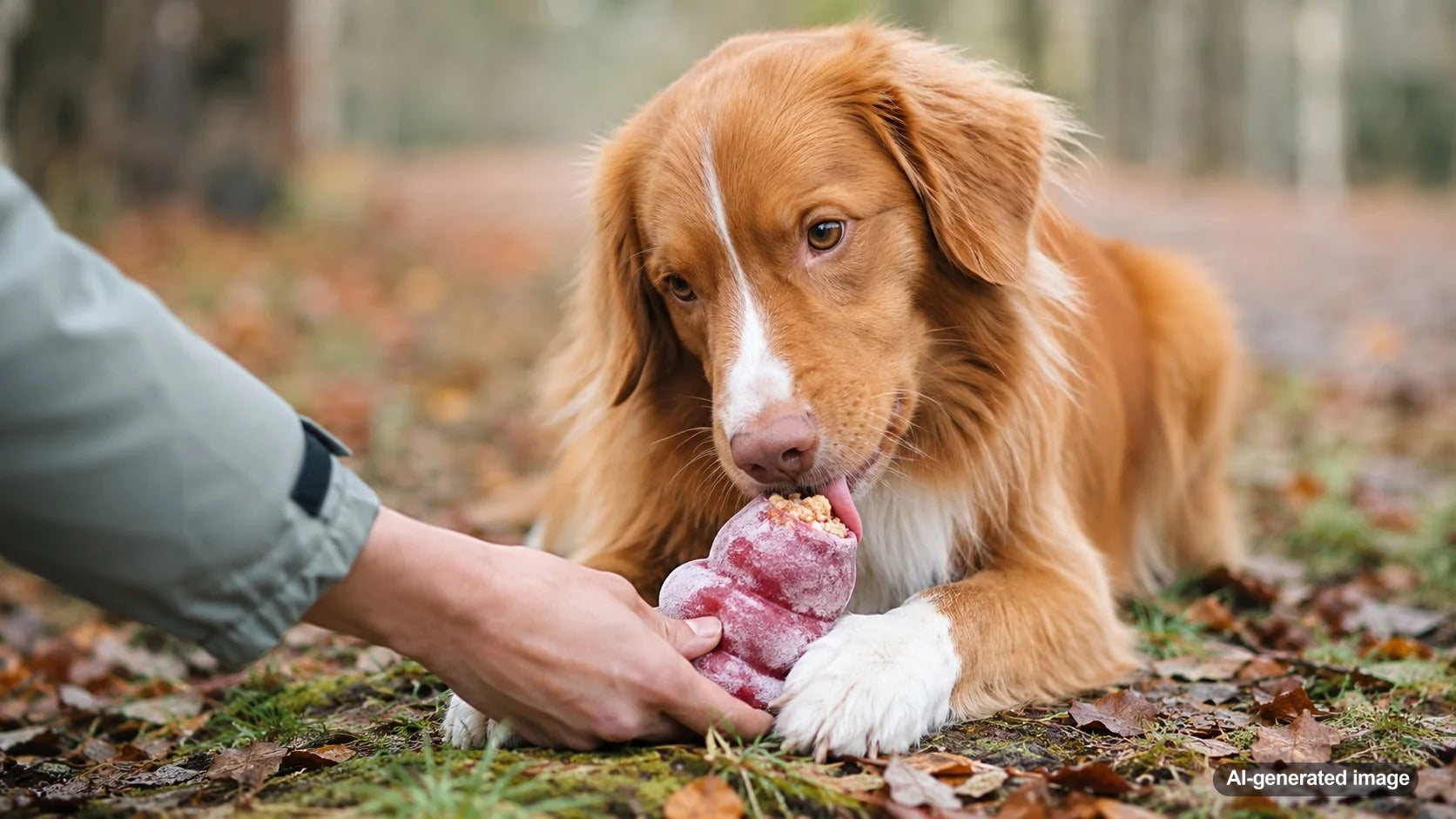
Your dog does not need a blazing summer afternoon to become fascinated by a frozen treat. Many dogs happily lick, nudge, and investigate something cold in the middle of winter because the appeal involves much more than temperature. Frozen treats combine flavor, texture, scent, and problem-solving into an activity that can feel more interesting than receiving the same ingredients in an ordinary bowl.
For dogs, eating is not always just about getting calories. It can also be an opportunity to sniff, lick, chew, explore, and work toward a reward. Freezing a dog-safe treat changes how quickly it can be consumed and creates a longer, more engaging experience.
Frozen Treats Turn Eating Into an Activity
A soft treat can disappear in seconds. Freeze that same treat inside an enrichment toy, and your dog may need to lick around the edges, reposition the toy, and return to stubborn spots several times.
That extra effort matters. Dogs naturally use their noses and mouths to investigate their surroundings, so a treat that requires interaction gives them something constructive to do. This can be especially useful during rainy afternoons, quiet evenings, work-from-home meetings, or other times when your dog needs an activity but cannot go on a long adventure.
A frozen refill served in The Pupsicle, for example, can turn treat time into a slower licking session instead of a quick snack. The goal is not simply to make food cold. It is to make the experience last longer and require gentle participation.
The Texture Feels Different and Interesting
Dogs notice changes in texture. A familiar food that is normally soft and easy to swallow becomes firmer when frozen. As it warms, it gradually changes again, moving from solid to slightly softened and eventually becoming easier to lick.
That progression can keep a dog engaged because the challenge is not exactly the same from one minute to the next. The outer layer softens first, while the center remains firm. Dogs may lick one side, rotate the toy, pause to investigate a new scent, and then resume when another area begins to thaw.
This does not mean every dog should crunch large pieces of hard ice. Dogs with sensitive teeth, existing dental problems, or a tendency to bite frozen objects forcefully may do better with a softer frozen mixture or a treat allowed to thaw for a few minutes. Ask your veterinarian if you are unsure what texture is appropriate for your dog.
Licking Can Be a Satisfying Routine
Many dogs appear to find repetitive licking naturally absorbing. A frozen treat encourages more licking because the flavor is released gradually rather than all at once.
This makes frozen enrichment useful well beyond hot weather. It can become part of a settling routine after a walk, a quiet activity while guests arrive, or a predictable signal that it is time to relax in a designated spot. Some dogs also benefit from having an appropriate activity during grooming, household chores, or other mildly distracting moments.
Frozen treats should not be presented as a treatment for anxiety or serious behavior concerns. A dog showing intense fear, panic, destructive escape behavior, or a sudden behavioral change may need support from a veterinarian or qualified behavior professional.
Cold Food Can Hold Attention Longer
Temperature affects how quickly food softens and how easily a dog can remove it from a toy. A refrigerated filling may still be finished quickly, while a properly frozen portion usually requires more patience.
This longer duration can make a modest serving feel more substantial. That is helpful for dogs that seem disappointed when a conventional treat disappears immediately. It also gives energetic dogs a focused task without requiring the owner to hand out treat after treat.
You can use a Pupsicle Treat Tray to prepare appropriately portioned homemade refills in advance. Keeping a few ready in the freezer makes it easier to repeat the routine without turning every enrichment session into a kitchen project.
Flavor Still Matters More Than the Weather
A dog who loves pumpkin, chicken, beef, or another familiar dog-safe flavor will not suddenly stop enjoying it because the outdoor temperature dropped. The treat still smells and tastes rewarding, even when served frozen.
Cold temperatures can slightly reduce how strongly some aromas travel, so highly food-motivated dogs may investigate the treat immediately while cautious or picky dogs may need a moment. Allowing the surface to soften briefly can release more aroma and make the treat easier to begin.
Novelty also plays a role. If most meals arrive as dry kibble in a bowl, a frozen treat with a different smell, shape, and texture stands out. Rotating safe flavors or changing the difficulty occasionally may help preserve that interest without constantly increasing portion sizes.
How to Serve Frozen Treats Safely
- Use ingredients you already know your dog tolerates.
- Check labels carefully and avoid xylitol, chocolate, grapes, raisins, macadamia nuts, and other unsafe ingredients.
- Count frozen treats as part of your dog's daily food and treat intake.
- Choose a portion and toy size appropriate for your dog's body size and eating style.
- Supervise the session, especially with puppies, power chewers, and dogs using a new toy.
- Wash reusable enrichment toys after each use and inspect them for damage.
Plain human ice cream and popsicles are not ideal substitutes. They may contain excessive sugar, dairy that causes digestive upset, artificial sweeteners, or other ingredients that are unsafe for dogs. Popsicle sticks can also present chewing, splintering, or swallowing hazards.
Introduce any new food in a small amount. Stop and contact your veterinarian if your dog develops vomiting, diarrhea, excessive drooling, appetite changes, facial swelling, or another concerning reaction.
Making Frozen Enrichment a Repeatable Habit
The easiest routines are the ones that do not require much planning. Prepare several portions at once, store them securely, and reserve them for moments when a longer activity would be helpful.
Try serving frozen enrichment after exercise, while the family eats dinner, or when your dog needs an independent activity. Keep the timing predictable enough that the treat supports your routine, but vary the filling or challenge occasionally so the experience stays interesting.
Watch how your individual dog responds. A puppy may need an easier, softer filling. A senior dog may appreciate a partially thawed texture. A large power chewer may require especially close supervision and a durable, correctly sized toy. The best frozen treat routine is not the coldest or most complicated one. It is the one your dog can enjoy safely and calmly.
Dog Parent FAQs
Do dogs only like frozen treats because they are cooling?
No. Cooling is only one possible benefit. Many dogs enjoy the slower licking, changing texture, flavor, novelty, and mental engagement regardless of the weather.
Can I give my dog a frozen treat every day?
Many dogs can enjoy frozen enrichment regularly, but the ingredients and calories should fit their overall diet. Ask your veterinarian for guidance if your dog has dietary restrictions or a medical condition.
Are plain ice cubes a good frozen treat?
Some dogs safely enjoy small ice pieces, but hard cubes can be risky for dogs with dental problems or aggressive chewing habits. Supervise your dog and consider softer frozen mixtures instead.
Why does my dog lick a frozen treat but ignore the same food in a bowl?
The frozen version lasts longer and provides a more interactive texture. Your dog may be responding to the activity and challenge, not just the flavor.
The Bottom Line
Dogs can enjoy frozen treats all year because the real attraction is often the experience. A frozen portion transforms familiar food into a slower, texture-rich activity that encourages licking, exploration, and focused engagement.
Use safe ingredients, sensible portions, and close supervision. When prepared with your dog's individual needs in mind, frozen treats can become a simple and enjoyable part of an everyday enrichment routine, even when there is snow outside the window.


