






































































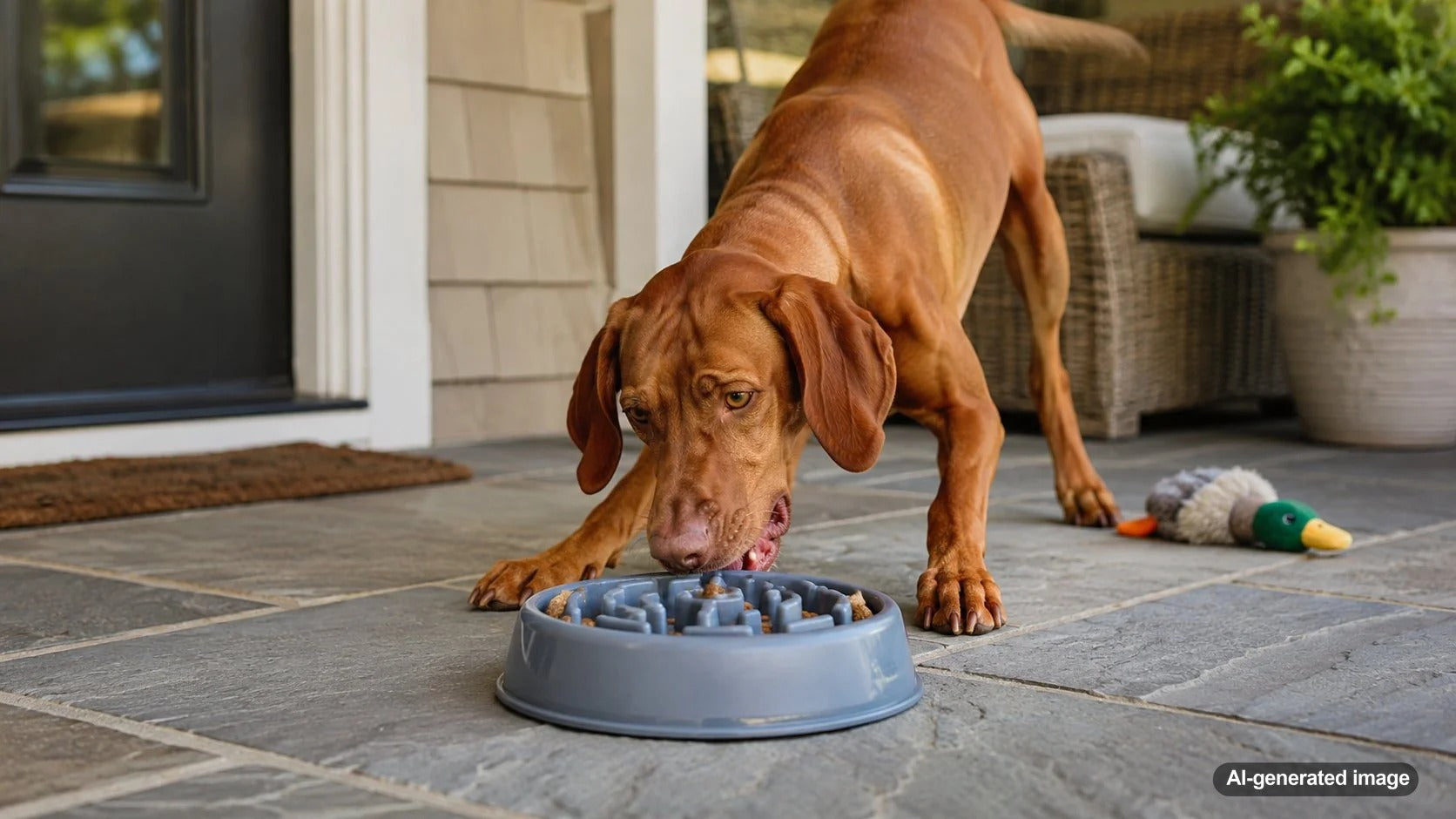
Some dogs can finish an ordinary bowl of food before you have time to put the scoop away, yet give that same dog a meal that requires licking, nudging, sniffing, or problem-solving and something fascinating happens. Their eyes brighten, their body becomes engaged, and dinner starts to look more like an activity than a chore. Dogs often get excited when food takes longer to eat because the experience activates natural food-seeking behaviors and gives them more opportunities to earn small, satisfying rewards.
That enthusiasm is not necessarily a sign that your dog needs more food. In many cases, your dog is responding to the anticipation, movement, sensory variety, and manageable challenge surrounding the meal.
Quick Answer
Dogs may become more excited about longer-lasting food activities because searching and working for food can be rewarding in its own right. Every successful lick, nudge, or piece of discovered kibble extends the experience. A well-matched slow feeder or food puzzle can turn a brief meal into mental stimulation while encouraging a more measured eating pace.
The Experience Becomes More Than Eating
A standard bowl asks very little of a food-motivated dog: lower the head, take several large mouthfuls, and finish. An interactive meal adds a sequence. Your dog detects the food, investigates how to reach it, tries a behavior, and receives a small reward. That cycle can repeat dozens of times.
This resembles foraging, the process of searching for and obtaining food. Domestic dogs do not need to hunt for dinner, but many still enjoy sniffing, pawing, licking, rolling, and manipulating objects to uncover something tasty. Extending a meal provides an appropriate outlet for those behaviors inside the home.
Anticipation Helps Build Excitement
Dogs quickly learn the cues that predict rewarding events. Opening a particular cabinet, removing a feeder from the freezer, or spreading food across a textured surface can become part of the mealtime ritual. Once your dog recognizes the pattern, excitement may begin before the food appears.
A longer activity also creates repeated moments of anticipation. Instead of receiving the entire reward at once, your dog encounters it piece by piece. A rolling feeder might release kibble after several nudges, while a lick mat reveals tiny amounts with each pass of the tongue. The reward remains close enough to sustain interest but is not consumed immediately.
The Right Challenge Creates Satisfying Work
Dogs often enjoy a task that requires effort without becoming impossible. You might see focused sniffing, relaxed licking, careful paw movements, or repeated attempts using slightly different angles. These behaviors suggest that the challenge is holding your dog's attention.
Difficulty matters. A puppy encountering a puzzle for the first time may need loose kibble placed where it is easy to reach. An experienced adult may enjoy a more complicated setup. Senior dogs and dogs with limited mobility may prefer a stable feeder that does not require chasing or uncomfortable bending. Small dogs need openings and portions suited to smaller mouths, while power chewers require durable options and close supervision.
If your dog barks continuously, bites the feeder instead of using it as intended, walks away, or becomes increasingly frantic, make the activity easier. Excitement should develop into engagement, not frustration.
Slower Meals Can Support a Better Routine
Dogs that gulp food may swallow large mouthfuls and finish before their bodies have much time to register the meal. Some fast eaters may also regurgitate shortly afterward. Spreading food across a larger surface or placing it in an interactive feeder encourages smaller bites or licks and can make dinner feel less rushed.
For a simple starting point, divide part of your dog's measured meal between an ordinary bowl and an enrichment tool. The FlipMat offers a slow-feeding surface with two challenge levels, making it easier to adjust the experience as your dog learns. For dogs that enjoy moving objects and searching for kibble, the Walkabout turns a portion of mealtime into a rolling puzzle with an adjustable opening.
Count everything placed in a feeder as part of your dog's daily intake. Enrichment changes how food is delivered, not how many calories your dog needs.
How to Introduce Longer Mealtimes
- Begin easy: Let your dog watch you add familiar food and make the first rewards simple to reach.
- Use a partial meal: Starting with a small portion prevents a hungry dog from becoming overwhelmed.
- Choose the right texture: Use food that fits the feeder and your dog's chewing or licking ability.
- Supervise: Watch for chewing, torn material, swallowed pieces, guarding, or signs of frustration.
- Clean after use: Wash food-contact surfaces according to their care instructions and inspect them regularly for damage.
Excitement Is Not Always Enjoyment
Happy anticipation often looks loose and purposeful: a wagging body, eager approach, and sustained focus once the activity begins. Stress can look more frantic. Watch for stiff posture, hard staring, repeated whining, resource guarding, aggressive biting at the feeder, or an inability to settle after the food is gone.
Feed dogs separately if competition causes rushing or guarding. If a dog suddenly becomes ravenous, loses weight, struggles to chew or swallow, drools excessively, vomits, develops diarrhea, or shows a major change in appetite or behavior, contact your veterinarian. A feeder should not be used to mask a possible health concern.
Dog Parent FAQs
Does making food last longer mean my dog is still hungry?
Not necessarily. Your dog may be excited by the activity and repeated rewards rather than by a need for additional calories. Measure the full daily portion and ask your veterinarian if hunger seems excessive or new.
How long should an enrichment meal last?
There is no universal target. The ideal activity lasts longer than a regular bowl meal while keeping your dog calmly engaged. Adjust the difficulty if your dog finishes instantly or becomes frustrated.
Can every meal be served in a slow feeder or puzzle?
Many dogs can enjoy frequent interactive meals, but variety and comfort matter. Rotate appropriate activities, supervise their use, and retain a simple feeding option for days when your dog is tired, unwell, or uninterested.
The Happiest Meal Is One Your Dog Can Successfully Solve
When food takes longer to eat, your dog gets more than extra minutes at the bowl. The meal can become a chance to sniff, explore, make choices, and experience a satisfying pattern of effort followed by reward. Start with an easy challenge, follow your dog's body language, and adjust the routine until excitement settles into focused, tail-wagging engagement.


