






































































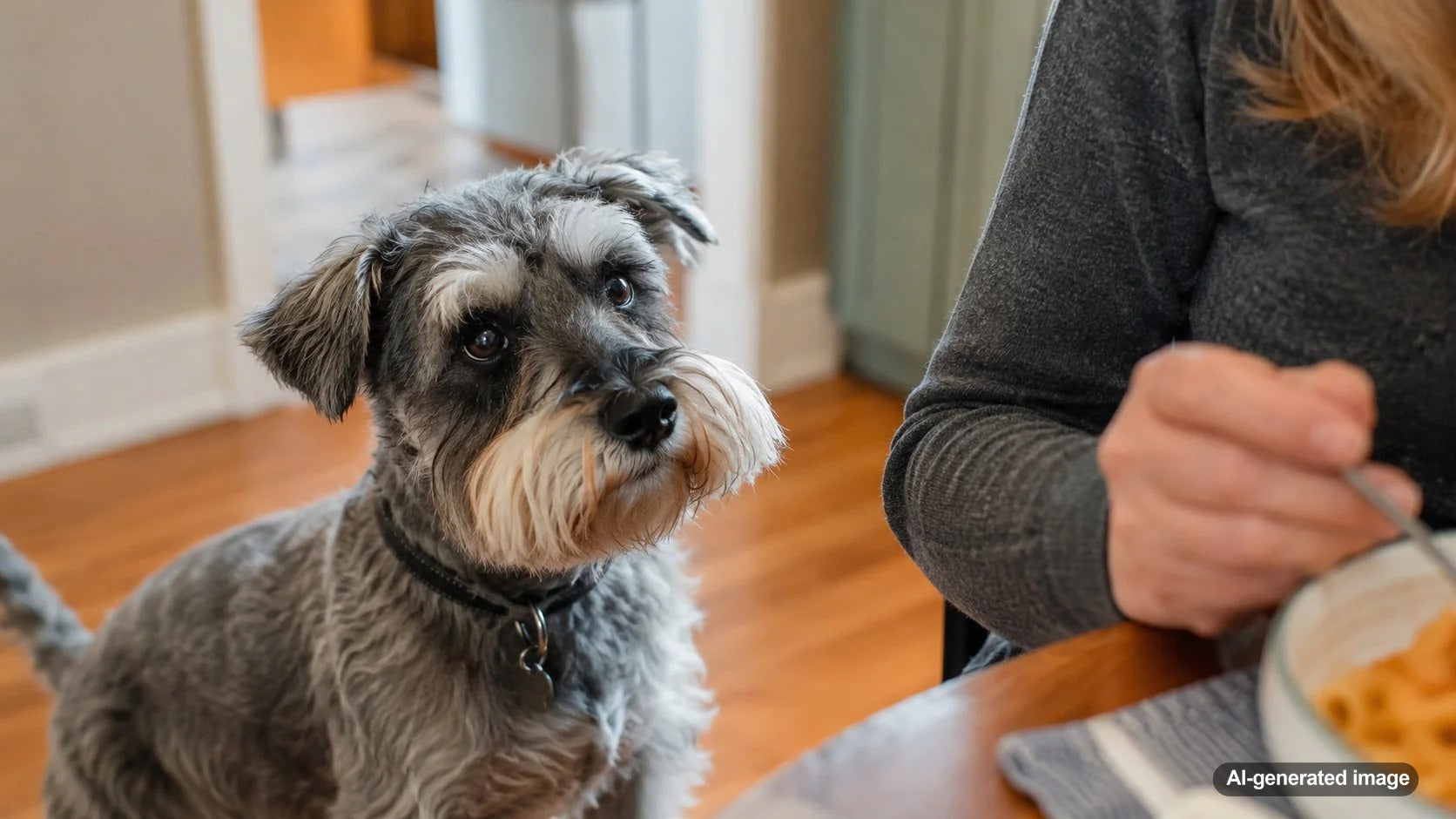
You lift your fork, and suddenly your dog is watching every bite with the concentration of a professional food critic. That steady stare usually means your dog hopes something delicious might come their way, especially if staring has worked before. It can also reflect curiosity, attention-seeking, routine, or your dog's impressive ability to notice exactly when food is involved.
The behavior is common and usually harmless, but regularly rewarding those pleading eyes can turn quiet watching into whining, pawing, barking, or hovering inches from your plate. Understanding what your dog is communicating makes it easier to respond without creating a mealtime habit you later have to undo.
Quick answer: Your dog probably stares while you eat because your food smells interesting and they have learned that watching you may lead to a bite, attention, or another reward. The most effective response is to stop feeding from the table consistently and teach an alternative mealtime routine, such as relaxing on a mat with an appropriate enrichment activity.
Why Your Dog Watches Every Bite
Dogs are excellent observers of human behavior. They notice where you look, what you touch, when you open the refrigerator, and which routines sometimes result in food. If your dog has ever received a piece of chicken after staring at you, they may reasonably decide that staring is worth trying again.
Occasional table treats can make the habit especially persistent. When staring works only once in a while, your dog does not learn that it is pointless. Instead, they may keep trying because the next bite could be the lucky one.
Your meal also carries powerful smells that are much more noticeable to your dog than they are to you. Even a dog who has already eaten may remain interested because wanting an appealing food is not the same as being nutritionally hungry.
Is the Stare Always About Food?
Food is the most likely explanation during dinner, but context and body language matter. A dog sitting quietly with a loose body, relaxed ears, and soft eyes is probably hopeful or curious. A dog who alternates between staring at you and looking toward an empty bowl may be asking for their own meal.
Some dogs also stare because it earns social attention. Talking to them, laughing, petting them, or repeatedly saying no can still reward the behavior if attention is what they wanted.
A hard, motionless stare paired with a stiff body, closed mouth, raised fur, growling, or guarding behavior is different from ordinary begging. Give the dog space and consult a qualified trainer, veterinary behavior professional, or veterinarian if tense staring occurs around food.
Why Feeding From the Table Can Become a Problem
A tiny bite may seem harmless, but the pattern matters. Dogs quickly learn which family members are most likely to share, where to stand, and how intensely they need to stare before someone gives in. Larger or more confident dogs may begin nudging hands or putting their front paws near the table, while smaller dogs may whine, tremble, or bounce beside a chair.
Sharing also makes it harder to control calories. Small portions of cheese, meat, bread, and sauces can add up quickly, particularly for small dogs. Some human foods and ingredients are unsafe for dogs, and rich or fatty foods may cause digestive trouble even when they are not considered toxic.
Safety reminder: Keep meals containing ingredients such as onions, garlic, grapes, raisins, chocolate, alcohol, xylitol, cooked bones, or heavily seasoned foods out of reach. Contact your veterinarian or a pet poison resource promptly if your dog eats something potentially dangerous.
How to Reduce Mealtime Staring Without a Battle
The goal is not to punish your dog for looking at you. It is to make calm behavior somewhere else more rewarding than waiting beside your plate.
- Pick a designated place. Use a dog bed, mat, open crate, or comfortable spot several feet from the table.
- Practice before dinner. Teach your dog to go to that spot during short sessions when no tempting meal is present.
- Reward the position. Place a treat on the mat when your dog settles. Gradually increase how long they remain there.
- Offer an appropriate activity. A lick toy, puzzle feeder, or part of the dog's normal meal can keep the routine positive.
- Stop table feeding completely. Everyone in the home, including guests and children, needs to follow the same rule.
For dogs who need help staying occupied, The Pupsicle can provide a longer-lasting licking activity in their designated spot while the family eats. You can also reserve some of your dog's regular food for a rolling slow-feeding toy such as the Walkabout, helping turn mealtime into a separate activity rather than an exercise in watching your plate.
Common Mistakes That Keep Begging Going
The biggest mistake is inconsistency. One person may ignore the dog all week while another slips food under the table on Saturday. From the dog's perspective, staring still works.
Repeatedly pushing your dog away can also create a game or provide attention. It is usually more effective to calmly guide them to their place and reward settling there.
Another common problem is waiting until dinner to introduce the routine. A dog who has never practiced staying on a mat will have difficulty learning while roast chicken is being served. Begin with easy, quiet practice sessions, then slowly add distractions.
When a Sudden Increase in Food Staring Deserves Attention
A naturally food-motivated dog may always watch meals closely. However, contact your veterinarian if the behavior suddenly becomes intense and is paired with increased hunger, weight loss, excessive thirst, vomiting, diarrhea, restlessness, scavenging, or a major appetite change.
Puppies may appear constantly hungry because they are growing and need properly scheduled meals. Senior dogs can develop medical or cognitive changes that affect appetite and routines. Your veterinarian can help determine whether feeding amounts, meal frequency, medication, or a health issue needs to be reviewed.
Helpful tip: If your dog finishes meals in seconds and immediately begins searching for more, ask your veterinarian whether the portion is appropriate. Then consider a slow feeder or food puzzle to make the existing meal last longer without automatically adding calories.
Dog Parent FAQs
Does my dog stare because they are still hungry?
Possibly, but interest in your food does not prove that your dog needs more calories. Check portion sizes, feeding instructions, body condition, and any appetite changes with your veterinarian.
Should I look away when my dog begs?
Ignoring the stare can help, but teaching a clear alternative is usually easier. Send your dog to a comfortable place and reward calm settling away from the table.
Is it okay to give my dog food from my plate after I finish?
Dog-safe food can be offered separately, but giving it beside the table may preserve the begging routine. Place any approved treat in your dog's bowl or enrichment toy after the dining area is cleared.
Why does my dog stare at one family member more than everyone else?
That person may have shared food before, responds more often, or is simply easier for the dog to influence. Consistent household rules usually reduce the difference.
The Bottom Line
Your dog's dinner stare is usually a learned, hopeful request rather than proof of starvation or manipulation. Dogs repeat behaviors that have paid off, and even occasional table scraps can keep those eyes locked on every forkful.
Choose a simple alternative routine, practice it outside mealtimes, and give your dog an appropriate activity in their own space. With patience and consistent rules, dinner can become calmer for everyone without making your dog feel excluded.


