






































































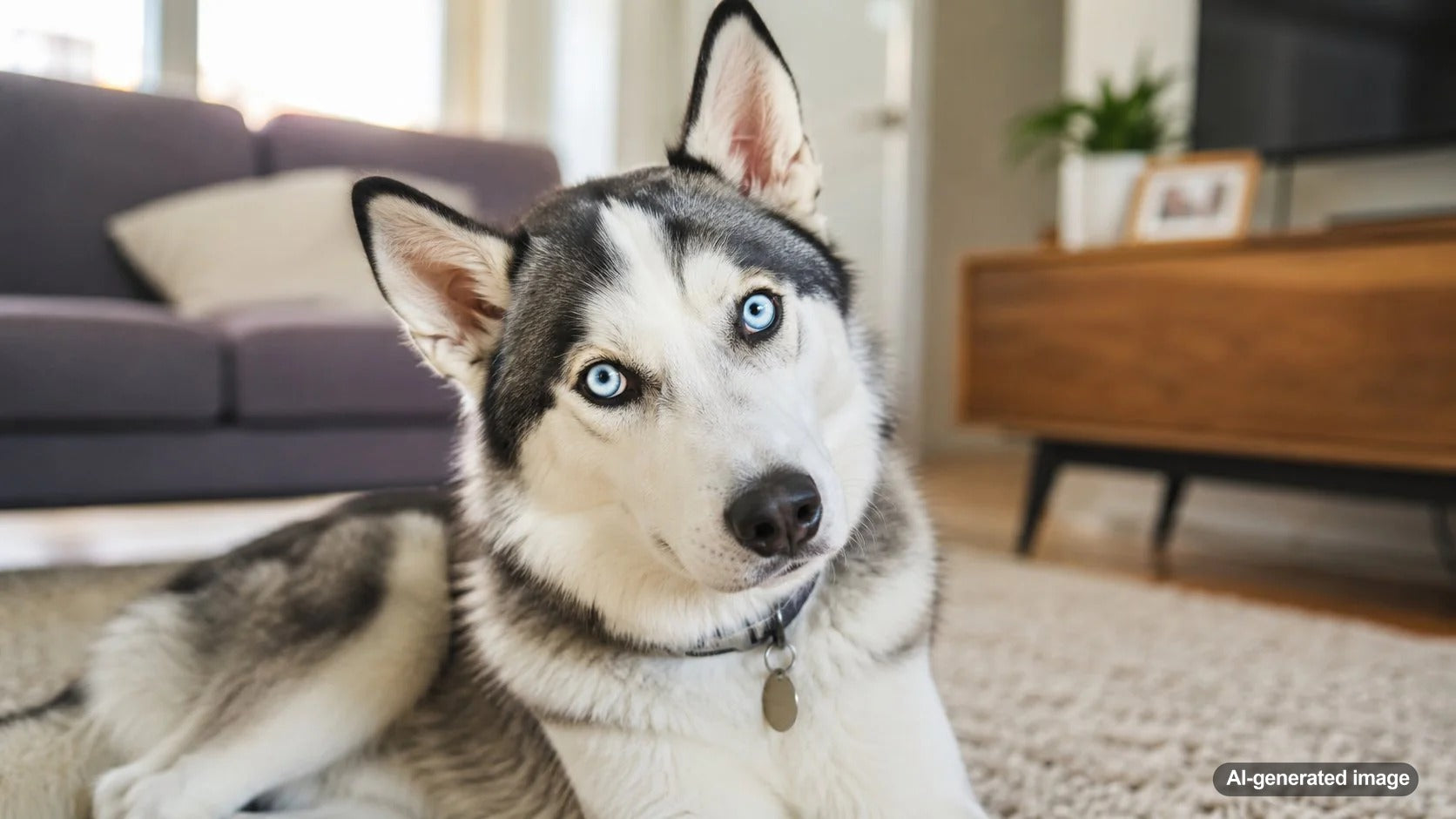
Blue eyes can give a dog an unforgettable, almost icy expression, but the color is usually the result of genetics rather than anything mysterious. Some dogs inherit traits that reduce pigment in one or both irises, allowing light to scatter in a way that makes the eyes appear blue. A naturally blue eye can be completely normal, although a new blue, cloudy, or hazy appearance should always be treated differently.
Eye color is especially interesting because it can vary between breeds, littermates, and even between a dog's two eyes. One dog may have two blue eyes, another may have one blue and one brown eye, and a third may have a mostly brown eye with a small blue section.
What Actually Makes a Dog's Eyes Look Blue?
A dog's iris contains pigment called melanin. Brown eyes have more visible pigment, while blue eyes contain less. The blue color does not usually come from blue pigment. Instead, light entering the eye scatters through the lightly pigmented iris, creating the blue appearance.
The exact shade can range from pale gray-blue to a bright, clear ice blue. Lighting also matters. A blue eye may look silver indoors, deeper blue outside, or almost white in a photograph taken with bright reflections.
Genetics Are the Main Reason
Several genetic pathways can contribute to blue eyes. In Siberian Huskies and some related dogs, a DNA variation near a gene involved in eye and facial development is strongly associated with blue eye color. This can produce blue eyes without requiring a merle coat or large areas of white fur.
Other dogs develop blue or partially blue eyes because genes affecting coat pigmentation also influence pigment around the eye. This is why eye color sometimes appears connected to a dog's markings rather than simply its breed.
How Merle Coats Can Affect Eye Color
Merle is a mottled coat pattern with irregular patches of lighter and darker color. It is seen in breeds such as Australian Shepherds, Border Collies, Cardigan Welsh Corgis, Dachshunds, and Great Danes. The same genetic effect that changes coat pigment can reduce pigment in the iris, producing one blue eye, two blue eyes, or sections of blue within a brown eye.
Blue eyes alone do not mean a merle dog has a health problem. However, breeding two merle-patterned dogs together can increase the risk of puppies being born with serious hearing or vision abnormalities. Responsible breeding decisions require more than choosing dogs based on appearance.
White Markings May Play a Role
Some dogs with extensive white coloring around the face have blue eyes because pigment-producing cells did not fully populate the iris during development. This is sometimes associated with piebald or extreme white spotting patterns.
Dogs with heavy white pigmentation, particularly around the ears and eyes, may have a higher risk of congenital deafness in certain breeds. A blue-eyed dog is not necessarily deaf, but owners who notice unusual responses to sound should ask their veterinarian about a hearing evaluation.
Why Does My Dog Have One Blue Eye and One Brown Eye?
Having two different-colored eyes is called heterochromia. Complete heterochromia means each eye is a different color. Sectoral heterochromia means one iris contains more than one color, such as a brown eye with a blue wedge.
Inherited heterochromia is often harmless and may remain unchanged throughout a dog's life. It is particularly noticeable in Huskies, Australian Shepherds, Catahoula Leopard Dogs, and mixed-breed dogs carrying similar pigmentation traits.
A dog that has always had mismatched eyes usually does not need special care because of the color difference. A color change that develops later, however, should be examined by a veterinarian.
Do Blue-Eyed Dogs See Differently?
A healthy blue eye can generally function just like a healthy brown eye. Iris color by itself does not determine whether a dog can see clearly. Dogs of every eye color rely more heavily on motion detection and low-light vision than humans do, and they see a more limited range of colors than people.
Some lightly pigmented eyes may appear more sensitive in strong sunlight, but squinting, avoiding light, pawing at the face, or keeping an eye closed should not be dismissed as a normal blue-eye trait. Those behaviors can signal pain or irritation.
Puppy Eye Color Can Change
Many young puppies begin life with eyes that look blue-gray because pigment development is not complete. Their permanent eye color often becomes clearer as they grow, commonly during the first several weeks or months.
A puppy whose eyes gradually change from gray-blue to amber or brown is usually experiencing normal development. The timeline can vary by breed and individual dog. Avoid assuming a very young puppy will stay blue-eyed based only on early photos.
Natural Blue Eyes Versus Cloudy Blue Eyes
A naturally blue iris looks clear, with the color appearing in the ring of tissue surrounding the pupil. Cloudiness usually looks like a film, haze, or pale area sitting over or behind the pupil.
Middle-aged and senior dogs commonly develop a transparent blue-gray haze called nuclear sclerosis as the lens ages. It is different from naturally blue iris color and is also different from a cataract. Because owners cannot reliably identify every eye condition at home, any new haze should be checked during a veterinary exam.
Caring for a Blue-Eyed Dog
Healthy blue eyes do not require a special supplement, cleaning solution, or daily treatment. Basic eye awareness is more useful than trying to change the eye-care routine unnecessarily.
- Look at both eyes regularly so you recognize your dog's normal color and appearance.
- Keep long facial hair trimmed or groomed so it does not repeatedly rub the eyes.
- Do not use human eye drops unless your veterinarian specifically instructs you to do so.
- Secure dogs safely during car rides instead of allowing their heads to hang far out of a moving window, where dust and debris can strike the eyes.
- Mention any vision, hearing, or behavior concerns during routine veterinary visits.
Eye color does not change a dog's need for exercise and mental engagement. A Husky, Australian Shepherd, or other active blue-eyed dog may still need plenty of structured outlets for energy. Food puzzles, sniffing games, training practice, and a long-lasting activity such as The Pupsicle can be part of a balanced enrichment routine while your dog settles at home.
Dog Parent FAQs
Are blue eyes rare in dogs?
They are less common than brown eyes overall, but they are expected in certain breeds and genetic lines. They can also appear in mixed-breed dogs.
Can two brown-eyed dogs have a blue-eyed puppy?
Yes. Parents may carry genetic traits that are not obvious from their own appearance, and their puppies can inherit a combination that produces blue eyes.
Do blue eyes mean a dog is blind or deaf?
No. Many blue-eyed dogs have normal vision and hearing. Certain pigmentation patterns can be associated with a higher risk of congenital hearing or vision problems, but eye color alone does not provide a diagnosis.
Why is my senior dog's eye turning blue?
A new blue-gray haze may be an age-related lens change, but cataracts, inflammation, injury, and other conditions can look similar. Schedule a veterinary eye exam rather than assuming it is normal aging.
Will my puppy's blue eyes stay blue?
Possibly, but many puppies begin with blue-gray eyes that darken as pigment develops. Permanent color often becomes easier to judge as the puppy gets older.
The Bottom Line on Blue-Eyed Dogs
Most dogs with naturally blue eyes simply inherited a striking variation in pigmentation. The color may be connected to breed ancestry, a Husky-associated genetic variant, merle coloring, white spotting, or heterochromia. What matters most is whether the eyes are clear, comfortable, and stable over time.
Enjoy those beautiful eyes, take enough photos to fill your camera roll, and learn what is normal for your individual dog. When an eye suddenly changes appearance or your dog seems uncomfortable, contact your veterinarian promptly.


