




































































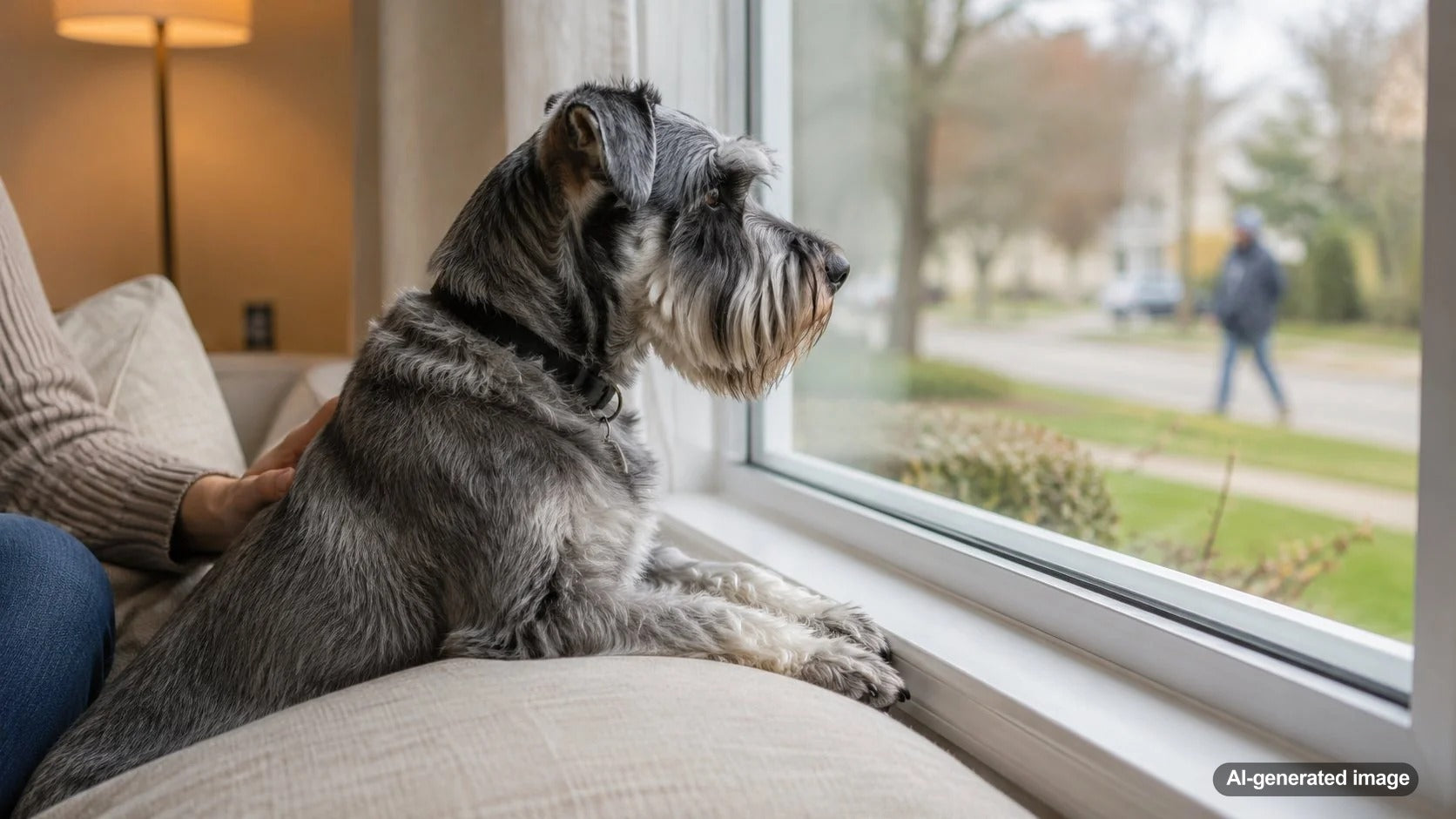
Your dog settles beside the window, watches a neighbor cross the street, tracks a squirrel across the yard, and seems completely absorbed in the show. Dogs often enjoy watching people out the window because the view offers movement, novelty, sounds, and opportunities to monitor what is happening around their home. For a relaxed dog, it can be a simple form of entertainment, but for a dog who becomes tense or vocal, the same window may create frustration rather than healthy enrichment.
Understanding the difference between calm observation and overstimulation can help you decide whether your dog's favorite viewing spot is a pleasant pastime or a habit that needs a little guidance.
The Window Is a Live Entertainment Channel
Dogs are naturally interested in changes in their environment. A person carrying groceries, a delivery truck stopping, a bicycle rolling past, or a child running down the sidewalk can all become part of a constantly changing sensory experience.
The view is especially appealing because dogs are good at noticing movement. Even when very little seems to be happening from a human perspective, your dog may be tracking distant sounds, shifting shadows, birds, other dogs, or familiar daily patterns. A dog who regularly appears at the window before the mail arrives may have learned the sound and timing of the route.
This kind of observation can provide light mental stimulation, particularly for dogs who are home during a quiet part of the day. However, watching the world should complement walks, sniffing, play, training, social interaction, and rest rather than replace them.
Some Dogs Are Monitoring Their Home
For certain dogs, the window is less like a television and more like a security station. They may feel responsible for noticing anyone who approaches the house, sidewalk, driveway, or yard.
A dog may stand tall, lean forward, close their mouth, raise their ears, or give a few alert barks when someone passes. This does not automatically mean the dog is aggressive. The dog may be curious, startled, excited, uncertain, or attempting to alert the household.
One reason window barking can become persistent is that it appears to work from the dog's point of view. The dog barks at a delivery person, and moments later the person leaves. Your dog may conclude that barking successfully made the visitor go away, encouraging the same response next time.
How to Tell Calm Watching From Stress
Look at your dog's entire body and what happens after the person has passed. Calm window watching usually includes a loose posture, soft face, normal breathing, and the ability to walk away or respond when called.
Signs that the view may be too intense include:
- Repeated barking that continues after the trigger is gone
- Lunging, scratching, or slamming into the window
- Rapid pacing between windows
- A stiff body, hard stare, or raised hackles
- Ignoring food or familiar cues
- Remaining agitated long after the street is quiet
A dog who wants to approach a person or animal but cannot get through the glass may experience barrier frustration. This can happen because the dog is excited and wants to greet the visitor, or because the dog wants the visitor to move farther away. In either case, the physical barrier prevents the dog from completing the interaction.
Should You Let Your Dog Look Out the Window?
For a dog who calmly observes the neighborhood and then returns to resting, there is usually no reason to eliminate the view. You can provide a stable bed or nonslip perch positioned safely away from fragile screens, cords, or objects that could fall.
If watching regularly leads to barking or frantic behavior, reduce the dog's access while you work on calmer habits. Closing the curtains, moving furniture away from the window, using a baby gate, or applying translucent film to the lower portion of the glass can limit the most triggering part of the view without making the room dark.
A window should not become an unsupervised lookout station for a dog who repeatedly rehearses reactive behavior. The more often the dog practices the same barking sequence, the more automatic it may become.
Teach a Calmer Window Routine
Begin when the environment is relatively quiet, not when several dogs and delivery vehicles are already outside. Sit a comfortable distance from the window and reward your dog for looking outside calmly, turning back toward you, or resting on a nearby mat.
When a mild trigger appears, calmly mark the moment your dog notices it and offer a small treat before barking begins. Over time, the sight of a passerby may become a cue to check in with you instead of rushing toward the glass.
You can also teach a simple alternative such as going to a bed, picking up a toy, or following you into another room. Practice the behavior without distractions first so it is familiar before you use it during a busy moment.
Avoid yelling from across the room. Your dog may interpret the added noise as participation in the alarm, and punishment can increase fear or frustration without teaching a better response.
Offer Enrichment Away From the Window
A dog who spends hours searching for outdoor activity may need more engaging options inside the home. Try short sniffing games, scattered kibble searches, training sessions, safe chew time, or food-based puzzles that encourage licking and problem-solving.
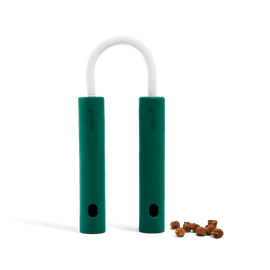
For a dog who needs help transitioning from an exciting view to a quieter activity, The Pupsicle can provide longer-lasting treat play in another part of the room. You might also use a FlipMat with an appropriate spread to create a calm licking routine on a mat placed away from the window.
Supervise new enrichment activities, select an appropriate size for your dog, and account for treats or food as part of the dog's daily intake. The goal is not simply to distract your dog every time someone passes. It is to build a repeatable routine that makes settling away from the glass rewarding.
Dog Parent FAQs
Is looking out the window good enrichment for dogs?
It can provide mild visual and auditory stimulation when a dog watches calmly. It should still be balanced with sniffing, exercise, social time, training, play, and adequate sleep.
Why does my dog bark at some people but not others?
Your dog may react to movement, clothing, equipment, sounds, past experiences, or how close the person comes to the home. Watch for patterns without assuming the dog simply dislikes a certain person.
Why does my dog whine while watching people outside?
Whining may reflect excitement, frustration, uncertainty, or a desire to approach. If the behavior is frequent or intense, increase distance from the window and ask a qualified trainer for guidance.
Do dogs understand that a window is a barrier?
Dogs recognize that they cannot move through the glass, but the barrier can still be frustrating because it prevents greeting, investigating, or creating more distance from whatever they see.
The Bottom Line
Watching people out the window can be a perfectly normal way for dogs to satisfy curiosity and follow the activity around their home. The important question is not how long your dog looks outside, but how the experience affects their body and behavior. A loose, quiet observer may simply be enjoying the view. A dog who barks, lunges, or stays agitated may benefit from less access, more distance, alternative behaviors, and enriching routines elsewhere in the home.


