






































































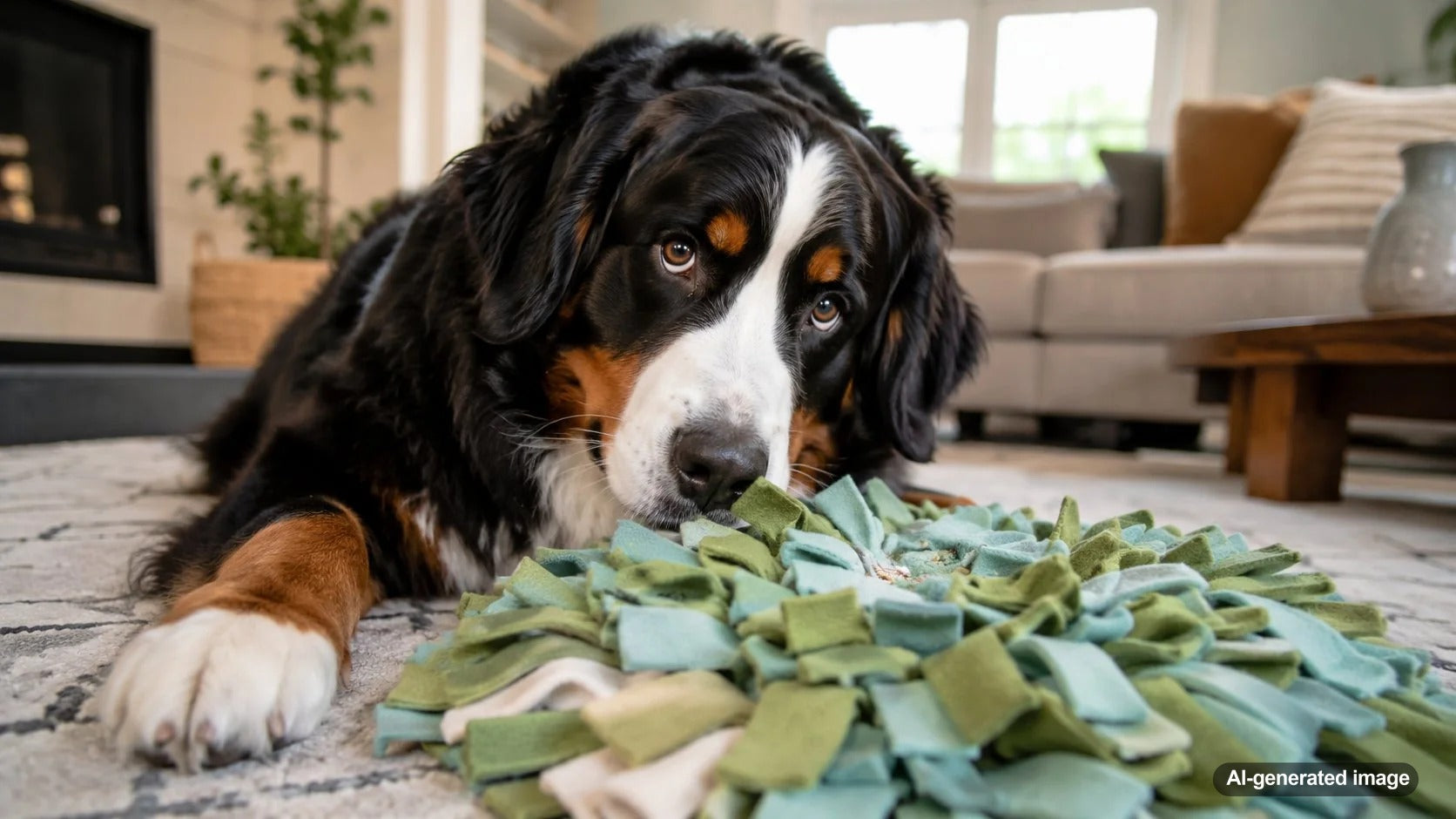
Bernese Mountain Dogs may look ready to charge up every mountain in sight, but keeping a Berner fulfilled is not about pushing that big body through nonstop high-impact activity. These affectionate working dogs benefit from a thoughtful mix of moderate movement, problem-solving, sniffing, licking, chewing, and time with their people. Gentle enrichment gives them an outlet for their intelligence and natural working instincts without making every activity physically demanding.
A well-planned routine is especially valuable because Berners are large, sensitive dogs that often mature slowly. Puppies are still developing, adults can carry substantial weight through every turn and landing, and seniors may become less comfortable with repetitive or jarring movement. The goal is not to keep a Bernese Mountain Dog inactive. It is to create satisfying activities that match the dog's age, mobility, weather tolerance, and individual enthusiasm.
Big Dogs Experience Play Differently
A quick pivot that looks effortless for a small dog can place far more force through the body of a 90-pound Berner. Repeated leaping for toys, skidding across hard floors, racing down stairs, or making sudden stops may be unnecessarily demanding, particularly for growing puppies, older dogs, or dogs with known mobility concerns.
This does not mean your Berner must live a quiet, boring life. It means choosing quality over intensity. A 15-minute sniff-focused walk may be more mentally satisfying than a frantic game of indoor chase. A slow puzzle meal can provide a useful project without encouraging jumping. Several short activities spread through the day can also be easier to manage than one exhausting session.
Watch how your dog moves during and after an activity. Slowing down unexpectedly, repeatedly sitting, lagging behind, stiffness, limping, difficulty rising, or avoiding an activity that was previously enjoyable deserves attention. Stop the session and contact your veterinarian if you notice pain, swelling, limping, or a significant change in mobility.
Use the Berner Brain, Not Just the Berner Body
Bernese Mountain Dogs were developed as versatile working companions, so many enjoy having a task. Fortunately, a task does not have to involve hauling equipment or completing a strenuous hike. Simple household jobs can make a dog feel involved.
- Carry a lightweight, dog-safe item from one room to another.
- Find family members by name in a calm hide-and-seek game.
- Search for treats scattered through a folded towel or around one room.
- Practice touching a hand target, stepping onto a mat, or putting toys in a basket.
- Follow a short scent trail made with pieces of the dog's regular food.
Keep training sessions brief and reward-based. Berners are commonly described as eager to please but sensitive, so calm guidance usually fits them better than harsh corrections. Three to five focused minutes can be enough for one session. End while the dog is still successful rather than waiting for frustration or fatigue.
Make Meals Part of the Enrichment Plan
A bowl is convenient, but it gives many dogs very little to do. Using part of a Berner's measured meal for enrichment can extend the experience without automatically adding extra calories.
Scatter kibble across a clean patch of grass, hide it in several easy locations, or place it in a slow-feeding puzzle appropriate for your dog's size and chewing style. Begin with an easy setup. If the food is too difficult to access, some dogs will walk away while others may become overly forceful with the toy.
Licking is another low-impact option. A large dog can settle comfortably while working on a spreadable snack placed on a secure surface. The dual-sided FlipMat can be used as a lick mat or slow feeder, allowing you to adjust the challenge for an easy afternoon activity. Count anything added to the mat as part of the dog's daily food intake, especially if your Berner needs help maintaining a healthy weight.
Choose Games With Fewer Jumps and Hard Stops
Fetch is not automatically off-limits, but the setup matters. Instead of throwing a ball high into the air, roll it along level ground or make short, low tosses where your dog has plenty of room to slow down. Avoid slippery flooring and repeated stair runs.
You can also replace some fast fetch sessions with searching games. Let your Berner watch you hide a favorite toy nearby, then release the dog to find it. As the dog learns the game, use another room or place the toy behind an easy obstacle. Sniffing and problem-solving add challenge without requiring high-speed movement.
Chewing can be useful during quiet periods, provided the item is suitable for your dog's size and chewing habits. Supervise every session, inspect reusable toys for damage, and remove pieces that have become small enough to swallow. For dogs that enjoy a longer-lasting food activity, The Pupsicle offers a stationary licking project that can fit into rest time after a moderate walk.
Adjust Enrichment for Puppies, Adults, and Seniors
Bernese Mountain Dog puppies
Puppies may appear energetic, but their bodies are still developing. Favor short sniff walks, basic manners, gentle exploration, and easy food puzzles. Avoid pressuring a puppy into repetitive jumping, long-distance running, or prolonged exercise simply because the puppy is willing to continue.
Healthy adult Berners
Adults often enjoy a balanced routine that includes moderate walks, outdoor exploration, training, scent games, and appropriate dog sports. Build new activities gradually. Weather matters too, since a heavy double coat can make warm conditions uncomfortable. Schedule summer activity during cooler parts of the day and provide water and indoor breaks.
Senior Berners
Senior dogs still need interesting things to do, even when their movement changes. Place food puzzles where the dog can use them without slipping or crouching awkwardly. Shorten walks while allowing extra sniffing time. Keep familiar games in the routine, but reduce speed, distance, and difficulty as needed.
Common Enrichment Mistakes With Large Dogs
One common mistake is assuming that enrichment must leave a dog physically exhausted. A dog that crashes after frantic exercise is not necessarily more fulfilled than one that calmly settles after sniffing, learning, or licking.
Another mistake is making every puzzle extremely difficult. Enrichment should offer a manageable challenge, not create persistent frustration. Show your dog how a new toy works, use easy-to-access food at first, and increase difficulty only after the dog understands the activity.
Finally, do not ignore changes in participation. A Berner that suddenly refuses stairs, walks away from a favorite game, struggles to reach a feeder, or becomes irritable when handled may be uncomfortable. Ask your veterinarian about any major change in movement, appetite, energy, or behavior.
Dog Parent FAQs
How much enrichment does a Bernese Mountain Dog need?
The right amount varies by age and health, but most Berners benefit from several short opportunities to sniff, learn, chew, lick, or solve simple problems throughout the day.
Are long walks enough for a Bernese Mountain Dog?
Walks provide valuable movement and exploration, but they do not replace every type of mental enrichment. Training, scent games, and food puzzles can add variety without adding another long outing.
Can Bernese Mountain Dog puppies use food puzzles?
Yes, when the puzzle is appropriately sized, easy enough for a beginner, and used under supervision. Include the food in the puppy's daily meal plan and prevent chewing on unsuitable toy pieces.
What is a good indoor activity for a senior Berner?
Try an easy scent search, a secure lick mat, or a short session practicing familiar cues on nonslip flooring. Adjust the activity so the dog can participate comfortably.
A Gentler Routine Can Still Be Deeply Satisfying
Your Bernese Mountain Dog does not need every day to become an endurance challenge. A successful enrichment routine gives that big, thoughtful dog opportunities to explore, make choices, work with you, and settle afterward. By balancing moderate physical activity with low-impact mental projects, you can create days that feel full without asking your Berner's body to do all the work.


