






































































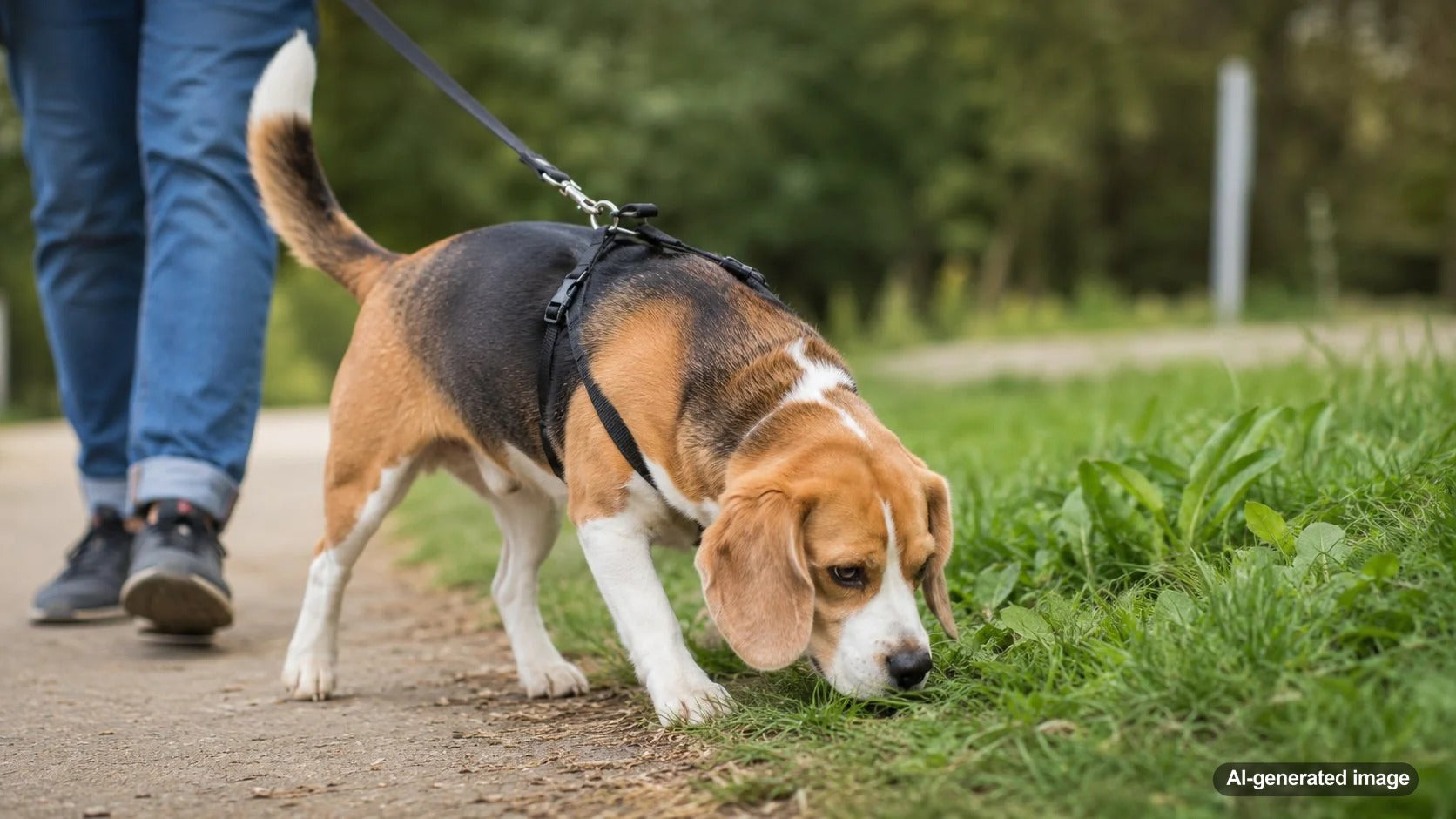
A Beagle can turn a simple trip around the block into a full-scale scent investigation. While you may be watching the clock or counting steps, your dog is decoding who passed by, where a squirrel traveled, and what changed since yesterday. For this scent-driven breed, slowing down to sniff is not wasted walking time. It is one of the most meaningful forms of enrichment you can offer.
Beagles still need physical exercise, but a fast, tightly controlled march does not fully satisfy the instincts they were bred to use. A balanced routine gives them opportunities to move their bodies, follow interesting smells, make safe choices, and return home mentally fulfilled.
Beagles Were Built to Follow Their Noses
Beagles are scent hounds developed to track trails over the ground. Once an interesting odor reaches a Beagle's nose, the rest of the world can temporarily become less important. That deep sniffing, zigzagging, and sudden stop beside an ordinary-looking bush are not signs that your dog has forgotten how walking works. They are normal expressions of breed-specific behavior.
A speed walk often asks a Beagle to ignore the very information that matters most to them. The dog may cover more distance, but the walk can feel like being rushed through an exciting story without being allowed to read the pages.
Sniff walks give Beagles a safe outlet for tracking, searching, and environmental investigation. They may also help reduce the frustration that can build when a scent-driven dog rarely gets to use their strongest natural ability.
Sniffing Exercises the Brain as Well as the Body
During a sniff walk, your Beagle is constantly sorting and comparing scent information. A patch of grass may reveal another dog's presence, wildlife activity, food crumbs, weather changes, or a path someone took hours earlier. Processing those details requires concentration.
This is why a short, scent-rich outing may leave some Beagles more settled than a longer walk spent pulling forward at a steady pace. Physical movement uses muscular energy, while sniffing adds a layer of mental work. Both matter, especially for a curious dog who becomes bored easily.
Watch your Beagle after different types of outings. A dog who returns from a fast walk and immediately starts pacing, stealing socks, or searching the kitchen may still be looking for something mentally engaging. After an unhurried sniff session, that same dog may be more ready to drink water, relax, or nap.
What a Good Beagle Sniff Walk Looks Like
A sniff walk does not require a special trail or a long afternoon. You can begin in your neighborhood, a quiet park, or another safe place with plenty of interesting smells.
- Use a secure harness and leash that give you comfortable control without constantly pulling your Beagle away from the ground.
- Choose a low-traffic area where your dog can pause without blocking people, bikes, or cars.
- Let your Beagle select some of the stopping points and spend time investigating them.
- Keep moving when safety requires it, then offer another chance to sniff nearby.
- Use small rewards to practice check-ins, leash turns, and leaving unsafe objects.
The goal is not to let your Beagle drag you anywhere they choose. Sniff walks still need boundaries. You decide which locations are safe, while your dog gets more freedom over the pace and what to investigate within those limits.
Sniff Walks Are Not the Same as Pulling Walks
Owners sometimes hesitate to encourage sniffing because their Beagle already pulls toward every smell. The solution is not necessarily to ban sniffing. It is to make sniffing a structured reward.
Practice a few steps on a loose leash, mark the behavior with a word such as "yes," and then release your dog with a cue like "go sniff." Over time, your Beagle can learn that staying connected to you is what earns access to the environment.
Bring bite-sized rewards that are quick to deliver without interrupting the walk. Love Nuggets can be used as training rewards for check-ins, coming away from tempting trash, or calmly passing another dog. Keep treats small and account for them as part of your dog's daily food intake.
Combine Sniffing With Short Bursts of Movement
Choosing sniff walks does not mean your Beagle should never walk briskly. Many dogs benefit from a mixed outing. You might begin with five minutes of steady movement, spend ten minutes exploring a grassy area, practice a few recall or leash exercises, and finish with another active stretch.
Puppies may need shorter outings because their bodies and attention spans are still developing. Senior Beagles may enjoy long sniffing pauses even when they cannot comfortably cover as much distance. Adjust the terrain, duration, and pace to your dog's age, fitness, weather tolerance, and veterinary guidance.
If your Beagle suddenly resists walking, limps, pants unusually hard, seems painful, or shows a major change in energy, contact your veterinarian rather than assuming the dog is simply being stubborn.
Continue the Scent-Based Enrichment at Home
Bad weather, busy schedules, and recovery days can limit outdoor exploration. You can still satisfy some of your Beagle's foraging instincts indoors by scattering part of a meal in a safe room, hiding treats in easy locations, or using an interactive feeder.
The Walkabout turns kibble or treats into a rolling search game, encouraging your dog to move, sniff, and problem-solve for food. Start with an easy setting so your Beagle learns how the toy works, supervise the first sessions, and make the challenge harder only when your dog remains interested rather than frustrated.
Common Sniff-Walk Mistakes
One common mistake is measuring every walk by mileage. Distance can be useful, but it does not show how mentally satisfying the outing was. Another is allowing unlimited access to unsafe areas. Beagles may investigate discarded food, animal waste, sharp debris, or plants that should not be eaten, so attentive supervision still matters.
It is also easy to use the exact same route every day. Familiar routes are comforting, but occasional changes in direction or location create new scent information. Even walking the usual loop backward can make the experience feel different to your dog's nose.
Finally, do not expect sniffing alone to solve persistent pulling, reactivity, separation distress, or destructive behavior. Enrichment can support a broader routine, but significant behavior concerns may require help from a qualified trainer, behavior professional, or veterinarian.
Dog Parent FAQs
How long should a Beagle sniff walk be?
There is no single ideal length. Start with 15 to 30 minutes and adjust for your Beagle's age, health, fitness, weather, and behavior after the walk.
Should I let my Beagle sniff every single thing?
No. Allow plenty of safe investigation, but interrupt access to trash, animal waste, toxic plants, roads, or anything your dog may swallow.
Can sniff walks tire out a high-energy Beagle?
They may help provide satisfying mental exercise, but most Beagles still need an appropriate combination of movement, training, play, rest, and enrichment.
Why does my Beagle ignore me when sniffing?
A powerful scent can temporarily overpower competing distractions. Practice rewarded check-ins in easier environments before expecting reliable attention around highly exciting smells.
Let Your Beagle Read the Neighborhood
A walk does not have to be fast to be valuable. For a Beagle, pausing at a tree, tracing a scent across the grass, and carefully investigating a breeze are meaningful activities rather than delays.
Give your dog a healthy mix of sniffing freedom, safe boundaries, physical movement, and simple training. You may cover fewer blocks, but your Beagle can return home having experienced a much richer walk.


