






































































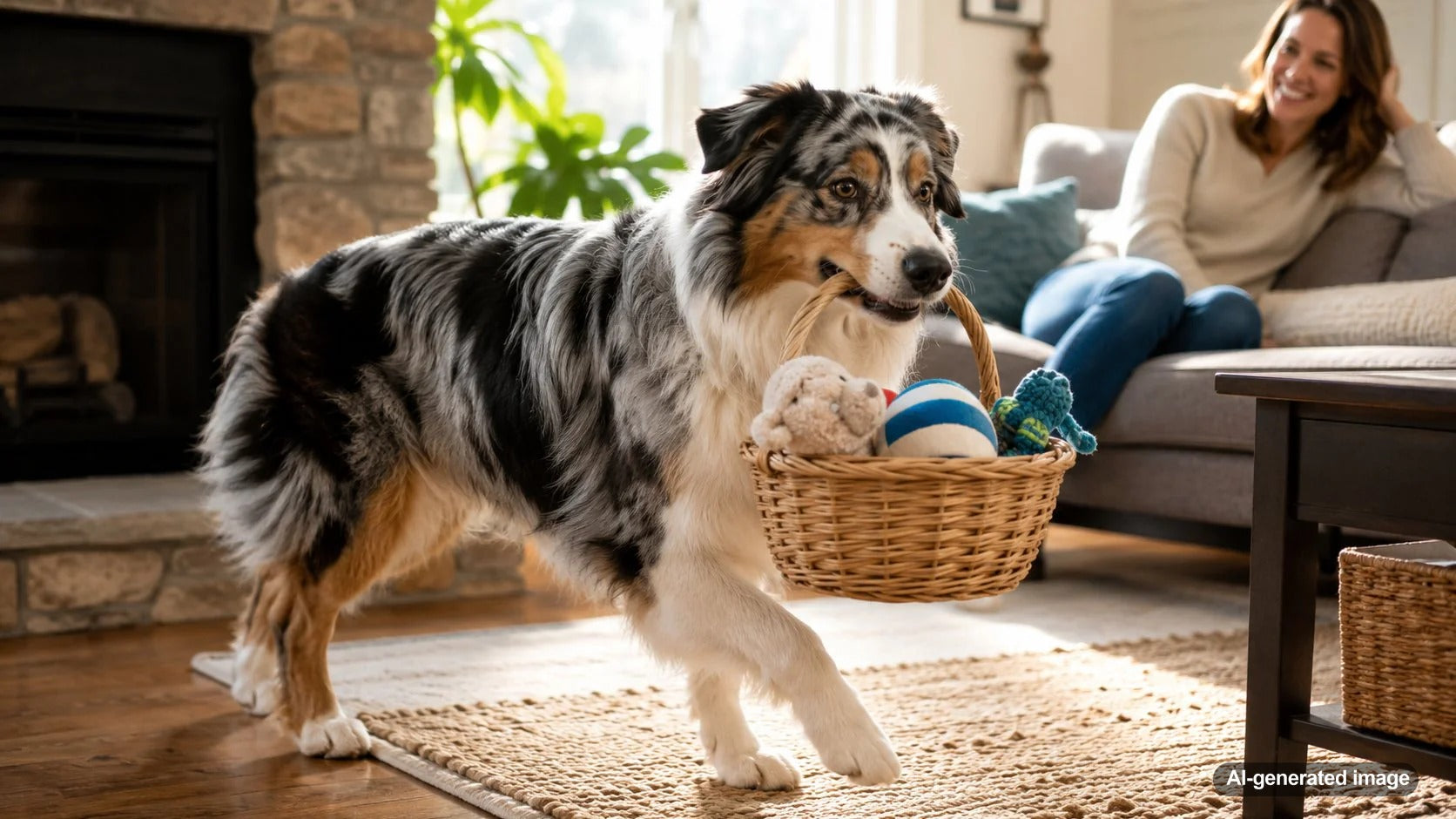
Australian Shepherds do not wake up thinking, "I would love to ruin the couch today." More often, they wake up with a brain that wants a project, a body that wants movement, and instincts that were shaped for watching, sorting, chasing, and problem-solving. When an Aussie does not get a clear job, they may create one, and that job might be patrolling the windows, herding the kids, shredding a toy, barking at every leaf, or reorganizing your laundry with great confidence.
That is not because Australian Shepherds are "bad dogs." They are smart, energetic herding dogs who often need more than a basic walk and a bowl of food. The sweet spot is giving them safe, repeatable outlets that feel like work without turning your entire day into a dog sports tournament.
Quick answer: Australian Shepherds invent jobs because they are intelligent, active, pattern-noticing dogs with strong working instincts. If their day does not include enough movement, mental stimulation, chewing, licking, training, sniffing, and predictable routines, they may redirect that energy into behaviors humans find annoying or destructive.
Why Aussies Are So Good at Finding Work
Australian Shepherds were developed as herding dogs, which means many of them are naturally tuned in to motion, routine, body language, and changes in their environment. A stroller rolling by, a cat crossing the room, a child running through the yard, or a delivery truck stopping outside can all look like information that needs to be managed.
This is why some Aussies seem to notice everything. They may stare, circle, nudge, bark, chase, or try to control movement. To a dog parent, it can look like bossiness. To the dog, it may feel like participating in the household system. The problem starts when the dog is given no better outlet for that focus.
What "Invented Jobs" Look Like in Real Life
An Aussie with too much unused mental energy might assign themselves a role. Doorbell security manager. Backyard squirrel supervisor. Sock relocation specialist. Hallway traffic controller. Small-child herding assistant. Couch cushion inspector.
These behaviors often get worse during predictable pressure points: right before dinner, after a quiet workday, when guests arrive, during bad weather, or when the dog has missed their usual exercise. Puppies and adolescent Aussies may be especially creative because their impulse control is still developing. Senior Aussies may need gentler jobs, but many still enjoy solving problems and participating in routines.
Physical Exercise Helps, But It Is Not the Whole Job
A long walk can help, but exercise alone may not satisfy an Australian Shepherd. In fact, some dogs become better athletes without becoming calmer thinkers if every solution is just more running. Many Aussies do best with a mix of movement and brain work.
Think of it like this: fetch drains the body, but training, sniffing, chewing, licking, and puzzle play give the brain something to do. A balanced day might include a walk with sniff breaks, a short training session, a food puzzle, a safe chew, and a settling routine. None of these need to be complicated, but they should be consistent enough that your dog learns what to expect.
Helpful tip: If your Aussie gets wild after exercise, add a calming follow-up routine instead of ending with peak excitement. A few minutes of licking, chewing, or slow feeding can help create a smoother transition from "go mode" to "settle mode."
Give Your Aussie a Job They Are Allowed to Do
The best enrichment jobs are simple, safe, and easy for you to repeat. Your Aussie does not need a ranch to feel useful. They need a task with rules, a beginning, and an end.
Scatter a few treats in grass or around a room and release your dog to search.
Offer a lick mat or slow feeder during grooming, work calls, or post-walk downtime.
Use a supervised chew session when your dog needs to gnaw instead of grabbing household items.
Practice 3 to 5 cues for a few minutes, then end before your dog gets frustrated.
For food-based focus, The Pupsicle can be a useful tool because it turns treat time into a longer-lasting enrichment session. For dogs who relax through licking, the FlipMat can support slower, calmer engagement while adding a bit of problem-solving to snack time.
Common Mistakes Dog Parents Make With Busy Aussies
Too much freedom too soon: A bored Aussie with full access to the house may find projects in every room.
Only exercising the body: Running helps, but thinking work matters too.
Waiting until the dog is already frantic: Enrichment works best before the chaos starts.
Accidentally rewarding the invented job: If barking at the window always gets attention, your Aussie may keep that job proudly.
Try setting up the right job before the usual trouble window. If your dog gets restless at 5 p.m., start a sniff game, chew session, or training routine at 4:45. If your dog barks at passersby, block the view during busy times and give them an alternate station, such as a mat, crate, or cozy spot with an approved activity.
How to Build a Better Daily Routine
Aussies often thrive on rhythm. They do not need every minute scheduled, but they do benefit from predictable outlets. Start with one morning job, one midday reset, and one evening calm-down activity.
For example, the morning can include a walk with sniffing and a few training cues. Midday can be a puzzle, slow feeder, or short search game. Evening can be supervised chewing or licking while the household winds down. Keep sessions short at first. A few successful minutes are better than a long session that ends with frustration.
Always supervise new toys, chews, and enrichment activities, especially with power chewers. Choose sizes and textures that fit your dog, remove damaged items, and adjust if your Aussie is swallowing pieces, guarding items, or getting overly worked up.
When an Invented Job Might Need Extra Help
Some behavior is more than boredom. If your Australian Shepherd suddenly becomes destructive, starts obsessively licking, shows major appetite changes, seems painful, has digestive issues, becomes unusually anxious, or shows aggression, check with your veterinarian or a qualified trainer. Medical discomfort, stress, fear, and anxiety can all change behavior.
For herding, nipping, or chasing children, bikes, cars, or other pets, get professional guidance early. These behaviors can be managed more safely when you teach alternative skills before they become deeply practiced habits.
The Bottom Line on Aussie "Jobs"
Australian Shepherds are happiest when their intelligence has somewhere to go. You do not have to entertain your dog all day, and you do not have to be perfect. You just need to give their brain and body a few clear, safe jobs before they start interviewing themselves for positions you did not approve.
When your Aussie has regular outlets for sniffing, chewing, licking, training, movement, and rest, daily life can feel easier for both of you. The goal is not to turn off their brilliance. It is to aim it somewhere better.
Dog Parent FAQs
Why does my Australian Shepherd herd my kids?
Many Aussies are sensitive to fast movement, so running children can trigger herding-style behaviors like chasing, circling, barking, or nipping. Interrupt calmly, manage the setup, and teach alternate cues with help from a qualified trainer if needed.
How much mental stimulation does an Aussie need?
Needs vary by age, health, and personality, but many Aussies benefit from several short brain-work sessions each day. Training, sniff games, puzzle feeding, licking, and chewing can all count.
Can enrichment replace walks?
Usually, no. Enrichment can support calmer behavior, but most Australian Shepherds still need daily physical exercise. The best routine includes both movement and mental work.
What should I try first if my Aussie is destructive?
Start by adding structure, supervision, and approved outlets before the destructive behavior usually happens. If the behavior is sudden, intense, or paired with signs of stress or illness, ask your veterinarian or a professional trainer for guidance.


