






































































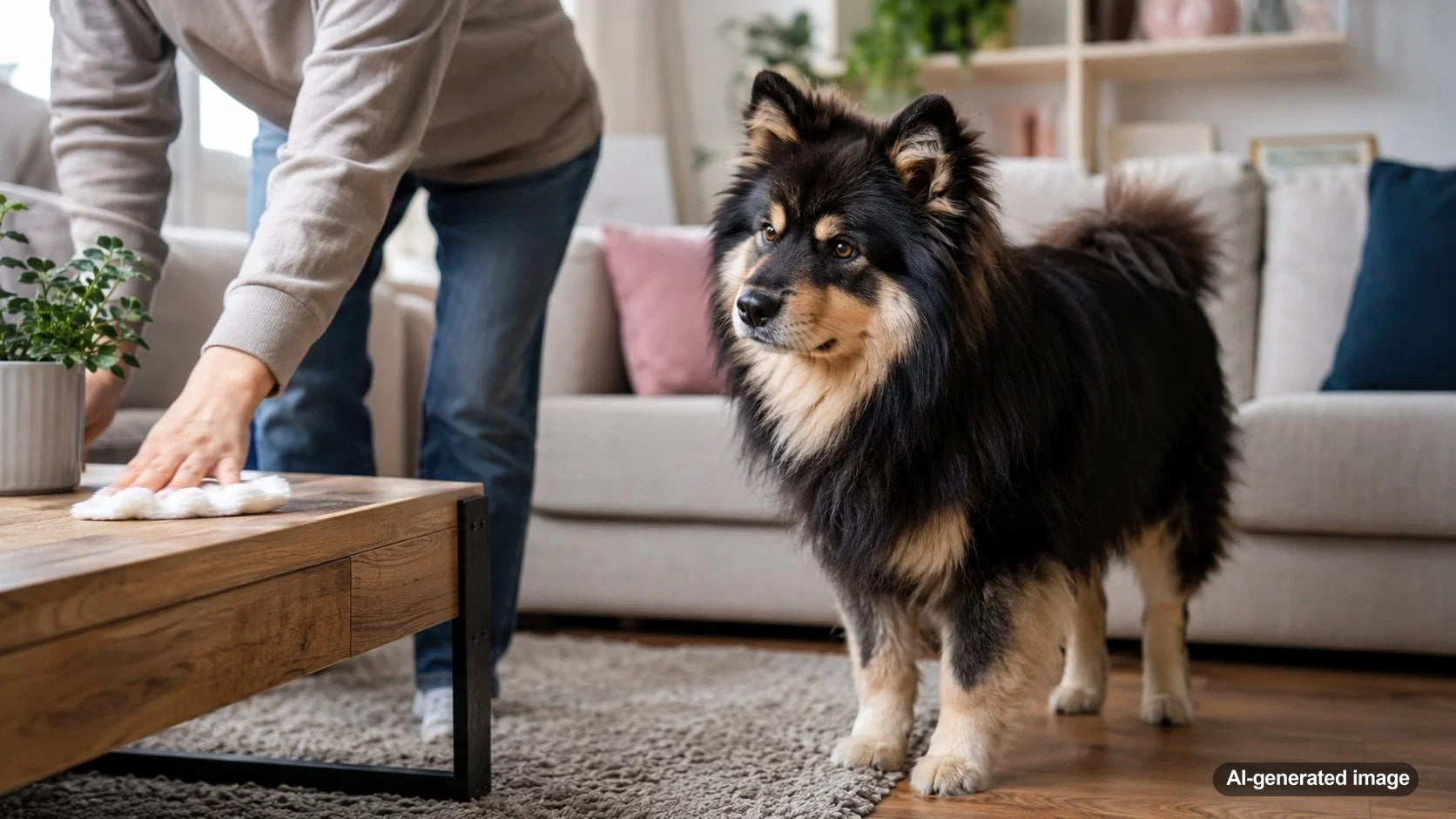
You pick up the laundry basket, and your dog reports for duty. You start wiping the kitchen counters, and a furry face appears directly beneath your elbow. Having a devoted household supervisor can be charming, but it becomes less adorable when your dog blocks the vacuum, investigates cleaning supplies, or settles exactly where you need to step.
The goal is not to stop your dog from enjoying your company. Instead, give them a safe way to participate from the sidelines while teaching that they do not need to follow every broom, basket, and dust cloth.
Why Does Your Dog Follow Every Chore?
Dogs shadow people for several possible reasons. Your movements may predict something interesting, such as food falling during meal prep, a trip outside after laundry, or a game with the vacuum. Social dogs may simply prefer being near their person, while puppies often investigate everything because household routines are still new.
Your reactions can also reinforce supervision without you realizing it. Talking to your dog, repeatedly steering them away, or laughing when they steal a sock all provide attention. Even frustrated attention may make the routine worth repeating.
Following is not automatically a sign of separation anxiety. A relaxed dog who trails you and then naps nearby is different from one who panics when access is blocked. Persistent barking, frantic scratching, escape attempts, destructive behavior near exits, excessive drooling, or an inability to settle when separated deserves a conversation with your veterinarian and, when appropriate, a qualified behavior professional.
Create a Safe Observation Station
Choose a bed or nonslip mat where your dog can see you without occupying the work zone. For cooking, place it beyond the path between the stove, refrigerator, and sink. For laundry, keep it away from detergent containers and appliance doors. The station should feel like a rewarding destination, not a punishment corner.
Start when no real chore is happening. Reward your dog for looking at the mat, stepping onto it, and eventually lying down. Deliver rewards on the mat so the location gains value. Add a cue such as "place" only after your dog is reliably moving there, and use a consistent release word to signal when supervision is over.
Build one skill at a time. First extend the time your dog remains settled. Then take a step away. Finally, introduce mild chore movements. Asking for a long stay while you disappear, open a noisy trash bag, and run the vacuum is too large a jump for an early lesson.
Give Your Supervisor an Appropriate Assignment
Some dogs settle more easily when they have a job of their own. A food puzzle, lick activity, or suitable chew can turn chore time into a predictable enrichment routine. The activity should match the length and intensity of the task. A brief scatter of kibble may cover folding towels, while a longer licking activity may suit cleaning the kitchen.
The Pupsicle is an interactive treat toy that can provide a longer-lasting licking activity while your dog rests at their station. Introduce it separately before depending on it during chores, and count edible fillings toward your dog's daily food and treat intake.
For a shorter routine, FlipMat offers two textured sides that can create different levels of licking and slow-feeding challenge. Place any enrichment item where you can monitor your dog, choose the correct size, and remove it if it becomes damaged or your dog tries to swallow pieces.
Match the Plan to the Chore
- Cooking: Use a station outside the kitchen work triangle. Prevent access to hot pans, dropped onions, sharp utensils, and open ovens.
- Cleaning: Keep your dog away from wet floors, concentrated products, mop water, and freshly treated surfaces. Follow product directions and ventilate the area when instructed.
- Laundry: Store detergent pods, dryer sheets, stain removers, and loose clothing out of reach. Socks can become dangerous swallowed objects.
- Vacuuming: Begin with the vacuum stationary, then move it without turning it on, and finally practice briefly at a comfortable distance. Never chase your dog with it.
- Repairs and yard work: Use a physical barrier when tools, nails, cords, fertilizers, paint, or debris are present.
Management is not a training failure. A closed door or baby gate is the safest choice when you cannot watch both the dog and the task. Give your dog something suitable to do in the protected area, provided they can use it safely without close supervision.
Reward Calm Behavior Before Your Dog Gets Involved
Notice quiet choices early. If your dog lies down while you sort clothes, calmly place a treat between their paws before they get up to investigate. This teaches that remaining settled makes rewards happen.
Avoid repeating cues louder and louder. If your dog leaves the station, make the exercise easier by reducing the distance, shortening the duration, or choosing a quieter chore. Puppies may need very short sessions and frequent potty breaks. Senior dogs may prefer a padded bed close enough to see you without repeatedly getting up on stiff joints.
Dogs who become overexcited may benefit from a sniffing walk or short training session before chores begin. The aim is not to exhaust them, but to meet some movement and mental-stimulation needs so settling is more realistic.
Common Mistakes That Keep the Pattern Going
Do not turn every interruption into a game of chase. Avoid giving food only after barking or pawing begins, since that sequence can reward the interruption. It is also unfair to expect a dog to ignore accessible food, dangling towels, or rolling vacuum attachments without gradual practice.
Consistency matters across the household. If one person rewards the dog for stealing laundry while another tries to teach a calm station, progress will be confusing. Agree on the station, cue, release word, and behaviors that earn attention.
Dog Parent FAQs
Is it normal for my dog to follow me from room to room?
Yes. Many social and curious dogs enjoy staying near their people. It becomes concerning when the behavior is a sudden change, creates distress, or prevents the dog from resting independently.
Should I let my dog watch me vacuum?
Only if your dog remains comfortable and stays at a safe distance. If they bark, lunge, hide, or try to bite the vacuum, stop and use gradual training or physical separation.
Can I give my dog an enrichment toy during every chore?
You can use enrichment regularly, but vary the routine and account for calories. Your dog should also practice settling without food for brief, achievable periods.
When should I ask for professional help?
Contact your veterinarian if following is sudden or accompanies pain, confusion, appetite changes, or other unusual behavior. Seek qualified training or behavior support for panic, aggression, guarding, or severe distress.
Turn Supervision Into a Calm Household Routine
Your dog does not need to resign as household supervisor. They simply need a safer job description. A well-placed mat, gradual training, thoughtful enrichment, and sensible barriers can help your dog stay connected without remaining underfoot. Practice during easy moments, reward the calm behavior you want, and adjust the plan to your dog's age, confidence, and energy level.


