






































































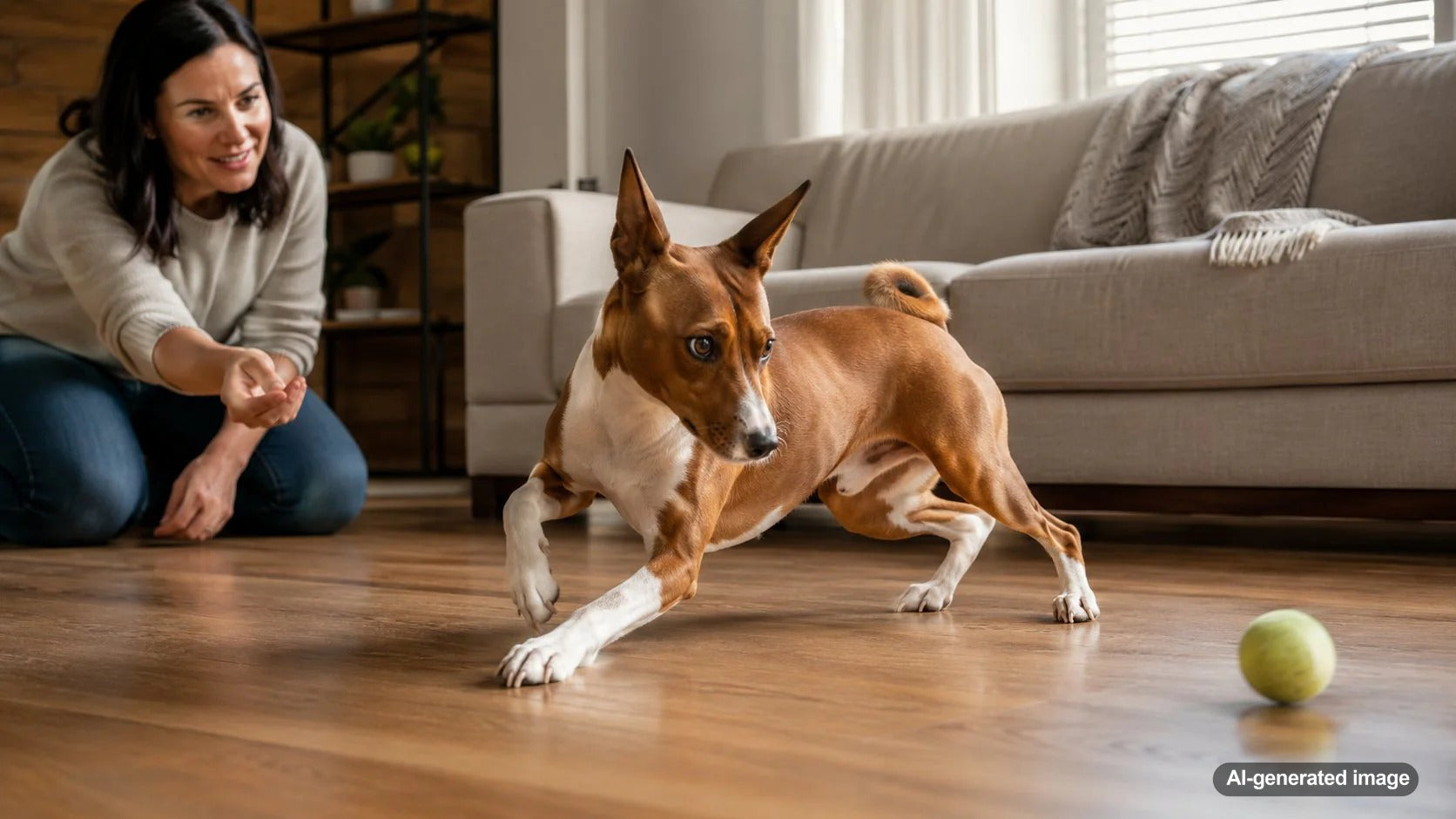
If your dog locks onto squirrels, bikes, joggers, cars, skateboards, birds, cats, blowing leaves, and anything else that dares to move, you are not alone. Chasing is one of those dog behaviors that can feel funny for half a second and then suddenly become stressful, loud, and unsafe. The quick answer is this: stop rehearsing the chase, create more distance from triggers, teach your dog what to do instead, and give their chase drive safe outlets through training, play, chewing, licking, and enrichment.
Most dogs do not chase because they are being stubborn or trying to embarrass you in front of the neighborhood. Movement is exciting, and for many dogs it taps into instinct, curiosity, frustration, prey drive, herding tendencies, or simply a big burst of under-used energy. The goal is not to erase your dog's personality. It is to help them stay connected to you when the world starts moving.
Quick Answer
When your dog wants to chase every moving thing, use a leash or secure long line, move farther away from the trigger, reward your dog for looking back at you, and practice calm replacement behaviors before the chase begins. Do not punish the urge to chase. Instead, manage the environment, build focus, and provide safe outlets like fetch, puzzle play, sniff walks, structured training games, and calming enrichment after exciting outings.
Why Moving Things Are So Hard for Dogs to Ignore
Dogs notice motion fast. A squirrel darting across the yard, a child on a scooter, or a cyclist rolling past can flip a switch before your dog has time to think. For some dogs, the trigger is prey-like movement. For others, it is herding instinct, frustration on leash, fear, overexcitement, or a learned habit that has been practiced again and again.
Breed tendencies can matter, but they are not the whole story. Herding breeds may want to control motion. Terriers and hounds may become intense around small animals. Sporting dogs may fixate on birds or bouncing balls. Puppies may chase because everything is new and thrilling. Seniors may chase less often, but a sudden increase in lunging, confusion, or reactivity is worth discussing with your veterinarian, especially if it appears alongside pain, vision changes, or major behavior shifts.
First, Make Chasing Harder to Practice
Every successful chase can make the next chase more tempting. That does not mean your dog is doing anything wrong. It just means the behavior is rewarding. The squirrel runs, the bike disappears, the jogger moves away, and your dog may think, "Great, I made that happen."
Start with safety and management. Use a well-fitted leash or secure long line in open areas. Avoid letting your dog rehearse chasing cars, cyclists, wildlife, or unknown animals. In the yard, check fences and gates, especially if your dog is a jumper, digger, or door dasher. On walks, cross the street, step behind a parked car, turn onto a quieter path, or create distance before your dog hits full launch mode.
Helpful tip: Distance is not failure. Distance is training. If your dog can notice a moving thing and still eat a treat, sniff the ground, or look back at you, you are probably working at a useful distance. If they are screaming, lunging, spinning, or unable to hear you, you are too close for learning.
Teach a Better Job Than Chasing
A dog who wants to chase needs a replacement behavior that is simple enough to do when their brain is excited. Start at home with no distractions, then practice in quiet places, then slowly bring the skill into more interesting environments.
Three helpful cues are "look at me," "this way," and "find it." "Look at me" teaches your dog to check in with you. "This way" means turn with me and move away from the trigger. "Find it" lets you scatter a few treats on the ground so your dog drops their nose, sniffs, and disengages from the moving thing.
Do not wait until your dog is already lunging. Reward the earliest moment: ears perk up, body freezes, eyes track the bike, tail stiffens, or mouth closes. That tiny pause is your training window. Say your cue, move away smoothly, and reward generously when your dog reconnects.
Use the Right Rewards for the Moment
Chasing is exciting, so the reward for not chasing needs to matter. Dry kibble may work in the kitchen, but outside you may need tiny, high-value treats, a favorite tug toy, a quick game, or a chance to sniff. For dogs who are highly motion-driven, tossing a treat away from the trigger can be useful because it gives them movement in a safe direction.
Keep rewards small and easy to chew. You are not trying to feed a full meal on the sidewalk. You are trying to create a strong pattern: moving thing appears, dog checks in, good things happen, and everyone stays safe.
For training sessions, Love Nuggets can be a useful pocket-friendly reward because bite-sized treats are easier to deliver quickly when your dog offers a glance, turn, or calm pause. The treat is not the whole training plan, but the right reward can make the plan easier to repeat.
Give Chasey Dogs Safe Outlets
A dog with a big chase drive often needs more than leash manners. They need safe ways to move, stalk, sniff, grab, chew, solve, and decompress. When those needs are met, many dogs have an easier time making good choices outside.
Safe outlets to try
Structured fetch: Ask for a sit, down, or hand target before each throw so the game builds impulse control, not just speed.
Flirt pole games: Use short sessions and teach a release cue. This can be intense, so keep it controlled and avoid sharp turns for puppies, seniors, or dogs with joint concerns.
Sniff walks: Let your dog investigate grass, trees, and safe trails. Sniffing can be deeply satisfying and mentally tiring.
Puzzle and treat play: Give your dog a job that uses their brain instead of their leash-lunging muscles.
Calming lick time: After an exciting walk, licking can help many dogs shift from high alert to settle mode.
If your dog comes home from a trigger-heavy walk still buzzing, a decompression routine can help. A toy like The Pupsicle can turn treat time into longer-lasting enrichment, giving your dog something appropriate to focus on after a big outing. For dogs who calm through licking, it can be part of a predictable reset routine once they are safely home and supervised.
Practice Around Motion the Smart Way
Do not start training next to a busy road, packed bike path, or squirrel-filled park at sunset. Pick an easier setup. Watch bikes from across a wide field. Sit far from a playground. Stand at the edge of a parking lot where cars are slow and distant. Your goal is not to test your dog. Your goal is to set up repetitions they can win.
Try this simple pattern: notice the moving thing, mark the calm moment with a cheerful word like "yes," feed a treat, then move away before your dog explodes. Over time, your dog learns that movement in the environment predicts checking in with you, not launching forward.
Keep sessions short. Five calm repetitions are better than a 30-minute struggle. End before your dog is fried. Dogs learn best when they are under threshold, which means they can still think, eat, respond, and recover.
Common Mistakes That Make Chasing Worse
One common mistake is tightening the leash the second a trigger appears. It is understandable, but a tight leash can add tension and make some dogs feel even more frustrated. Instead, create distance, turn your body, and guide your dog away before the leash becomes a battle.
Another mistake is letting the dog stare too long. Staring can look calm, but for many dogs it is the loading screen before the chase. If your dog freezes, stalks, crouches, whines, or starts breathing harder, interrupt gently and move.
It also helps to avoid yelling. Loud correction may stop a dog for a moment, but it can add stress around the trigger. If your dog already finds bikes, cars, or joggers overwhelming, stress can make the behavior harder to change.
When to Get Extra Help
Some chase behaviors need professional support. Contact a qualified positive-reinforcement trainer or veterinary behavior professional if your dog has chased cars, bitten or nipped people, redirected onto the leash or handler, escaped the yard, or cannot calm down around common triggers. Also check with your veterinarian if the behavior appears suddenly, worsens quickly, or comes with signs of pain, illness, anxiety, appetite changes, limping, excessive drooling, vomiting, diarrhea, or other health concerns.
There is no shame in getting help. Chasing can be dangerous, and a personalized plan can protect your dog, your family, and the people and animals around you.
A Simple Daily Routine for Chasey Dogs
Start the day with a short sniff walk or indoor training game before the busiest outdoor hours. On walks, carry small rewards and choose routes where you can create space. Practice check-ins before your dog notices a trigger, not only after. After walks, offer a calm activity like licking, chewing, or a food puzzle so your dog has a landing routine.
On high-trigger days, lower your expectations. Windy weather, wildlife activity, trash trucks, school pickup, or weekend bike traffic can make the world harder for your dog. A shorter, calmer walk with enrichment at home may be more productive than forcing a long walk full of lunging.
Bottom line: Your dog does not need to chase every moving thing to have a rich, fun life. With distance, practice, rewards, and safe outlets for their instincts, you can help them turn "must chase" into "I can check in with my person."
Dog Parent FAQs
Will my dog grow out of chasing everything?
Some puppies become less impulsive with maturity, but many dogs need training and management. If chasing is rehearsed often, it can become stronger over time.
Should I let my dog chase squirrels in the yard?
It may seem harmless, but frequent chasing can build intensity and make it harder for your dog to listen around wildlife. Supervision, recall practice, and safer games are better choices.
Can I train my dog not to chase cars?
Many dogs can improve with distance, leash safety, reward-based training, and professional help when needed. Because cars are dangerous, avoid practicing close to traffic and get qualified support if your dog lunges toward vehicles.
What is the best first cue to teach?
A cheerful "this way" cue is often useful because it tells your dog exactly what to do: turn with you and move away. Practice it at home first, then on quiet walks, then around mild distractions.
Is chasing always prey drive?
No. Dogs may chase because of prey drive, herding instinct, fear, frustration, excitement, boredom, or habit. Watching your dog's body language and triggers can help you choose the right training plan.


