






































































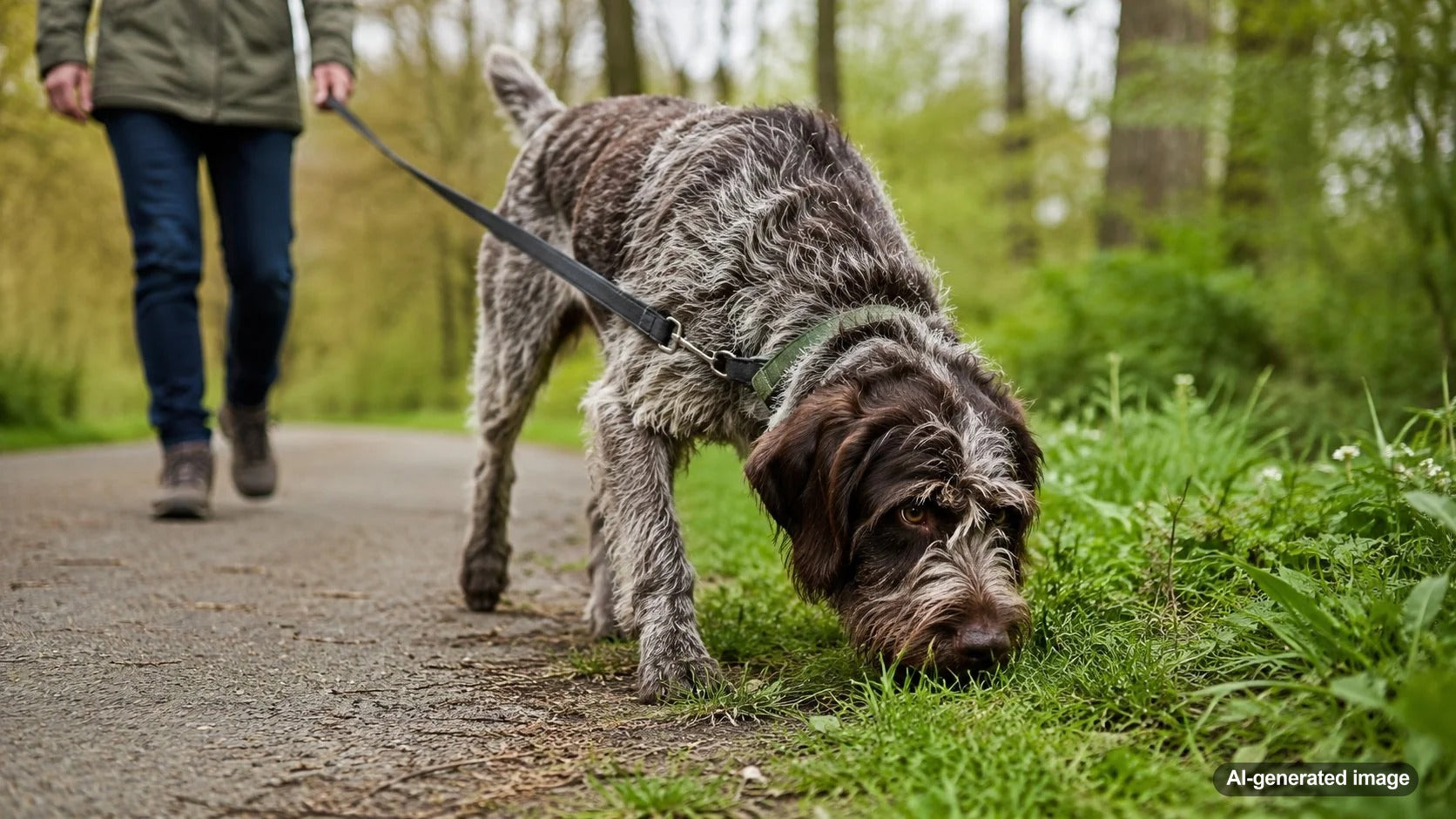
You planned a brisk walk around the neighborhood, but your dog apparently planned a detailed investigation of every mailbox, shrub, fire hydrant, and suspicious blade of grass. A sniff marathon can test your patience when you are short on time, yet it is rarely a sign that your dog is being stubborn. Sniffing is one of the main ways dogs gather information, explore their surroundings, and enjoy the mental side of a walk.
The goal is not to eliminate sniffing. It is to create a walk that gives your dog meaningful nose time while still allowing you to move, practice leash manners, and get home before dinner.
Quick answer: Let your dog enjoy planned sniff breaks, then use a consistent cue such as "let's go" to resume walking. Reward your dog for leaving a scent and moving with you. When you need exercise, alternate short sniffing periods with purposeful walking instead of expecting either nonstop sniffing or nonstop heeling.
Why Dogs Stop to Sniff Everything
A neighborhood that looks familiar to you may smell completely different to your dog each day. Other dogs, wildlife, delivery workers, rain, wind, lawn care, and discarded food can all leave new scent information behind. Your dog may be learning who passed through, which direction an animal traveled, or whether another dog recently marked the area.
Breed and personality matter, too. Scent hounds and many hunting breeds may become deeply absorbed in odor trails, while curious puppies often stop because nearly everything is new. Senior dogs may prefer slow scent exploration when long, fast walks are no longer comfortable. A dog who spends most of the day indoors may also treat a walk as a major opportunity for mental enrichment.
Sniffing can be tiring in a different way than running. A slow 20-minute exploration may leave some dogs more settled than a longer walk spent pulling forward without having a chance to investigate.
Decide What Kind of Walk You Are Taking
Many frustrating walks begin because the dog and owner have different expectations. Before leaving, decide whether the outing is primarily a bathroom break, an exercise walk, a training session, or a relaxed sniff walk.
On a sniff walk, choose a safe, quieter route and allow plenty of time for wandering. On an exercise walk, keep moving for longer stretches but include several planned sniff breaks. A quick bathroom trip can be short and predictable, especially if your dog has learned a potty cue.
You do not need to make every outing the same. A dog can learn that one walk is leisurely while another has more structure.
Use Sniffing as a Reward
Sniffing is naturally valuable to many dogs, so it can become part of your leash-training strategy. Ask for a few steps of loose-leash walking, mark or praise the behavior, and then say a release cue such as "go sniff." Let your dog investigate for a short period before using your movement cue.
This teaches a useful pattern: walking politely makes access to interesting smells more likely. It is often more effective than repeatedly pulling a dog away from every scent.
Bring small, easy-to-eat rewards for moments when leaving a smell is especially difficult. Woof's bite-sized Love Nuggets can be useful for reinforcing check-ins and smooth transitions without turning the walk into a full meal.
Teach a Reliable "Let's Go" Cue
Practice the cue somewhere easy before testing it beside the most fascinating tree in the neighborhood. Say "let's go" in a cheerful voice, turn your body in the direction you want to move, and reward your dog as soon as they follow.
Avoid repeating the cue five or six times while standing still. That can teach your dog that the first few requests do not matter. Give the cue once, make your movement clear, and reward the response.
Start with low-interest scents and gradually practice around harder distractions. For especially captivating spots, give your dog a few seconds to finish investigating before asking them to leave. Cooperation tends to improve when sniffing does not always end abruptly.
Set a Sniffing Time Limit Without Rushing
You do not need to count every second, but a simple routine can prevent one odor from consuming the entire outing. Allow a reasonable pause, offer your movement cue, and continue walking. Another sniff opportunity will be available farther down the route.
You can also divide the walk into zones. For example, let your dog sniff freely along the grassy first block, walk steadily for the next two blocks, and finish with another exploration period near home.
Helpful tip: On rushed mornings, choose a short route with several reliable sniffing spots. Predictability can make the outing satisfying without allowing every driveway to become a ten-minute investigation.
Watch the Difference Between Relaxed and Frantic Sniffing
Relaxed exploration usually includes a loose body, a comfortable pace, and the ability to respond when you speak or move. Frantic sniffing may appear fast, scattered, and tense. Your dog might zigzag, pant when it is not hot, scan constantly, tuck their tail, or struggle to take treats.
That pattern may mean the environment is overwhelming rather than enjoyable. Move to a quieter area, create more distance from traffic or other dogs, and shorten the outing. A qualified positive-reinforcement trainer can help when fear, reactivity, or leash frustration regularly takes over walks.
Contact your veterinarian if sniffing changes suddenly or appears with unusual behavior such as disorientation, repeated circling, limping, excessive drooling, nasal discharge, appetite changes, or apparent pain.
Balance Nose Work With Physical Movement
A sniff-heavy walk provides valuable mental activity, but many dogs still need opportunities for age-appropriate physical exercise. Alternate sniff walks with steady walks, play sessions, training games, or safe off-leash activity in a securely enclosed area.
When weather, mobility, or your schedule limits outdoor time, bring the search indoors. Hide a few treats around one room, scatter kibble in a safe area, or use an interactive feeder. The Walkabout turns food into a rolling puzzle, giving sniff-focused dogs another way to forage and problem-solve at home.
Adjust the challenge to your dog. Puppies need short, successful games. Seniors may benefit from easier searches on nonslip surfaces. Dogs who become frustrated should start with treats that are easy to find before progressing to harder puzzles.
Dog Parent FAQs
Should I let my dog sniff as long as they want?
Allow generous sniffing when time and safety permit, but use planned breaks and a trained movement cue when you need to continue.
Does sniffing count as exercise for dogs?
Sniffing provides meaningful mental activity and may be tiring, but most dogs also need suitable physical movement based on their age, health, and abilities.
Why does my dog sniff more on some walks?
Weather, wildlife, other dogs, unfamiliar routes, and recent activity in the area can make certain walks far more interesting to your dog's nose.
Can sniffing help a dog settle after a walk?
Calm scent exploration may help many dogs decompress, especially when the route is quiet and the dog is allowed to explore without constant pressure.
Let the Walk Work for Both of You
A successful walk does not have to cover a certain number of miles. It should provide safe movement, useful enrichment, and a manageable routine for both ends of the leash. Give your dog permission to investigate, teach clear cues for moving on, and vary the purpose of your outings. You may still pause at plenty of shrubs, but those pauses can become part of the plan instead of a daily battle.


