






































































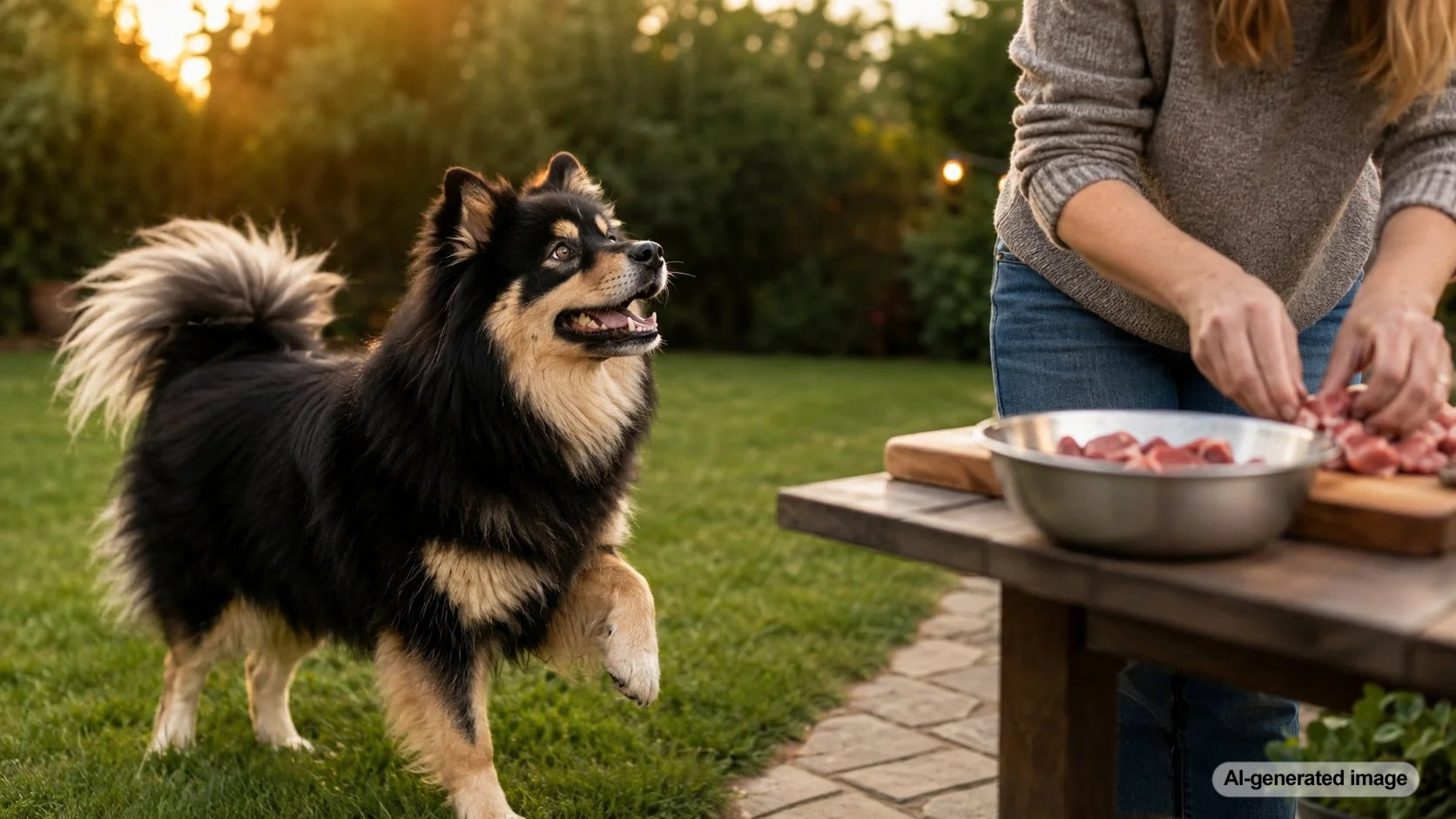
The cutting board comes out, a food container opens, and suddenly your dog is starring in a one-dog dinner show. Barking, spinning, whining, counter watching, and dramatic sighing can make a simple meal feel like a live performance. The most effective response is to stop rewarding the production, teach a calm behavior your dog can perform instead, and make that behavior worthwhile.
This does not require banishing your dog from every family moment. With a predictable routine, your dog can learn that dinner preparation means settling on a mat, working on an enrichment activity, or waiting quietly outside the kitchen.
Why Dinner Prep Becomes a Performance
Dogs are excellent at recognizing patterns. The refrigerator door, clinking bowl, can opener, and familiar preparation sequence can all predict food. Your dog may become excited before a single bite appears because those sights and sounds have become cues.
The performance also may have worked before. A dropped ingredient, a taste from the counter, eye contact, laughter, or even repeated scolding can reward attention-seeking behavior. If barking occasionally makes dinner arrive faster, your dog may learn that persistence pays. This does not necessarily mean your dog is starving or trying to dominate the kitchen. It usually means anticipation and reinforcement have built a strong habit.
Choose the Behavior You Want Instead
It is easier to teach a clear alternative than to keep saying no. Pick a bed, non-slip mat, or open crate positioned beyond the busiest kitchen path. The location should let a social dog see the family without placing paws or tails underfoot.
Practice outside mealtime first. Say a simple cue such as "place," guide your dog to the station, and reward any early success. At first, that might mean one paw touching the mat. Gradually work toward all four paws on the mat, lying down, and remaining there until you give a release cue.
Keep early sessions short. Puppies may manage only a few seconds before needing another reward. Senior dogs may benefit from a cushioned, non-slip surface that is easy to reach. If your dog guards food or becomes tense when approached, consult a qualified reward-based trainer rather than reaching for the food or forcing the dog off the station.
Build a Repeatable Pre-Dinner Routine
- Give your dog a bathroom break or brief sniff walk when possible.
- Measure the full meal before preparation excitement begins.
- Reserve a portion for station rewards or enrichment.
- Cue your dog to the designated place before opening tempting ingredients.
- Release your dog only after preparation is finished and the kitchen is safe.
Using measured kibble from the meal helps prevent training rewards from quietly adding too many calories. For dogs that inhale dinner, the Walkabout can turn an appropriate portion of kibble into a rolling slow-feeder activity away from the cooking zone. Another option is spreading a dog-safe food on a FlipMat to encourage focused licking. Choose the challenge that fits your dog, supervise use, and count everything served toward the daily food plan.
Reward Calm Before the Curtain Goes Up
Do not wait for a full barking routine and then present the best treat in the house. That sequence can accidentally teach your dog that noisy behavior starts the reward process. Instead, notice the quiet moments: four paws on the floor, a relaxed body, looking away from the counter, or choosing the mat without being asked.
Deliver rewards at the station rather than from the cutting board or table. This distinction matters. Food handed over near the cooking area can make that location more valuable, while rewards placed on the mat strengthen the behavior and position you actually want.
Everyone in the household needs to follow the same rule. One person slipping the dog a bite "just this once" can keep begging remarkably persistent because occasional rewards encourage the dog to keep trying.
Use Management While Training Catches Up
Training takes repetition, but dinner still has to happen tonight. A pet gate, closed door, exercise pen, or leash secured with direct adult supervision can prevent rehearsals of jumping and counter surfing. Management is especially important when hot pans, sharp utensils, glass dishes, or guests are involved.
Keep ingredients and scraps away from counter edges, and use a covered trash container. Onions, garlic, grapes, raisins, chocolate, alcohol, foods containing xylitol, and certain other human foods can be dangerous to dogs. If your dog eats something questionable, contact your veterinarian or a pet poison service promptly instead of waiting for symptoms.
What Not to Do
Avoid shouting, pushing your dog away, or turning the station into punishment. Excited dogs may interpret loud reactions as participation, while sensitive dogs may become worried about the kitchen without learning what to do instead.
Do not demand a 30-minute stay on the first day. Begin with a duration your dog can successfully handle and add time in small increments. If the dog repeatedly leaves the mat, reduce the difficulty by shortening the session, increasing distance from the food, or using a gate while you continue practicing.
Dog Parent FAQs
Should I ignore my dog when they bark during dinner prep?
Avoid rewarding the barking with food or animated attention, but do not rely on ignoring alone. Prevent access to the cooking area and reinforce a specific alternative, such as resting on a mat.
Can I give my dog dinner before I cook?
Yes. Feeding first works well for some dogs. Others remain interested in human food, so pairing an earlier meal with station training and safe management may still be necessary.
How long does it take to stop kitchen begging?
Every dog is different. Consistent daily practice often produces gradual improvement, but a long-reinforced habit may take more time. Keep sessions achievable and make sure every household member follows the routine.
What if my dog suddenly acts ravenous all the time?
Contact your veterinarian, particularly if the change comes with weight loss, increased thirst, digestive trouble, medication changes, or other unusual symptoms. Sudden hunger can require medical evaluation.
A Calmer Ending to the Dinner Show
Your dog does not need perfect manners overnight. The practical goal is a safe, repeatable pattern: dinner cues appear, your dog goes to a comfortable station, and calm behavior earns something appropriate. When the quiet routine becomes more reliable than the old performance, dinner prep can return to being an ordinary part of the evening instead of the main event.


