






































































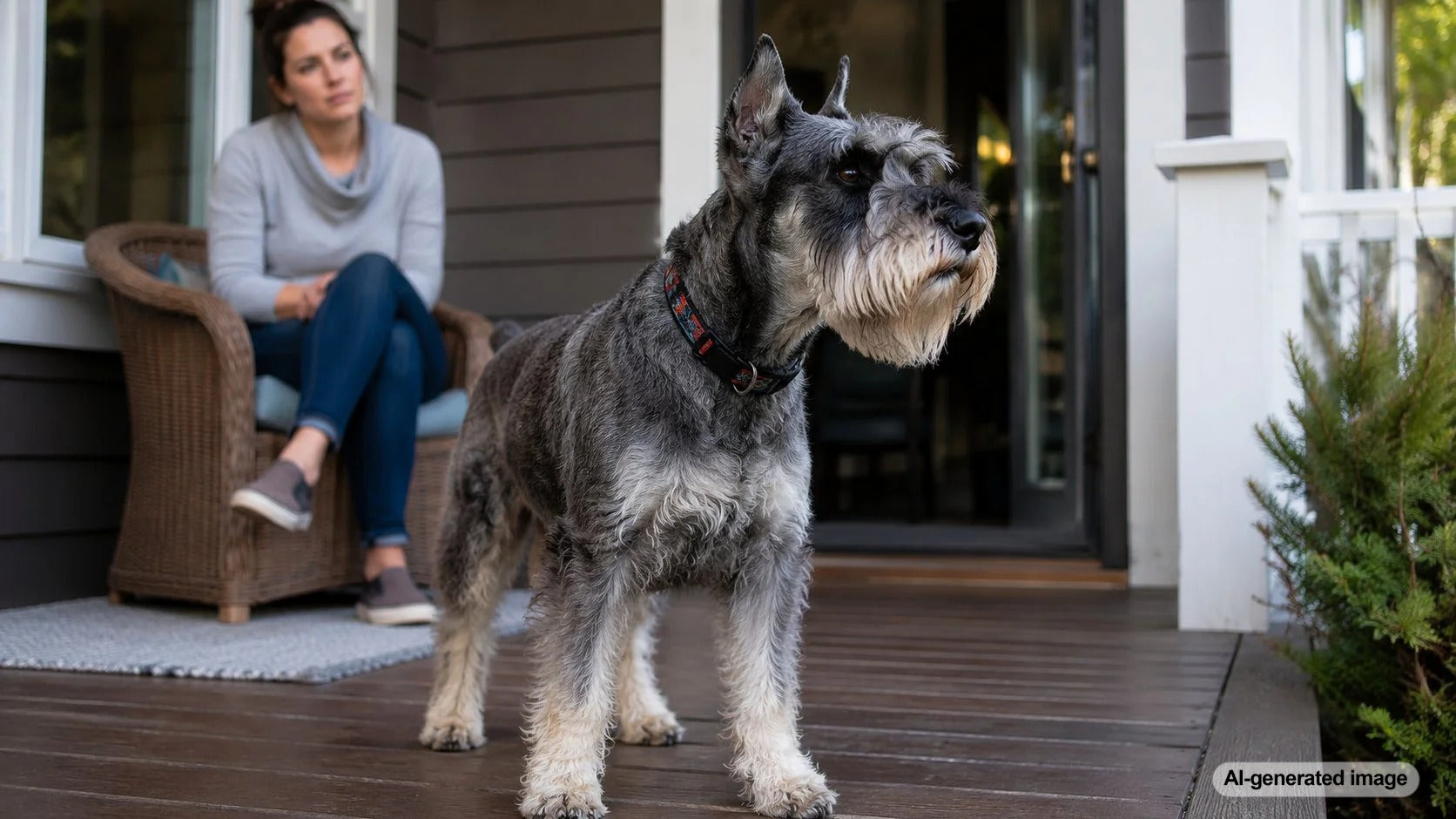
When your dog reacts to every door slam, delivery truck, hallway footstep, microwave beep, or distant bark like the world is ending, daily life can feel noisy for both of you. The goal is not to punish the barking or force your dog to ignore scary sounds overnight. The goal is to help your dog feel safer, recover faster, and learn that not every sound needs a full emergency response.
Sound sensitivity can show up as barking, trembling, hiding, pacing, whining, panting, jumping up, scratching doors, or running to a window. Some dogs are startled by sudden sounds, while others build a whole routine around monitoring the house. If the behavior appeared suddenly, is getting worse, or comes with signs of pain, confusion, hearing changes, appetite changes, or major stress, check in with your veterinarian or a qualified behavior professional.
Quick answer: When your dog treats every noise like an emergency, start by lowering the intensity of the trigger, giving your dog a predictable calm spot, pairing quiet responses with rewards, and practicing short sound sessions below your dog's panic level. Do not yell, flood your dog with loud sounds, or wait until they are already frantic to begin training.
Why Some Dogs React So Hard to Everyday Noises
Dogs notice sound differently than people do. A noise that barely registers to you may be sudden, unfamiliar, high-pitched, or impossible for your dog to locate. That uncertainty can make a dog feel like they need to investigate, alert, escape, or control the situation.
Common triggers include delivery knocks, apartment hallway sounds, garbage trucks, thunder, fireworks, construction, kids running upstairs, appliances, car doors, other dogs barking, or even a phone notification that predicts a visitor. Over time, dogs can start connecting the whole pattern: the truck sound means a package, the package means the doorbell, the doorbell means chaos.
Age and temperament matter too. Puppies may bark because everything is new. Adolescents may suddenly become more reactive as their confidence and awareness change. Senior dogs may react more if they are dealing with discomfort, cognitive changes, or hearing shifts. Small dogs are not automatically more dramatic, and large dogs are not automatically more confident. Any dog can become sound-sensitive.
Start With Management Before Training
Training works best when your dog is not already in full emergency mode. If your dog is barking at every window sound, start by changing the setup. Close blinds during busy delivery hours. Use a fan, white noise machine, or calm music to soften outside sounds. Move your dog's resting area away from the front door if that spot has become the neighborhood watch station.
Create a predictable reset zone with a bed, water, a favorite toy, and a calming activity. This is not a punishment corner. It should feel like a safe little den where your dog can decompress. Some dogs prefer a crate with the door open, some prefer a bedroom, and some settle better near their person.
Helpful tip: If your dog cannot take food, cannot respond to their name, or is frantically scanning for the sound, the trigger is too intense for learning. Make the environment easier first, then practice.
Teach a Better Pattern: Hear It, Check In, Get Rewarded
The most useful skill for noisy homes is a simple pattern: your dog hears a sound, turns back to you, and gets something good. Start with low-level sounds, not the biggest trigger. A quiet knock on a table, a soft door sound from another room, or a low-volume recording can be enough.
When the sound happens, use a calm marker like "yes" or "good," then reward your dog before they spiral. Keep your voice relaxed. You are not trying to hype them up. You are teaching, "That sound predicts something nice, and you do not have to handle it alone."
Practice in tiny sessions of 30 to 90 seconds. End while your dog is still doing well. If your dog barks once but can immediately turn back and take a treat, that is workable. If your dog launches into a long alarm routine, make the sound softer, farther away, or less surprising next time.
Use Licking, Chewing, and Sniffing to Help Your Dog Come Down
After a noise trigger, many dogs need help shifting out of alert mode. Calm enrichment can support that transition because licking, chewing, sniffing, and problem-solving give your dog something specific to do besides patrol the house.
A lick routine can be especially useful during predictable noisy moments like trash pickup, delivery windows, storms rolling in, or guests arriving. Woof's FlipMat can be part of that setup because it gives dogs a focused licking and slow-feeding activity with two challenge levels. For longer distraction, The Pupsicle can help keep pups busy with treat play while you manage the environment around them.
These tools are not a cure for fear or anxiety, and they should not replace training or veterinary support when a dog is severely distressed. Think of them as part of the routine: lower the noise, guide your dog to a safe spot, offer an appropriate enrichment activity, and reward calm check-ins.
What Not to Do When Your Dog Barks at Noises
Common mistakes to avoid:
- Do not yell over the barking. Many dogs read loud human voices as more alarm.
- Do not force your dog to approach the sound. That can make the trigger scarier.
- Do not play loud sound recordings to "get it over with." Too much too soon can backfire.
- Do not only reward silence after a long barking episode. Reward the earlier check-in before the reaction grows.
- Do not ignore sudden new sound fear, especially in senior dogs or dogs showing other changes.
A Simple 7-Day Noise Reset Routine
Days 1 and 2: Track the top three triggers. Write down what happens before the reaction, how intense it is, and how long it takes your dog to settle. You are looking for patterns, not perfection.
Days 3 and 4: Set up management. Block the busiest window view, add background sound, move the resting spot, and prepare rewards near the places where reactions happen.
Days 5 and 6: Practice low-level sound games. Make a soft sound, reward your dog for noticing and turning back, then pause. Keep sessions very short.
Day 7: Add a calm enrichment routine during a predictable noisy time. Use a lick mat, puzzle toy, chew, or Pupsicle-style activity before your dog hits peak alert. The timing matters. It is easier to support calm early than to interrupt panic late.
When to Ask for Professional Help
Some dogs need more support than a home routine can provide. Contact your veterinarian or a qualified trainer or veterinary behavior professional if your dog is injuring themselves, trying to escape, destroying doors or crates, trembling heavily, losing bladder or bowel control, reacting for long periods, or getting worse despite careful practice.
You should also ask your vet about sudden sound sensitivity in an adult or senior dog. Pain, ear issues, cognitive changes, or other health concerns can sometimes make noises feel more threatening. Getting the right help early can keep the problem from becoming a bigger daily stressor.
Dog Parent FAQs
Should I comfort my dog when they are scared of a noise?
Yes, calm comfort is okay. Use a steady voice, gentle presence, and a safe place. Avoid frantic reassurance or scolding, because either can add intensity to the moment.
Will giving treats reward my dog for being scared?
Food does not reward fear in the same way it rewards a trained behavior. When used carefully, treats can help create a better emotional association with low-level sounds. Keep the trigger easy enough that your dog can still think and eat.
Why does my dog bark at some noises but not others?
Your dog may react more to sounds that are sudden, unpredictable, close to the house, connected to visitors, or hard to locate. Past experiences can also make certain sounds feel more important.
Can enrichment stop noise anxiety?
Enrichment may help some dogs settle and redirect their focus, but it is not a guaranteed fix or a replacement for behavior support. For intense fear, pair enrichment with management, training, and professional guidance when needed.
The Bottom Line on Noise-Sensitive Dogs
Your dog is not trying to ruin the afternoon. They are responding to sounds in a way that feels urgent to them. With a calmer setup, lower-intensity practice, better reward timing, and soothing enrichment routines, many dogs can learn to recover faster and treat everyday noise as less of a crisis.
Keep it simple: reduce the trigger, reward the check-in, offer a calming activity, and repeat in small doses. Progress often comes from boring consistency, not one big breakthrough.


