






































































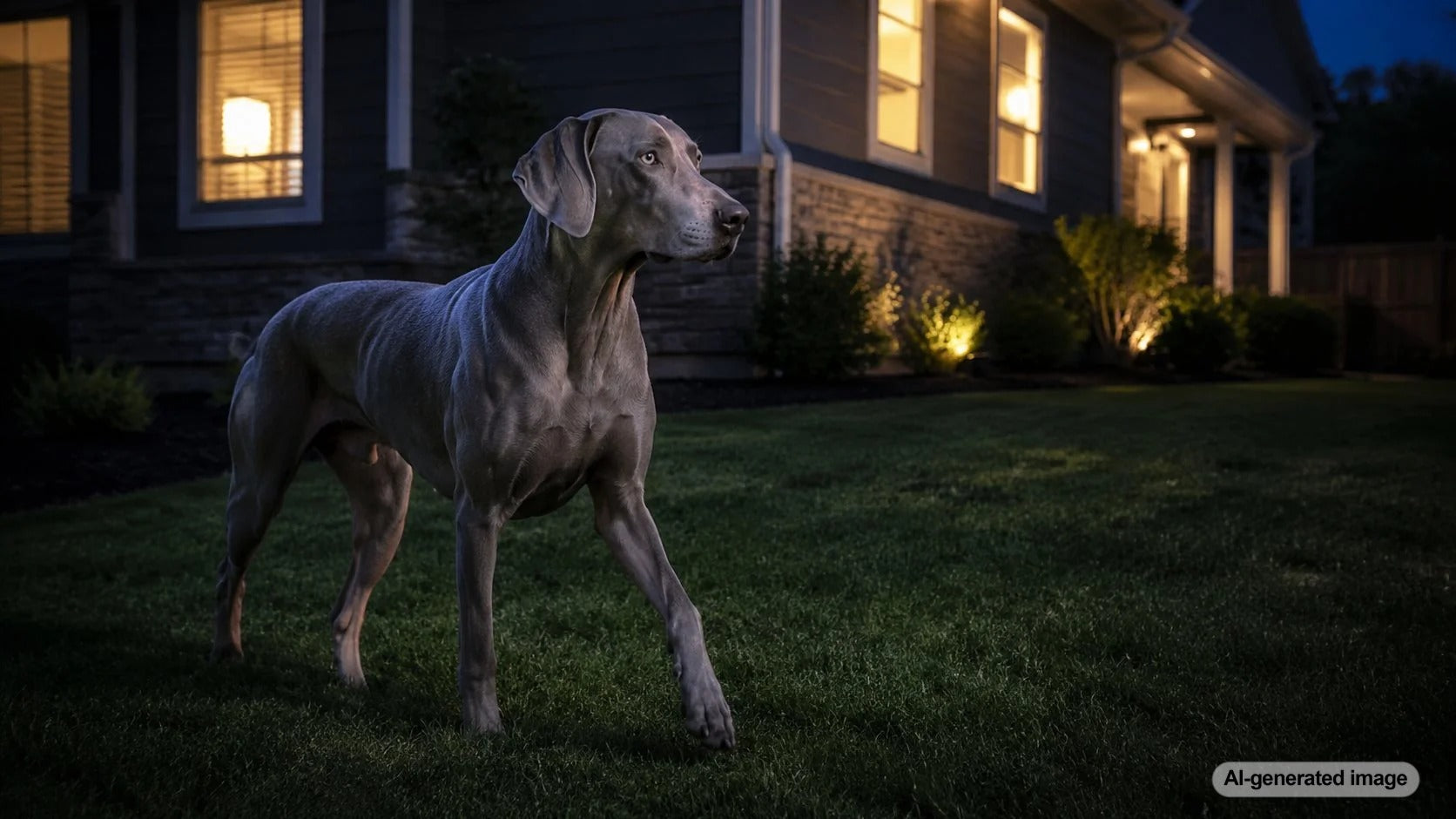
Hearing your dog's nails click from room to room at 2 a.m. can make it feel as though you have a tiny security guard working an overnight shift. Occasional nighttime checking may be harmless, especially after an unusual noise or schedule change. Repeated pacing, scanning, whining, panting, or wandering, however, deserves a closer look because your dog may be bored, uncomfortable, anxious, confused, or simply stuck in a routine that keeps rewarding the behavior.
The best response is not to immediately assume your dog needs more exercise or to repeatedly call them back to bed. First, observe what the patrol actually looks like, rule out urgent needs, and then create a predictable evening routine that makes resting easier and nighttime activity less rewarding.
Figure Out What Night Patrol Looks Like
Not every dog who walks around at night is doing the same thing. A young dog who visits the kitchen and nudges a toy may be looking for entertainment. A watchful dog who pauses at every window may be responding to wildlife, headlights, neighbors, or outdoor sounds. A senior dog who wanders without a clear destination, gets trapped behind furniture, or seems unable to settle may be experiencing discomfort, sensory changes, or age-related confusion.
Watch for patterns without turning the event into a game. Note when the behavior begins, where your dog goes, whether they pant or vocalize, and what finally causes them to settle. A simple log for three to five nights can reveal whether the patrol follows late meals, skipped walks, household noises, storms, bathroom needs, or changes in your schedule.
Handle Immediate Needs First
When your dog wakes and starts roaming, quietly offer a brief bathroom trip. Keep the lights low, avoid play, and return inside as soon as the job is done. Puppies, senior dogs, and dogs drinking more water than usual may genuinely need an overnight break.
Check the sleeping area as well. A room that is too warm, a bed that no longer supports an older dog's joints, blinking electronics, or noise near a window can make settling difficult. Close curtains, move the bed away from high-traffic areas, and consider soft background noise if outdoor sounds repeatedly trigger alert behavior.
Build a Better Evening Routine
A useful bedtime routine begins several hours before everyone goes to sleep. Give your dog an appropriate walk, sniffing opportunity, training session, or play period earlier in the evening. The goal is satisfying activity, not frantic exercise immediately before bed. High-energy play too late can leave some dogs more alert instead of relaxed.
Follow activity with a calmer transition. Lower the household energy, dim bright lights, and offer a quiet activity in the area where you want your dog to settle. Repeating the same sequence each evening helps bedtime become predictable: activity, bathroom break, calm enrichment, then rest.
For dogs who relax through licking, a prepared FlipMat can provide a focused wind-down activity before bed. Use an appropriate portion of your dog's usual food or a dog-safe spread, supervise the session, and remove the mat when the food is finished. The purpose is to create a consistent transition into rest, not to continuously feed your dog throughout the night.
Give the Brain a Job Before Bed
Physical exercise alone does not always solve nighttime wandering. Dogs who spend much of the day sleeping may still have unused mental energy after dark. Short scent games, easy training repetitions, food puzzles, and supervised licking can make the evening feel more complete without creating the intensity of rough play.
Try hiding a few pieces of kibble around one room, practicing simple cues for five minutes, or serving part of dinner through an interactive feeder. A dog who enjoys longer-lasting treat play may settle after a supervised session with The Pupsicle. Choose the correct size, account for the food in the dog's daily intake, and finish the session before bedtime rather than leaving a food-filled toy available without supervision.
Stop Accidentally Rewarding the Patrol
Dogs repeat behaviors that produce interesting results. If every nighttime lap earns food, enthusiastic attention, access to the yard for play, or a tour of the house with you, patrolling may become a reliable way to start an event.
After you have addressed bathroom and safety needs, keep your response boring and consistent. Calmly guide your dog to bed, use a familiar settling cue, and avoid repeated conversations or treats for wandering. Reward quiet resting during the evening and at bedtime instead, so the behavior you want receives the better payoff.
Management may also help. Close doors to unnecessary rooms, block access to window views, or use a comfortable gated sleeping area if your dog is already accustomed to it. Never suddenly confine a dog who panics when separated or has not been gradually introduced to the space.
Adjust the Plan for Puppies and Senior Dogs
Puppies often patrol because they need a bathroom trip, have not learned a nighttime routine, or became overtired and overstimulated earlier in the evening. Keep nighttime trips quiet, maintain an age-appropriate schedule, and provide enough naps during the day. An overtired puppy can act surprisingly energetic.
Senior dogs need a more cautious approach. Add night-lights along familiar paths, use nonslip flooring, keep furniture arrangements consistent, and make water easy to reach. If an older dog begins sleeping more during the day while wandering, vocalizing, or appearing confused at night, schedule a veterinary visit. Changes in sleep-wake patterns can be associated with pain, urinary needs, sensory decline, medication effects, or cognitive changes.
Dog Parent FAQs
Should I ignore my dog when they pace at night?
Do not ignore the behavior until you have checked for bathroom needs, discomfort, fear, or illness. Once urgent needs are ruled out, keep your response calm and avoid rewarding unnecessary wandering with play or food.
Will a longer walk stop nighttime patrolling?
It may help a dog with unused energy, but more exercise is not the answer for every dog. Mental enrichment, a predictable routine, environmental changes, and veterinary evaluation may also be needed.
Why does my senior dog suddenly wander at night?
Possible reasons include pain, increased bathroom needs, reduced vision or hearing, medication effects, anxiety, or age-related cognitive changes. A veterinarian should evaluate sudden or worsening nighttime behavior.
Can I give my dog a treat to help them settle?
A small treat or supervised enrichment activity can support a bedtime routine, but avoid teaching your dog that pacing always produces a snack. Offer it before wandering begins and include it in the dog's daily food intake.
A Quieter Night Starts With the Right Clues
Night patrol is a behavior, not a diagnosis. Your dog's route, body language, age, environment, and recent routine changes can help you identify what is driving it. Address genuine needs first, build a repeatable wind-down routine, reward resting, and involve your veterinarian when the behavior is new or concerning. With a thoughtful plan, many dogs can trade their overnight rounds for a more comfortable and predictable night's sleep.


