






































































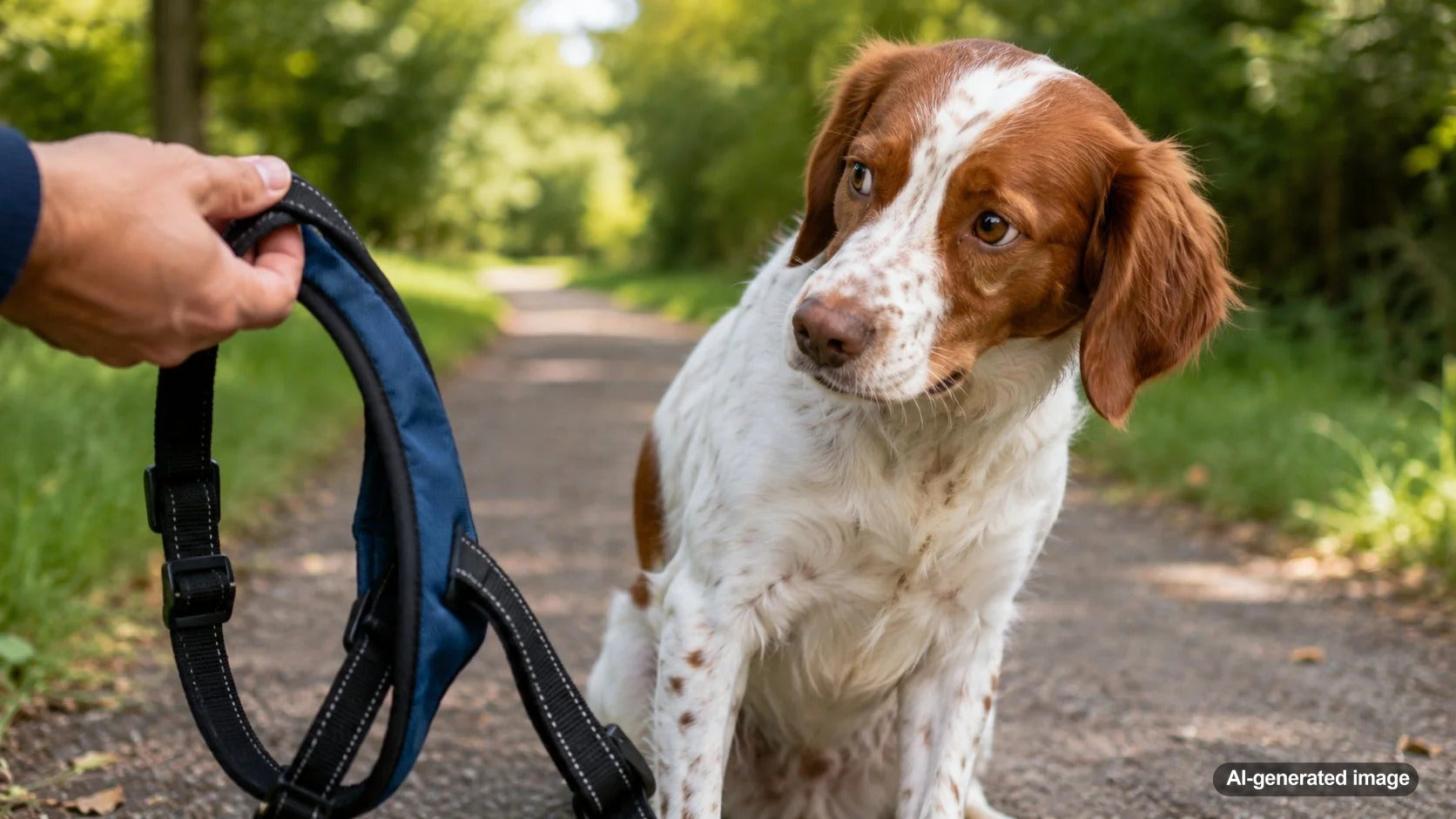
Your dog hears the word walk and races to the door, but the moment you pick up the harness, the excitement disappears. They may back away, flatten their ears, hide under a table, mouth the straps, or freeze while you try to put it on. When a dog loves the destination but hates the preparation, the best approach is to stop forcing the harness and rebuild the routine through comfort, tiny training steps, and high-value rewards.
Harness resistance is not usually stubbornness. Your dog may dislike something going over their head, feel uncomfortable about a buckle near their body, remember being pinched, or simply find the whole process too rushed. A thoughtful reset can make getting ready for a walk feel much safer.
Quick Answer
Start by checking that the harness fits comfortably and does not rub, pinch, or restrict movement. Then introduce it away from walk time, reward your dog for calmly looking at and approaching it, and gradually practice each part of putting it on. Keep sessions short, stop before your dog becomes worried, and contact a veterinarian or qualified trainer if the reaction is sudden, intense, or connected to possible pain.
First, Figure Out What Your Dog Dislikes
Watch what happens before assuming your dog hates every part of the harness. The exact moment they become uncomfortable gives you useful information.
- If your dog backs away when the neck opening approaches, they may dislike equipment passing over their head.
- If they tolerate the harness until you reach underneath them, they may be sensitive about handling around the chest, belly, or legs.
- If they flinch when the buckle closes, the sound may startle them or the strap may have pinched their skin or fur before.
- If they walk stiffly once dressed, the harness may fit poorly, rub behind the front legs, or limit shoulder movement.
A puppy may simply be unfamiliar with the sensation. A senior dog may have neck, shoulder, back, or joint discomfort that makes dressing harder. A long-haired dog may have fur caught by a buckle, while a small dog may feel overwhelmed when a person leans over them.
Check the Fit Before Starting Training
Training cannot make an uncomfortable harness feel good. Inspect the equipment for rough seams, twisted straps, cracked buckles, or areas that press into the armpits. You should generally be able to slide a couple of fingers beneath the straps without the harness hanging loosely enough for your dog to escape.
Watch your dog walking naturally. The harness should not force a shortened stride, rotate heavily to one side, or sit directly against the throat. Check the skin and coat after walks for redness, thinning fur, damp irritation, or tender spots.
Contact your veterinarian if harness avoidance appears suddenly or comes with limping, yelping, stiffness, swelling, reluctance to be touched, difficulty using stairs, or other major behavior changes. Pain can make a previously easy routine feel threatening.
Teach Your Dog That the Harness Predicts Good Things
Practice when you are not in a hurry to leave. Place the harness on the floor several feet away and reward your dog for noticing it without retreating. You can use tiny, easy-to-eat rewards such as Love Nuggets so you can repeat the exercise without turning each session into a full meal.
Over several short sessions, reward your dog for approaching, sniffing, or standing beside the harness. Do not chase them with it or lure them into a position and suddenly fasten it. The goal is for your dog to remain relaxed and willingly participate.
Break the Process Into Very Small Steps
Many owners move from showing the harness to fully dressing the dog too quickly. Instead, separate the routine into manageable pieces.
- Pick up the harness, give a treat, and put it down.
- Move it gently toward your dog, reward calm behavior, and move it away.
- Touch the harness briefly to the shoulder or chest, then reward.
- Practice placing the neck opening near the nose without putting it on.
- Let your dog voluntarily move their nose through the opening for a treat.
- Rest the harness loosely on the body for one second, then remove it.
- Practice fastening and immediately releasing one buckle.
- Gradually increase the amount of time your dog wears it indoors.
Advance only while your dog remains loose, interested, and willing to take food. If they stop eating, turn away, crouch, freeze, paw at you, or try to escape, return to an easier step.
Practice Buckle Sounds Separately
Some dogs handle the straps well but react to the sharp click of a buckle. Make that sound quietly from across the room, immediately offer a reward, and then pause. As your dog becomes comfortable, move the sound slightly closer over multiple sessions.
You can also practice handling without the harness. Briefly touch the areas where straps will sit, reward your dog, and release. This can be especially useful for dogs who dislike having a front leg lifted or a hand passed beneath their belly.
Do Not Make Every Harness Session Lead to a Long Walk
If the harness always predicts a noisy hallway, crowded sidewalk, car ride, or other stressful experience, your dog may be reacting to what comes next. Practice wearing it for a minute while receiving treats in the living room, then take it off. Later, walk to the mailbox and return. Keep some outings easy and sniff-focused.
For dogs who need a moment to settle after getting dressed, a brief enrichment activity can create a smoother transition. A prepared FlipMat Mini may offer a portable licking activity while you gather keys, shoes, and waste bags. Supervise the routine and choose an amount of food that fits your dog's regular diet.
Avoid These Common Harness Mistakes
- Cornering your dog: This can make the harness feel even more threatening.
- Only training when late: Rushed movements and frustration can undo progress.
- Using treats to trap the dog: Reward voluntary movement rather than distracting your dog while forcing straps into place.
- Ignoring subtle stress: Lip licking, head turning, lowered posture, and suddenly refusing food may mean the session is too difficult.
- Making sessions too long: Two calm minutes can be more productive than 15 minutes of increasing resistance.
When to Ask for Professional Help
Seek help from a qualified reward-based trainer or veterinary behavior professional if your dog panics, growls, snaps, or cannot stay comfortable even with very small steps. Avoid punishing warning signals. Growling communicates discomfort, and suppressing it does not resolve the underlying fear.
A professional can watch your dog's body language, evaluate the dressing routine, and help you create a safer progression. Your veterinarian should be involved when pain, skin irritation, mobility changes, or a sudden shift in behavior may be contributing.
Dog Parent FAQs
Should I leave the harness on my dog all day?
Usually, no. Extended wear may create rubbing, trapped moisture, snagging risks, or discomfort. Remove it when it is not needed unless your veterinarian or trainer has advised otherwise.
How long does harness training take?
Some dogs improve in a few short sessions, while fearful dogs may need several weeks or longer. Progress depends on the dog's history, comfort, and the size of each training step.
What if my dog will not take treats near the harness?
Move the harness farther away or place it out of sight and begin with an easier action. Refusing a normally valued treat can mean your dog is too worried to learn comfortably.
Can I use a collar instead of a harness?
The safest choice depends on your dog's size, health, walking behavior, and escape risk. Ask your veterinarian or a qualified trainer which equipment is appropriate for your dog.
Build a Routine Your Dog Can Trust
A dog who loves walks already has a strong reason to learn. Your job is to make the harness portion predictable, comfortable, and free from pressure. Check the fit, practice outside the rush of departure, reward voluntary participation, and respect the small signals that say your dog needs an easier step.
With patient repetition, many dogs can learn that the harness is not something to avoid. It becomes one simple part of the routine that leads to sniffing, exploring, and spending time with their favorite person.


