






































































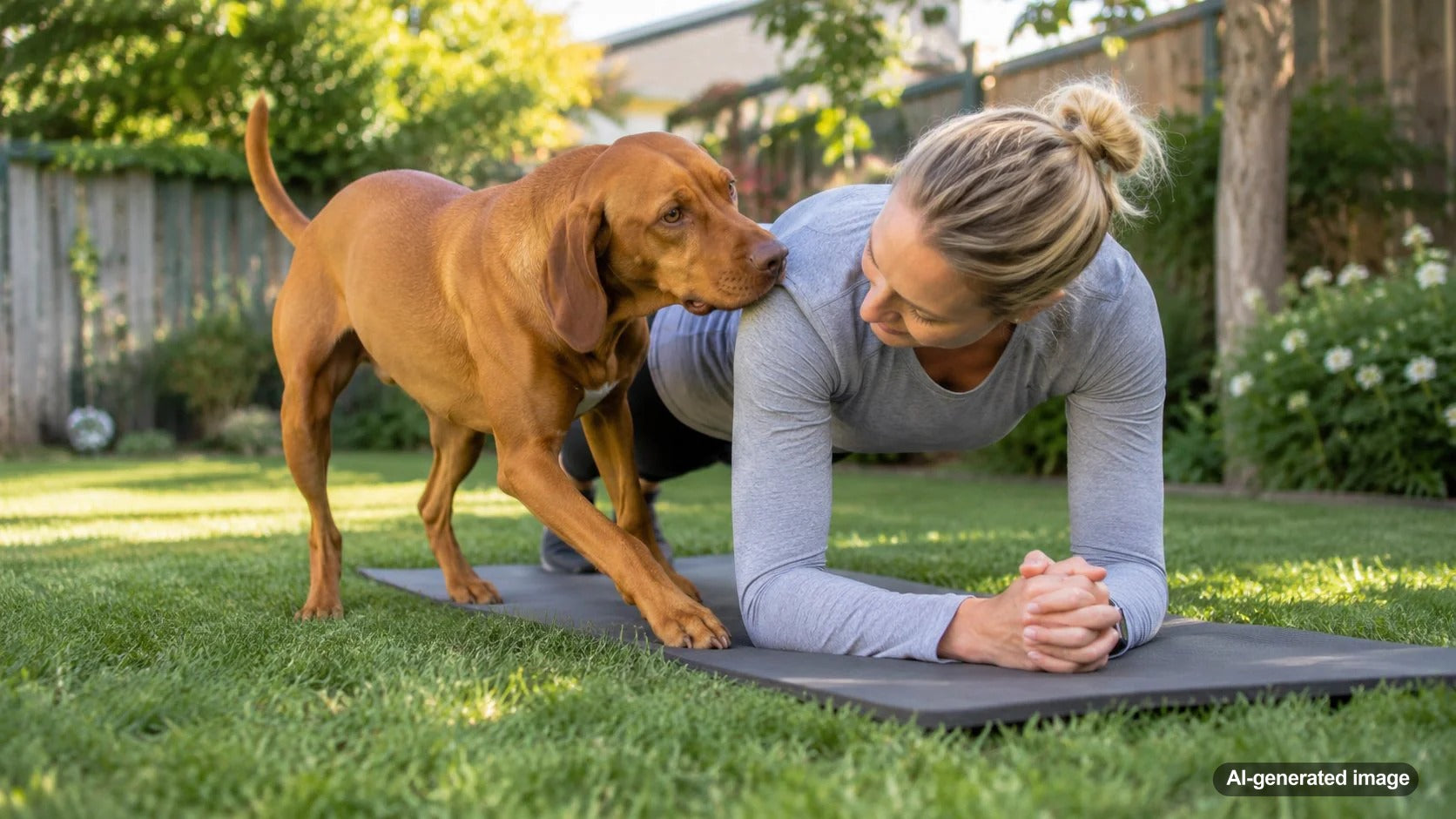
You roll out your mat, start your warmup, and suddenly your dog is standing on your chest like they have been hired as your personal trainer. If your pup barks during squats, steals your towel, noses your dumbbells, or flops directly where your plank is supposed to happen, you are not alone. What to Do When Your Dog Interrupts Your Workout starts with understanding that your dog is usually asking for something: attention, play, food, reassurance, a potty break, or a job of their own.
The goal is not to make your dog feel ignored. The goal is to set them up before you begin, reward the calm behavior you want, and give them a safe activity that keeps their brain busy while your body gets moving.
Quick Answer: What Should You Do First?
Before your workout, give your dog a quick needs check: potty, water, a few minutes of connection, and a simple enrichment activity. During your workout, avoid rewarding interruptions with big reactions. Instead, calmly redirect your dog to a mat, bed, chew, puzzle toy, or licking activity, then praise them when they settle.
Why Dogs Interrupt Workouts
To your dog, your workout can look like a very confusing game. You are moving fast, getting on the floor, making exciting noises, waving bands or weights around, and suddenly becoming much less available than usual. Some dogs see pushups as an invitation to lick your face. Others think jumping jacks are a chase game. Puppies may interrupt because they have not learned how to settle yet, while high-energy dogs may be looking for more stimulation before they can relax.
There is also a common training trap: if your dog paws at you and you laugh, talk, toss a toy, or stop your workout, the interruption worked. Even a frustrated response can feel like attention. Over time, your dog may learn that barking at lunges is a reliable way to bring the human show to a halt.
Start With a Two-Minute Pre-Workout Routine
A little prevention usually works better than trying to negotiate with a dog mid-burpee. Before you begin, take your dog out for a potty break, offer fresh water, and spend one or two minutes doing something predictable: a few treats for sit, down, touch, or go to your mat. This tells your dog, "Yes, you matter. Now here is what comes next."
If your dog has been napping all afternoon and you suddenly begin an intense workout, they may be full of stored-up energy. Try a short sniff walk, five minutes of tug, or a quick training game before your session. For senior dogs or dogs with mobility concerns, choose gentler connection first, such as a slow sniff outside or a calm treat scatter. If your dog seems painful, unusually restless, limping, coughing, or not acting like themselves, check with your veterinarian before assuming the behavior is just attention-seeking.
Give Your Dog Their Own Workout Job
Many dogs do better when they are given an incompatible behavior, which simply means something they can do instead of climbing on you. A dog lying on a bed cannot also be sitting on your resistance band. A dog working on a licking activity is less likely to bark at your mountain climbers.
Set up a cozy station near your workout area but outside your movement path. Add a bed, mat, or crate if your dog is comfortable there. Then give them an activity that matches the length and intensity of your workout. For a 10-minute stretch, a small lick mat may be enough. For a 30-minute strength session, a longer-lasting puzzle or frozen treat toy may be a better fit.
Woof's The Pupsicle can be a helpful option when your dog needs a longer-lasting, food-based distraction while you exercise nearby. For dogs who settle through licking, FlipMat gives them a dual-sided lick mat and slow feeder experience that can turn your workout time into their enrichment time.
Helpful tip: Save the special enrichment toy for workout time only. When the fun activity appears right before your session and disappears afterward, your dog starts to understand the pattern faster.
Teach a Workout Cue Your Dog Can Recognize
Dogs learn routines beautifully when we make them consistent. Pick a simple phrase like "workout time" and say it right before you guide your dog to their station. Then give their enrichment activity and begin with an easy warmup. At first, keep sessions short so your dog can succeed.
Practice on low-stakes days too. Roll out your mat, cue "workout time," reward your dog for going to their spot, do three minutes of gentle movement, and end before they get frustrated. Over several repetitions, your dog learns that the mat coming out does not mean chaos. It means they have a predictable job.
What Not to Do When Your Dog Interrupts
Try not to turn interruptions into a jackpot. If your dog barks and you immediately toss a toy, they may learn barking starts play. If your dog steals your sock and you chase them, the sock thief just got the best cardio of the day. Instead, pause calmly, make the environment easier, and redirect to the behavior you want.
Common workout mistakes to avoid:
- Starting a workout when your dog clearly needs a potty break or has not had any attention.
- Using equipment your dog finds too exciting before they have learned boundaries.
- Letting your dog chew bands, weights, shoes, or foam rollers, which can be unsafe.
- Expecting a young puppy to stay settled for a full workout without breaks.
- Giving up every time your dog interrupts, which can accidentally teach persistence.
Adjust for Your Dog's Age, Size, and Personality
Puppies often need shorter practice rounds, more potty breaks, and safe confinement when they cannot be supervised closely. Small dogs may want to be on top of you because floor exercises put you at their level. Large dogs can accidentally make workouts unsafe by bumping weights or jumping during dynamic moves. Power chewers need durable, appropriate chew options and supervision, especially with anything edible.
Anxious dogs may interrupt because movement, heavy breathing, or unfamiliar equipment feels strange. Go slower with these pups. Leave the mat out between workouts, reward calm sniffing around equipment, and avoid sudden jumps or loud movements until your dog is more comfortable. If your dog panics, pants heavily, shakes, drools excessively, becomes destructive, or cannot settle even with training support, contact a qualified trainer or veterinarian.
Build Breaks Into the Routine
If your workout is longer than your dog's attention span, plan breaks before your dog creates one. Between sets, ask for a simple cue, toss a treat to their station, or give a calm scratch if they are relaxing. This helps your dog learn that staying settled makes good things happen.
You can also create a small schedule: five minutes of your workout, one calm reward for your dog, then back to your movement. Over time, stretch the time between rewards. The real win is not a perfectly silent dog on day one. It is a dog who gradually learns that your workout is normal, safe, and not a reason to demand the spotlight.
Dog Parent FAQs
Why does my dog bark every time I exercise?
Your dog may be excited, confused, bored, anxious, or trying to start play. If barking reliably makes you stop, talk, or interact, it can become a learned habit. Meet their needs first, then reward calm behavior during short practice sessions.
Should I put my dog in another room while I work out?
That can be a good choice if your dog is comfortable and safe there. Use a crate, gated area, or separate room with water and an appropriate enrichment activity. Do not use isolation as punishment, and check on dogs who are still learning to settle.
Can I let my dog work out with me?
Sometimes, yes. Calm training games, gentle stretching nearby, or a few cued behaviors between sets can be fun. Avoid moves where your dog could get stepped on, knocked over, or tangled in equipment.
When should I ask a professional for help?
Reach out to a veterinarian or qualified trainer if interruptions include intense anxiety, sudden behavior changes, aggression, pain signs, destructive behavior, or an inability to settle despite consistent practice.
The Bottom Line
Your dog is not trying to ruin your workout. They are communicating in the best way they know. With a pre-workout routine, a safe enrichment station, calm redirection, and consistent rewards for settling, your dog can learn that your exercise time is also their calm-time routine.


