






































































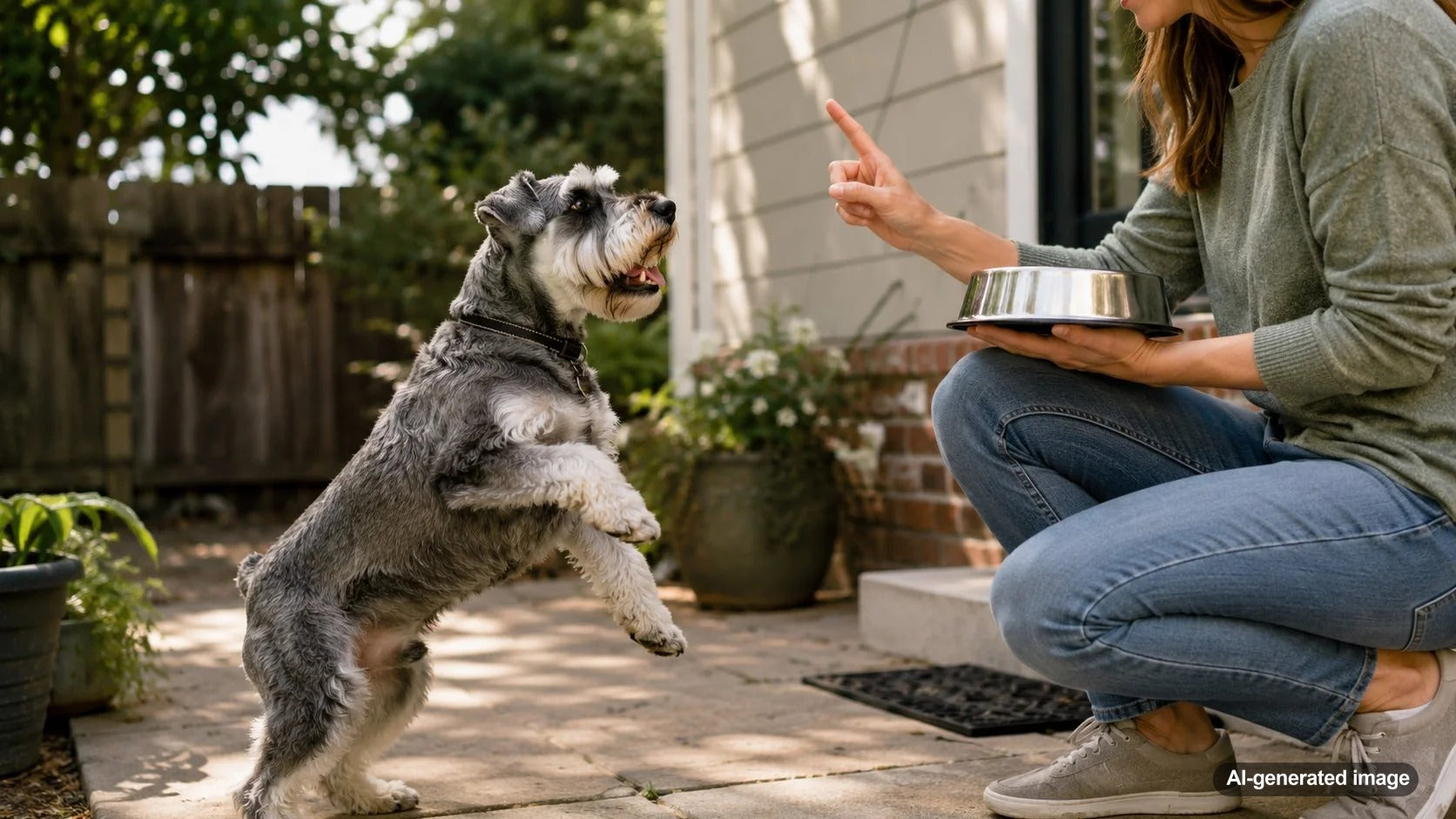
If the sound of a kibble scoop turns your dog into a spinning, barking, counter-pawing tornado, you are not alone. Many dogs become overexcited before dinner because the routine is predictable, the reward is valuable, and their enthusiastic behavior has accidentally become part of the sequence. The most effective response is not to scold your dog or demand a long, perfect stay, but to build a simple routine in which calmer behavior reliably makes dinner happen.
Start with one achievable behavior, such as keeping four paws on the floor, standing quietly for one second, or going to a mat. Reward that small moment of self-control by continuing the meal preparation. With repetition, your dog can learn that calm behavior moves dinner closer while jumping, barking, and crowding temporarily pause the process.
Quick answer: Prepare dinner in small steps, pause whenever your dog becomes too wild, and resume as soon as they offer a manageable calm behavior. Use a consistent feeding station, a release cue, and slow-feeding enrichment when appropriate. Practice outside the most intense dinner rush so your dog can learn without being overwhelmed.
Why Dogs Get So Excited Before Dinner
Dinner excitement is usually a mix of anticipation, habit, and learned behavior. Your dog notices tiny signals you may barely recognize: opening a cabinet, picking up a bowl, walking toward the pantry, or touching the refrigerator handle. Each signal predicts food, so their arousal can climb before the meal is even visible.
Dogs also repeat behaviors that appear to work. If barking makes you scoop faster, jumping causes you to put the bowl down, or circling earns attention, your dog may conclude that those actions are part of getting fed. This does not mean your dog is being stubborn or manipulative. They are simply following a pattern that has paid off before.
Puppies and adolescent dogs may struggle more because impulse control is still developing. High-energy dogs may become physically intense, while some small dogs express excitement through sharp barking or bouncing. Senior dogs can also become vocal or restless around meals, but a sudden change in appetite, pacing, confusion, or food-related behavior deserves a conversation with your veterinarian.
Choose One Calm Behavior to Reinforce
A common mistake is asking an already frantic dog for too much. A two-minute stay may be unrealistic when your dog can barely keep their paws on the floor. Begin with a behavior your dog can successfully offer.
Good starting behaviors include:
- Four paws remaining on the floor
- One second without barking
- Standing behind a kitchen boundary
- Sitting beside a feeding mat
- Looking away from the bowl
- Going to a bed or designated station
The instant your dog offers the chosen behavior, continue preparing the meal. This makes forward progress toward dinner the reward. You can gradually ask for two calm seconds, then three, but increase the difficulty slowly enough that your dog keeps succeeding.
Use the Stop-and-Start Dinner Method
Divide meal preparation into small actions. Reach for the bowl. Pause. Scoop the food. Pause. Walk toward the feeding area. Pause again. At each stage, proceed when your dog is reasonably composed.
If your dog jumps, barks, paws at you, or rushes the bowl, quietly stop moving. Hold the bowl out of reach or place it back on the counter. Avoid repeating cues, lecturing, or pushing your dog away, since extra attention can add even more energy to the moment. Resume when your dog offers the calm behavior you selected.
When lowering the bowl, lift it slightly if your dog breaks position or dives forward. Try again without frustration. Once the bowl reaches the floor, use a consistent release cue such as "okay" or "dinner" before allowing your dog to eat.
Helpful tip: The first few sessions may take longer than usual. Measure the meal in advance and begin before your dog reaches peak hunger. A calmer handler, an easier goal, and a less frantic schedule make learning much smoother.
Practice When Dinner Is Not at Stake
Dogs learn more effectively when they are below their excitement threshold. Practice going to a mat, waiting behind a boundary, or settling near the kitchen at random times during the day. Reward with a few pieces of their regular kibble, then release them.
You can also rehearse harmless meal signals without serving food. Pick up the bowl, wait for calm, and put it down again. Open the food cabinet, reward four paws on the floor, and walk away. These short rehearsals make the signals less explosive and give your dog more opportunities to practice successfully.
Turn the Meal Into Calming Enrichment
Some dogs settle more easily when dinner requires licking, sniffing, or gentle problem-solving instead of disappearing from a bowl in seconds. Part of the meal can be scattered across a clean snuffle area, used in a slow feeder, or served through an appropriate food toy.
For dogs who enjoy working for food, the Walkabout turns kibble into a rolling slow-feeder activity. Adjust the opening so food comes out often enough to prevent frustration, especially for beginners. Supervise the first sessions and include any kibble used in the toy as part of your dog's normal daily food allowance.
For wet food, soaked kibble, or a dog-safe spread, the FlipMat offers licking and slow-feeding surfaces with different challenge levels. Prepare it before your dog enters the feeding area so the setup itself does not become another source of frantic anticipation.
Avoid These Common Mealtime Mistakes
Do not punish excitement with shouting or physical corrections. These reactions can increase arousal, create frustration around food, or make the feeding routine feel unpredictable. Instead, calmly pause access to dinner and show your dog which behavior makes the routine continue.
Do not change the rules from day to day. If jumping earns dinner on busy mornings but delays dinner at night, your dog receives a confusing lesson. Everyone who feeds the dog should follow the same basic sequence.
Avoid requiring perfection. Your dog does not need to look sleepy or remain frozen. The goal is manageable self-control, not suppressing every sign of happiness. A wagging tail and eager expression are fine if your dog can still respond and keep their body under control.
When to Ask for Professional Help
Contact your veterinarian if intense food behavior appears suddenly or is accompanied by unusual hunger, weight changes, vomiting, diarrhea, excessive thirst, pain, weakness, confusion, or a major personality change. Medical issues can sometimes affect appetite and behavior.
Seek help from a qualified reward-based trainer or veterinary behavior professional if your dog guards the bowl, growls when approached, snaps, redirects frustration toward people or pets, or becomes too overwhelmed to eat safely. Food guarding should not be tested by repeatedly touching the bowl or taking food away.
Dog Parent FAQs
Should I make my dog sit before every meal?
A sit can be useful, but it is not mandatory. Four paws on the floor, waiting on a mat, or standing calmly behind a boundary can work just as well.
How long should my dog wait before eating?
Start with one or two successful seconds. A brief, calm pause is more useful than a long wait that causes frustration or repeated failure.
Should I ignore barking before dinner?
Avoid rewarding barking by immediately serving the meal. Quietly pause preparation, then resume during a brief moment of silence or another achievable calm behavior.
Can slow feeders reduce pre-dinner excitement?
They may help extend the eating portion of the routine and provide mental engagement, but they work best alongside consistent training before the meal is served.
Build a Routine Your Dog Can Repeat
Calmer dinners come from clear patterns, not battles of willpower. Choose one realistic behavior, reward it by moving the meal forward, and practice the routine consistently. Over time, the bowl, food scoop, and kitchen sounds can become cues to settle into position instead of signals to launch into chaos.
Your dog can still be delighted about dinner. The goal is simply to help that excitement fit inside a safer, calmer routine that makes mealtime easier for everyone.


