






































































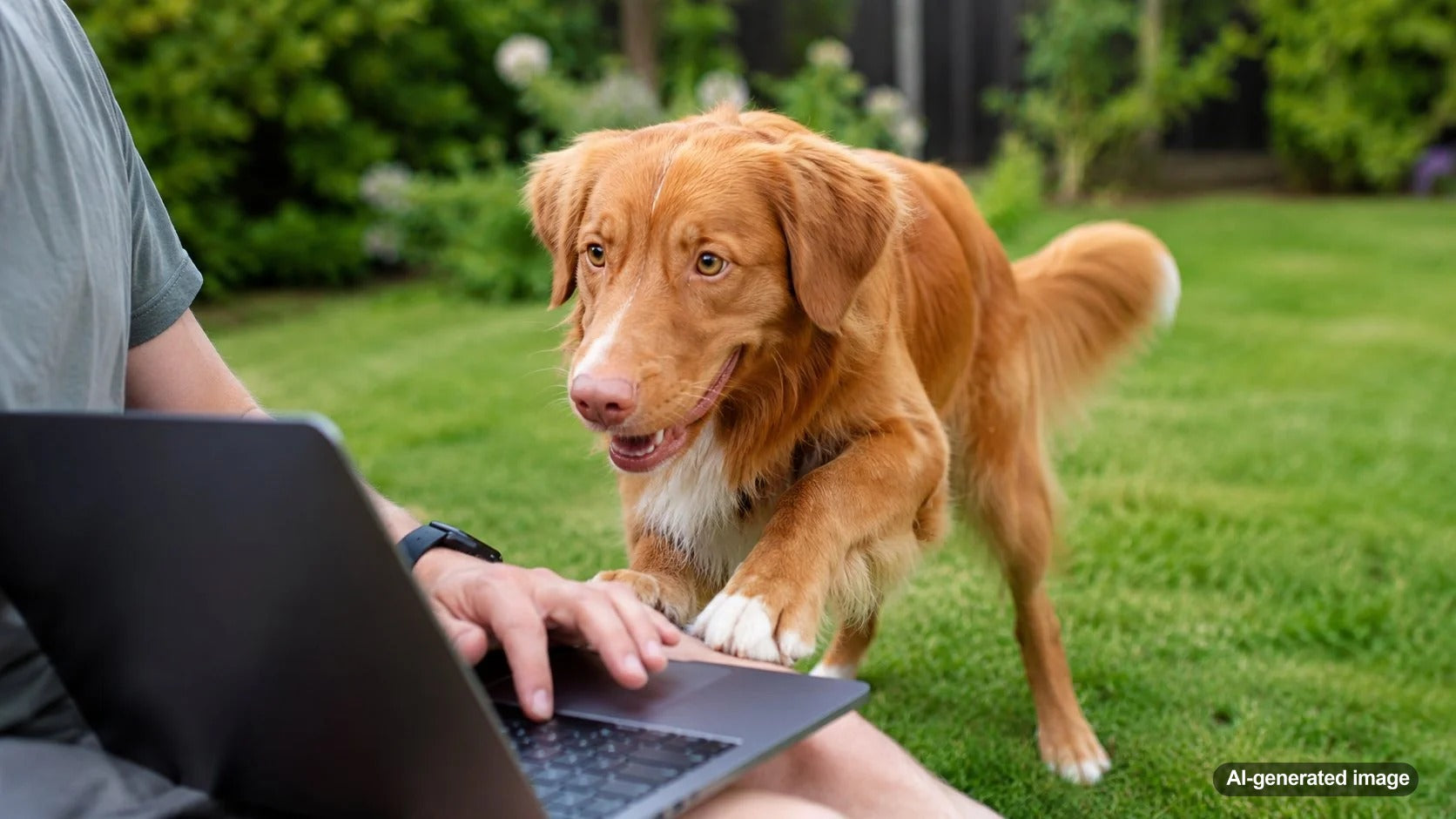
You open your laptop, settle in to answer a few emails, and suddenly your normally independent dog is pushing a nose under your arm, dropping a toy on the keyboard, pawing your leg, or delivering a very dramatic stare. It can certainly look like your dog is jealous of your laptop, but the behavior is often better understood as attention-seeking, frustration, boredom, or a response to a familiar routine in which the glowing rectangle seems to make you unavailable. The most helpful response is not to simply shoo your dog away, but to give them clearer expectations and something appropriate to do while you focus.
Dogs are excellent observers of patterns. If opening the laptop regularly means petting stops, eye contact disappears, and you stay in one place for an hour, your dog may quickly learn that work time changes access to their favorite person. A little planning can make laptop time much easier for both of you.
First, Figure Out What Your Dog Is Asking For
Before labeling the behavior as jealousy, look at what is happening around it. A dog who starts whining 20 minutes after breakfast may need a bathroom break. A young dog who has been indoors all morning may be looking for movement or play. A dog who only paws you after you begin typing may have learned that interrupting your work reliably gets a reaction.
Common attention-seeking behaviors include pawing, whining, nudging your hand, barking, repeatedly bringing toys, squeezing between you and the computer, or resting a chin directly on your keyboard. Some dogs become mischievous instead and start stealing socks, chewing forbidden objects, or investigating the trash because those behaviors reliably make a human get up.
The distinction matters because the best solution depends on the need. A potty break should not be ignored as attention-seeking, while repeatedly rewarding demand barking with instant play can make the pattern stronger.
Create a Pre-Laptop Routine
One of the easiest ways to improve work-from-home behavior is to give your dog something before asking them for quiet time. The routine does not need to exhaust your dog. In fact, mental activity can be especially useful when a long walk does not fit your schedule.
Try a short sniff-focused walk, five minutes of training, a quick game of fetch, or a few minutes searching for treats around the room. Then offer water and a bathroom opportunity before you sit down. Over time, the sequence can become predictable: activity first, settling second, laptop third.
Puppies generally need more frequent breaks and supervision than mature dogs, so expecting a young puppy to quietly entertain themselves through a two-hour meeting is rarely realistic. Senior dogs may also need more frequent bathroom or comfort breaks. If an older dog suddenly becomes much clingier, restless, confused, or unusually vocal, talk with your veterinarian because significant behavior changes can sometimes have an underlying physical or age-related cause.
Give Your Dog Their Own Work Project
Your laptop keeps your brain busy. Giving your dog an appropriate project can do the same for theirs. Food puzzles, licking activities, sniffing games, and suitable chews encourage dogs to engage in natural behaviors such as searching, licking, manipulating, and chewing.
For example, you might prepare The Pupsicle shortly before a meeting so your dog has a long-lasting interactive treat activity while you focus. Another option is the FlipMat, a dual-sided lick mat and slow feeder that can turn part of a meal or a dog-safe spread into a more involved enrichment activity.
Match the activity to your individual dog. A gentle licker and a determined power chewer may need very different options. Supervise new toys and chews until you understand how your dog interacts with them, and choose appropriately sized products for your dog's size and chewing style.
Teach a Calm Place Near Your Desk
Your dog does not necessarily need to leave the room. For many dogs, having a designated bed or mat close to your desk provides the perfect compromise: they can be near you without needing to participate in every email.
Practice when you are not busy. Toss a treat onto the bed, calmly praise your dog for stepping onto it, and reward relaxed behaviors such as lying down. Gradually increase the amount of time between rewards. Once your dog understands the routine, practice opening your laptop for a few seconds while they remain on the bed, then slowly build toward longer work periods.
Keep the early sessions easy. Training during a high-stakes video call is much harder than practicing when you can close the computer after 30 seconds.
Be Careful What You Reward
Imagine your dog paws your arm while you type. You immediately look down, laugh, pet them, and say, "What do you want?" From your perspective, you are acknowledging your dog. From your dog's perspective, pawing just worked beautifully.
This does not mean you should ignore every request from your dog. Instead, make sure legitimate needs have been addressed and then try to reward the behavior you actually want. If your dog quietly lies on their bed, that is an excellent moment to calmly deliver a treat or a little attention. If barking instantly produces tug time every afternoon, barking may become your dog's preferred way to start the game.
Do Not Expect Enrichment to Replace Interaction
An enrichment toy can make a work block easier, but it should not become your dog's entire daily routine. Dogs still benefit from social interaction, movement, sniffing, play, training, rest, and opportunities to explore their environment.
If your dog finishes an activity in five minutes and immediately returns to bothering you, consider whether the activity was too easy or whether your dog simply needs a different type of engagement. Rotating between licking, sniffing, chewing, training, and physical play can be more interesting than offering the same toy every day.
When Laptop Jealousy Seems More Serious
Mild nudging and attention-seeking are very different from intense distress. If your dog becomes frantic, cannot settle, destroys objects, pants excessively without an obvious reason, shows aggression, or experiences a major change in behavior, contact your veterinarian or a qualified dog behavior professional. Do not assume severe distress is simply stubbornness or jealousy.
A professional can also help if you have been consistently practicing calm behavior but the interruptions are becoming worse. Individual dogs have different histories, temperaments, exercise needs, and comfort levels, so some situations benefit from a personalized plan.
Dog Parent FAQs
Why does my dog bother me as soon as I open my laptop?
Your dog may have learned that the laptop predicts a period when your attention becomes unavailable. Boredom, unmet needs, or previously rewarded attention-seeking behavior can also contribute.
Should I ignore my dog when they paw at me while I work?
First make sure your dog does not need a bathroom break, water, movement, or other essential care. If their needs are met and pawing is purely attention-seeking, focus on rewarding calm alternative behavior rather than repeatedly rewarding the pawing itself.
Can a lick mat or food toy help during meetings?
It may help many dogs stay independently engaged during a work block. Choose an activity appropriate for your dog's size, eating habits, and chewing style, introduce new items with supervision, and account for treats or food used during enrichment as part of their daily intake.
How often should I take breaks with my dog while working from home?
There is no single schedule for every dog. Puppies, seniors, highly active dogs, and dogs with specific health needs may require more frequent breaks, while many adult dogs can comfortably settle for longer periods after their needs have been met.
A Better Workday for Both of You
Your dog does not need to love your laptop. They simply need to learn that when it appears, good things can happen for them too: a sniffing game, a favorite enrichment activity, a comfortable resting spot, and predictable breaks with their person. When you meet their needs proactively and consistently reward calm independence, work time can gradually become another familiar part of the daily routine instead of a competition for your attention.


