






































































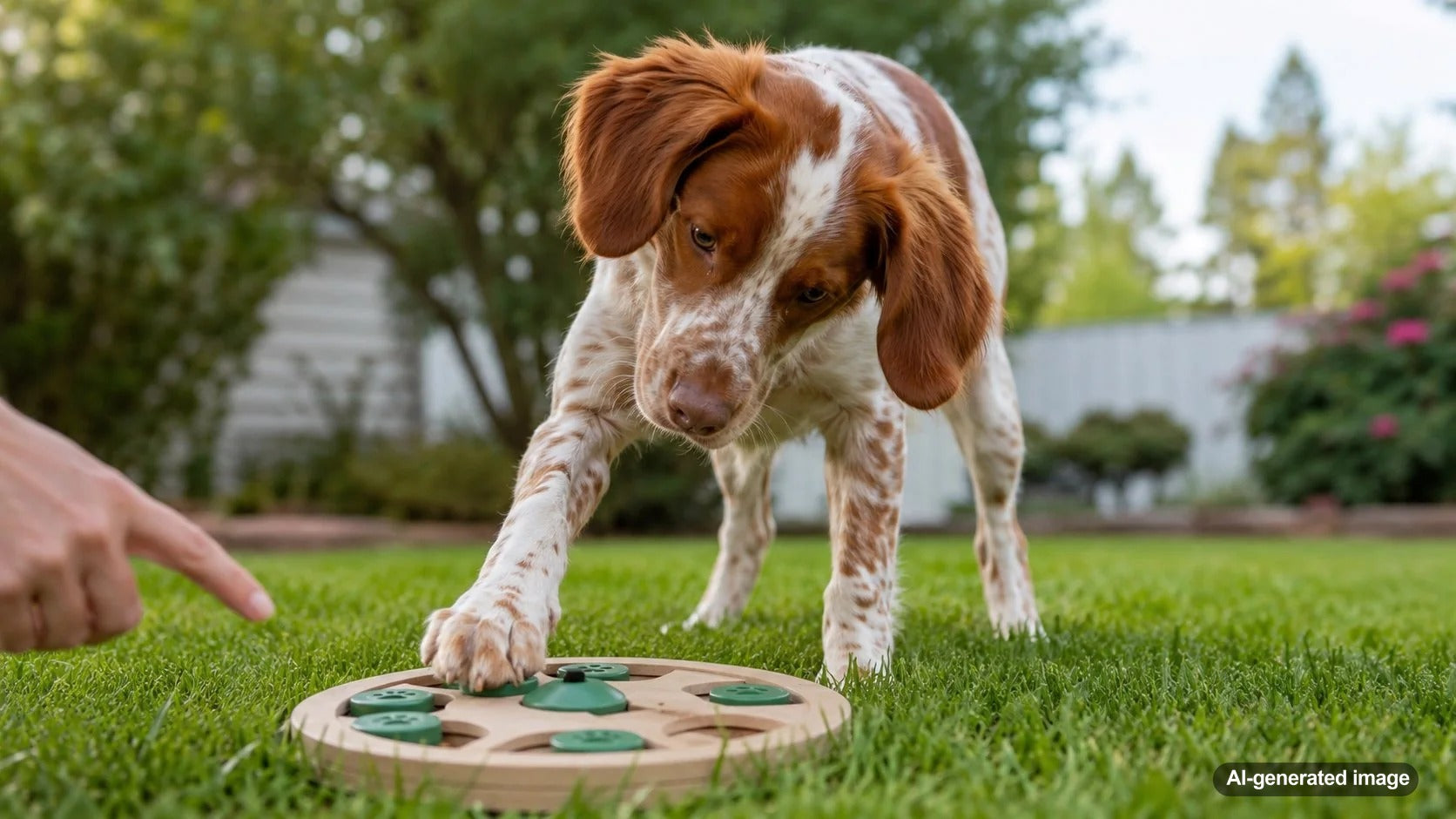
Puzzle toys are supposed to make your dog curious, busy, and happily determined, but sometimes they produce barking, frantic pawing, hard biting, or a dramatic walkout instead. When that happens, your dog is not necessarily being stubborn or failing the game. The puzzle may simply be too difficult, unfamiliar, physically awkward, or not rewarding enough yet.
The best response is to pause, lower the difficulty, and help your dog earn a few easy wins. A puzzle should feel like a solvable challenge, not an impossible container standing between your dog and a snack.
Quick answer: When your dog gets frustrated with a puzzle toy, calmly end the session or make the puzzle easier. Use better-smelling rewards, leave treats partly exposed, demonstrate one simple movement, and keep the next session short. Increase the difficulty only after your dog can solve the easier version without barking, chewing aggressively, or giving up.
How Puzzle Toy Frustration Looks in Real Life
Healthy problem-solving usually includes focused sniffing, gentle pawing, nudging, licking, rolling, and brief pauses. Your dog may try several approaches before discovering what works.
Frustration looks more intense. A dog may bark directly at the toy, slam it repeatedly, bite parts that are not meant for chewing, scratch at the floor, stare at you for help, or leave the area. Some dogs become increasingly frantic, while others shut down and stop trying.
A little effort is part of enrichment. Escalating agitation is a sign that the challenge needs to change.
Why Dogs Get Frustrated With Puzzle Toys
The difficulty jumped too quickly
A puzzle that requires several different actions can overwhelm a beginner. Lifting a cover, sliding a compartment, and then rotating another piece is much harder than simply rolling a toy until food falls out.
The reward is too difficult to access
Check the relationship between the treat size and the opening. If the treat barely fits through the exit, your dog may perform the correct action many times without receiving anything. That inconsistency can make the toy feel impossible.
Your dog does not understand the required movement
Dogs bring different natural play styles to puzzles. One dog may readily push objects with a nose, while another prefers pawing, licking, tugging, or carrying. A puzzle built around an unfamiliar action may require more teaching.
The toy moves in an uncomfortable way
Some dogs dislike loud plastic scraping, sudden wobbling, or toys that slide across hard floors. Puppies may be uncertain around unfamiliar movement, while senior dogs may struggle with puzzles that demand repeated bending, standing, or forceful pawing.
Your dog is tired, full, or overstimulated
A dog who just finished dinner may not work very hard for kibble. A dog who is already excited from visitors, play, or a busy walk may not have the patience for a complicated task. Timing matters.
Use This Five-Step Puzzle Reset
- Stop before frustration escalates. Calmly pick up the toy and offer a simple activity, such as sniffing for a few scattered treats.
- Make the reward obvious. Place several treats beside the toy and leave one or two partially exposed.
- Reduce the number of required actions. Open compartments, loosen moving pieces, enlarge the dispensing opening, or use only one section of the puzzle.
- Reward interaction, not just completion. Mark and reward a sniff, nose touch, gentle paw, or successful roll.
- End after an easy win. A short session that ends successfully builds more confidence than a long session filled with repeated failure.
During the next few sessions, adjust only one variable at a time. You might hide the treats slightly more, close one additional compartment, or reduce the dispensing opening by a small amount. Gradual changes make it easier to see exactly where the challenge becomes too hard.
Choose Rewards That Keep Your Dog Interested
Start with small, aromatic treats that can be delivered quickly. Large biscuits that become stuck can create unnecessary frustration, and too many rich treats can upset your dog's normal diet.
Woof Puzzle Treats are air-dried, chicken-based rewards sized for Woof puzzle toys. Their size can help create more predictable treat delivery, especially while your dog is learning how a new toy works.
You can also reserve part of your dog's regular meal for puzzle practice. This keeps the activity within the daily food allowance and may make the reward more motivating when offered shortly before the usual mealtime.
Match the Puzzle to Your Dog's Play Style
A dog who loves chasing and rolling may enjoy a moving dispenser more than a stationary board. The adjustable opening on the Walkabout lets dog parents modify how easily kibble or treats come out, making it possible to begin with frequent rewards and gradually add difficulty.
Dogs who prefer tugging, carrying, and chewing may engage more readily with a treat-stuffable toy that incorporates those behaviors. Dogs who enjoy licking may do better with a lick mat or spreadable enrichment before progressing to puzzles that require several movements.
There is no single best puzzle for every dog. The most useful option is one that matches your dog's body size, jaw strength, favorite behaviors, and current skill level.
Common Mistakes That Can Increase Frustration
Avoid making every session harder. Dogs benefit from familiar, easy puzzles too. Confidence-building sessions are still mentally enriching.
Do not repeatedly point, shake, or talk at the toy. Too much input can distract a dog who is trying to concentrate.
Do not leave an unsuitable puzzle unattended. Supervise new toys and remove any item your dog begins damaging or attempting to swallow.
It is also helpful to rotate puzzles rather than offering every toy at once. A small selection keeps the activity fresh without constantly asking your dog to learn a completely new system.
When to Take a Longer Break
Pause puzzle play and check with your veterinarian if a dog who previously enjoyed food toys suddenly refuses them, drops food, chews only on one side, paws at the mouth, drools excessively, or seems uncomfortable when lowering the head. Dental pain, neck discomfort, vision changes, or other physical issues can make a familiar activity unpleasant.
A qualified trainer or veterinary behavior professional can help if puzzle frustration regularly leads to guarding, intense anxiety, destructive behavior, or conflict between dogs in the home. Feed and supervise dogs separately when competition over puzzle toys is a concern.
Dog Parent FAQs
Should I help my dog solve a puzzle toy?
Yes, but provide small hints instead of completing the entire puzzle. Make one treat visible, loosen a compartment, or demonstrate a single movement, then let your dog try.
How long should a puzzle toy session last?
Begin with a few minutes and stop while your dog is still interested. Session quality matters more than duration, especially for puppies, seniors, and puzzle beginners.
Is barking at a puzzle toy normal?
An occasional bark can be part of excitement, but repeated barking combined with frantic biting, scratching, or giving up usually means the puzzle is too difficult or overstimulating.
What if my dog never likes puzzle toys?
That is okay. Some dogs prefer sniffing games, training sessions, licking activities, fetch, tug, or safe chewing. Enrichment should reflect what your individual dog enjoys.
Build Skills One Easy Win at a Time
When a puzzle creates frustration, the answer is rarely to wait for your dog to work harder. Reset the activity, improve the reward, and create a simpler path to success. As your dog learns that patient exploration pays off, you can gradually increase the challenge without turning enrichment into a battle.
The goal is not to prove how difficult a toy can be. It is to give your dog a satisfying, repeatable activity that supports curiosity, confidence, and enjoyable time together.


