






































































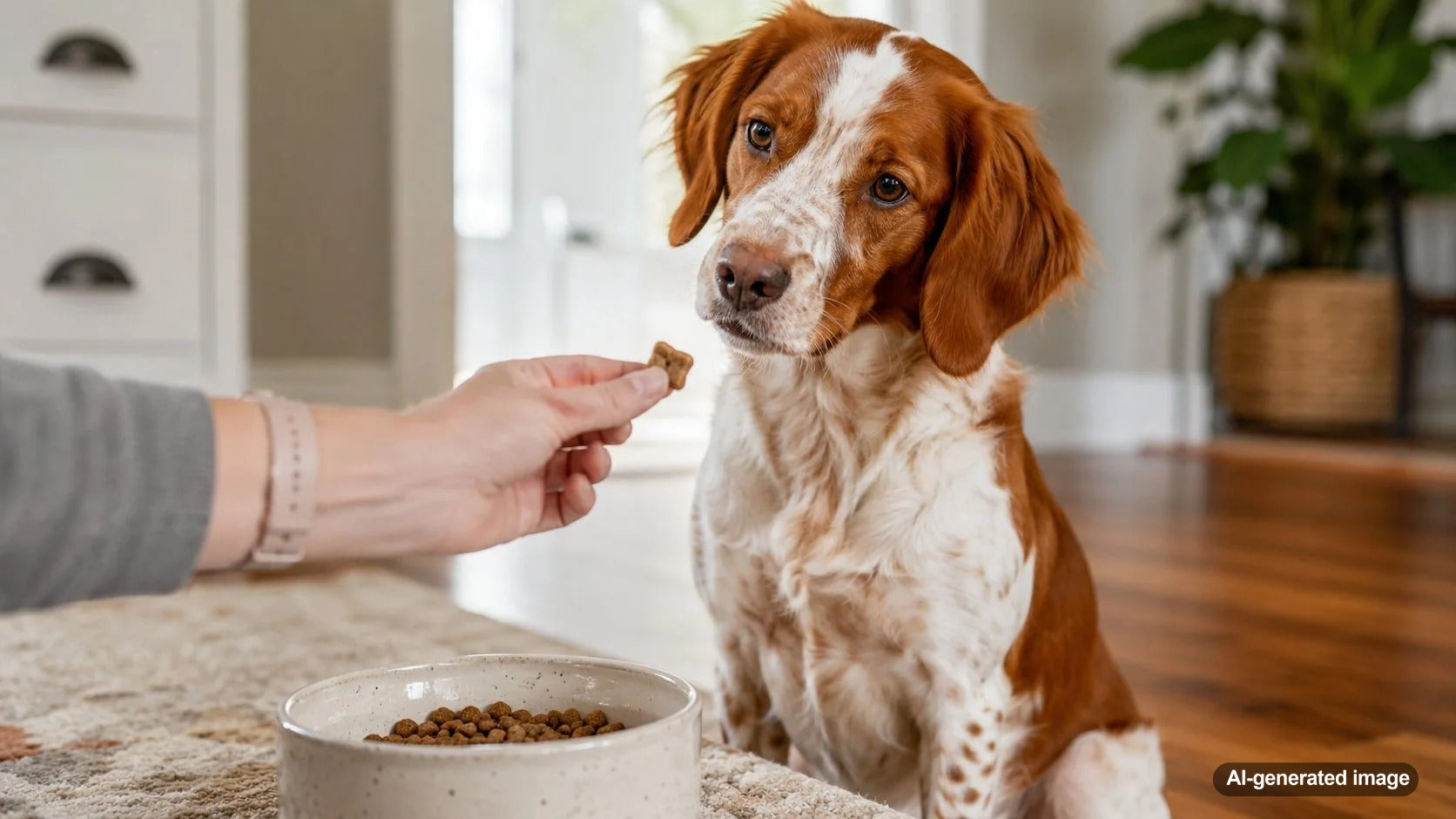
When your dog turns away from a full bowl but appears instantly for a treat, it can feel like you are being expertly negotiated with. Sometimes that is exactly what is happening: your dog has learned that skipping dinner may lead to something tastier. But a sudden appetite change can also signal stress, dental discomfort, nausea, pain, or another health concern, so the first step is to look at the whole dog, not just the bowl.
If your dog is energetic, drinking normally, maintaining weight, and behaving like themselves, a simple mealtime reset may help. If the change is sudden, lasts more than a day or two, or comes with other symptoms, contact your veterinarian rather than assuming your dog is merely picky.
Start by Deciding Whether This Is Pickiness or a Health Change
A dog who happily eats soft treats but avoids crunchy kibble may have mouth pain, a damaged tooth, sore gums, or difficulty chewing. A dog who sniffs food and walks away may feel nauseated. Seniors may struggle to bend comfortably toward a bowl, while puppies and small dogs can become unwell more quickly when they miss meals.
Call your veterinarian promptly if your dog also has vomiting, diarrhea, unusual drooling, lethargy, weight loss, a swollen or painful abdomen, trouble swallowing, increased thirst, or a major behavior change. Puppies, dogs with diabetes or other chronic conditions, and dogs refusing all food deserve faster guidance.
Count Every Treat, Chew, Topper, and Table Scrap
Many dogs who appear to skip meals are simply filling up elsewhere. Training rewards, dental chews, bits of cheese, food dropped by children, and treats from multiple family members can add up quickly. High-value snacks may also teach a dog that regular food is only the opening offer.
For three days, write down everything your dog eats. Include supplements that contain calories, food used for medication, and edible chews. Keep treats to a small portion of the daily diet, and ask your veterinarian for a calorie target if you are unsure how much your dog should receive.
For training, break rewards into very small pieces. A pea-sized reward can be meaningful without replacing half a meal. You can also reserve part of your dog's measured kibble for easy training sessions.
Use a Calm, Predictable Mealtime Reset
- Offer the measured meal at the same times each day.
- Place the bowl in a quiet area with comfortable footing.
- Leave it down for about 15 to 20 minutes.
- Pick it up calmly if your dog does not eat.
- Do not follow the skipped meal with treats or table food.
- Offer the next scheduled meal as usual.
Avoid hovering, hand-feeding every bite, or repeatedly adding new ingredients while your dog watches. That attention can accidentally turn refusal into a rewarding game. Stay neutral and consistent.
Exercise can help some dogs arrive at meals with a better appetite. A walk, sniff session, or gentle play before breakfast or dinner may be enough, provided the activity is appropriate for your dog's age and health.
Make Regular Food More Interesting Without Creating a Treat-Only Habit
Some dogs are less interested in eating from a plain bowl than they are in working for food. Try serving part or all of the measured meal through a slow feeder, puzzle toy, scatter-feeding game, or snuffle activity. This is especially useful for dogs who enjoy seeking, licking, and problem-solving.
The Walkabout can turn compatible kibble into a rolling slow-feeder game, making the meal itself the reward rather than adding more snacks. For wet food or a veterinarian-approved mixture, the FlipMat offers licking and slow-feeding surfaces that can add variety to the same measured portion.
You can also try gently warming wet food or adding a small amount of warm water to increase aroma. If you use a topper, mix in a modest, consistent amount instead of escalating from broth to chicken to cheese every time your dog hesitates. Dogs quickly learn to wait for the next upgrade.
Check the Food, Bowl, and Feeding Environment
Inspect the food for staleness, moisture, insects, or an unusual smell. Confirm that the bag is within date and stored tightly sealed. If the appetite change began with a new formula or bag, mention that detail to your veterinarian.
Some dogs dislike bowls that slide, clang, or crowd their whiskers. Others feel uneasy eating near another pet, a noisy appliance, or a busy doorway. Senior dogs may benefit from a nonslip mat, a more accessible bowl position, or softer food if chewing is uncomfortable. Any sudden chewing difficulty still warrants a dental or veterinary check.
Common Mistakes That Keep the Cycle Going
Offering a buffet: Rotating through several foods at one meal can reward refusal and may upset your dog's stomach.
Free-feeding all day: Constant access makes it harder to see how much your dog actually eats and can weaken mealtime motivation.
Changing food too quickly: Sudden diet changes may cause digestive upset. Transition gradually unless your veterinarian gives different instructions.
Using treats to compensate: A dog who skips dinner but receives a full evening of snacks has little reason to change.
Dog Parent FAQs
How long can a dog skip food before I should worry?
Contact your veterinarian for guidance if a healthy adult dog continues refusing meals for more than a day or two. Seek help sooner for puppies, seniors with sudden changes, dogs with chronic conditions, or any dog showing other symptoms.
Should I mix treats into my dog's regular food?
A tiny amount may encourage eating, but large pieces can teach your dog to pick out the treats and leave the meal. Use a consistent, modest topper and count it toward daily calories.
Is my dog being stubborn?
Dogs repeat behaviors that work. Holding out for something better can be learned, but pain, stress, nausea, dental problems, and food issues should be considered before labeling the behavior stubbornness.
Can I use kibble as training treats?
Yes. Set aside part of the measured daily meal and use it for easy training, sniff games, or puzzle feeding so your dog earns rewards without receiving excessive extra calories.
The Bottom Line
A dog who eats treats but ignores regular food may be full, selectively waiting for better options, bored with the presentation, stressed, or uncomfortable. Start with health and safety, then simplify the routine. Measured portions, fewer extras, consistent meal windows, and food-based enrichment can help make regular meals worth showing up for again.


