Fly n' Feed is one of my favorite ways to show dogs what “chill” actually feels like—because sometimes an excited pup needs more than a verbal cue to find their calm. If your dog turns every doorbell, visitor, walk, or snack into a full-body celebration, you're not alone—and you're not doing anything wrong. The “Settle” command is less about shutting your dog down and more about teaching a life skill: how to switch gears, self-soothe, and relax on purpose.
Think of “Settle” as a friendly pause button you can press anywhere—on the couch, at a patio table, before guests come in, or while you're trying to answer one email without a squeaky toy soundtrack. And the best part? You can build it with upbeat, reward-based training that feels like a game instead of a struggle.
What the “Settle” Command Really Means (and Why It's So Powerful)
When people say “my dog won't calm down,” what they often mean is: “my dog doesn't know how.” Dogs aren't born with an instruction manual for modern life—doorbells, delivery drivers, Zoom calls, kids running around, and exciting smells on every sidewalk. “Settle” teaches your dog that relaxing is a behavior that earns good things.
In real life, “Settle” can look like: laying down with a soft body, taking a deep breath, and staying in a calm state until you release them or the moment passes. It's the foundation of polite greetings, better focus, and easier transitions from playtime to quiet time. It also helps dogs who get overstimulated and spiral into barking, jumping, zoomies, or mouthy behavior.
Quick reality check: You are not aiming for a statue. You are aiming for a dog who can relax, reset, and choose calm more often—even when life is exciting.
Start with the Right Setup: Calm is a Skill, Not a Mood
Before you ever say the word “Settle,” set your dog up to win. Pick a low-distraction spot, keep sessions short (like 2–5 minutes), and have rewards ready. For many dogs, tiny training treats help you mark the moment they make a good choice—and that's exactly where Woof Puzzle Treats shine. They're sized to work with Woof puzzle toys, but they're also awesome for quick reinforcement when you catch that first little “exhale” of calm.
Also: meet your dog where they are. If your dog is already over-threshold (wild eyes, frantic movement, cannot hear you), the first step is to lower the intensity—not repeat the cue louder. This is where enrichment becomes your secret weapon.
The Step-by-Step “Settle” Training Plan You'll Actually Use
Step 1: Reward calm moments you already see. This is the easiest cheat code in dog training. Any time your dog naturally lies down, softens their body, or pauses the chaos for two seconds—quietly deliver a treat. No fanfare needed. You are teaching: “Calm makes good stuff happen.”
Step 2: Add a “home base” for settling. A bed, a mat, or even a specific spot on the rug works. Guide your dog there, and reward for being on the spot. If your dog pops up right away, that's okay—reward smaller steps first (standing calmly, then sitting, then laying down).
Step 3: Build duration in tiny slices. Once your dog can lie down, reward one second of calm. Then two. Then three. If they get up, you didn't fail—you just found the current time limit. Go back a step and rebuild.
Step 4: Name it. When your dog is consistently relaxing on that spot, start saying “Settle” right as they begin to lay down or soften. You're pairing the word with the behavior your dog is already offering.
Step 5: Add real-life distractions (slowly). Practice when the doorbell rings on TV, then when someone walks past a window, then when you grab your keys. Keep the challenge level fair. The goal is progress, not perfection.
Trainer tip: If your dog struggles to hold a settle, it often means they need help shifting their nervous system. That's not stubbornness—that's biology. Give them something soothing to do while they learn.
Turn “Settle” Into a Ritual with Calming Enrichment
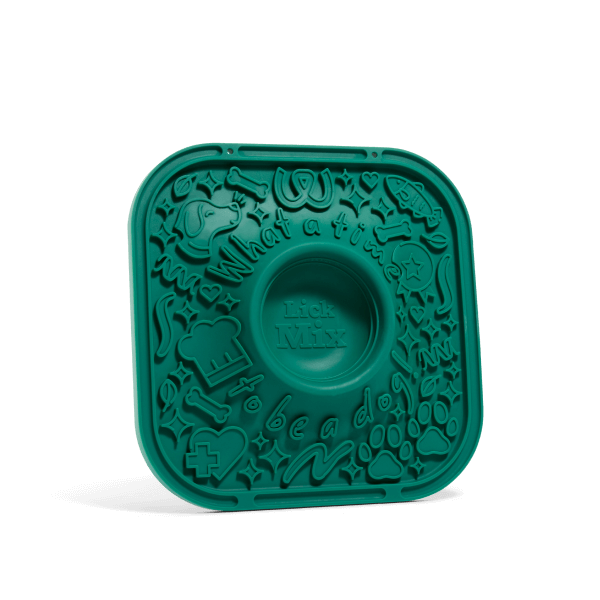
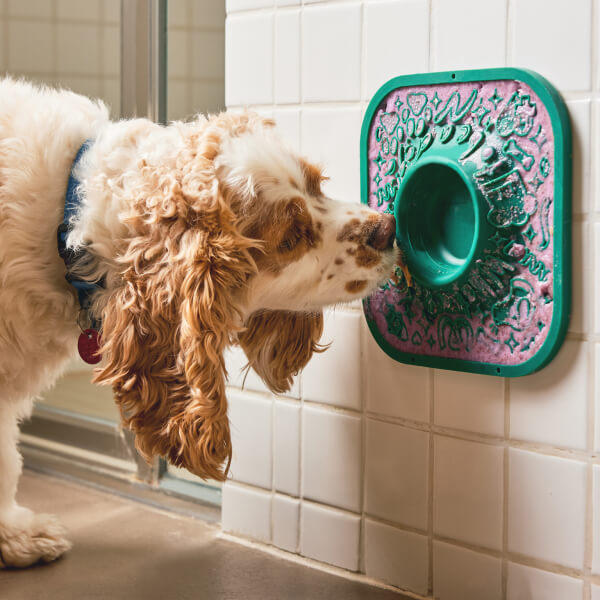
If your dog goes from 100 to 0 only when they're asleep, enrichment can bridge the gap between “wired” and “relaxed.” Repetitive licking is naturally calming for many dogs, which is why so many families love The LickMat and the whole LickMix & LickMat lineup. Add a tasty spread and you've got a focused activity that helps your dog settle their body while their brain stays pleasantly busy.
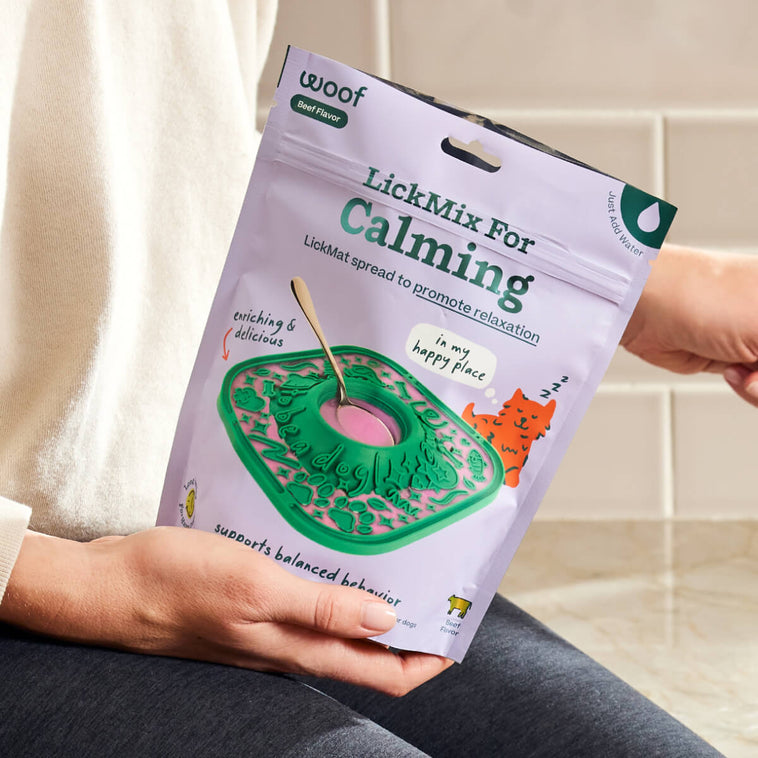
Want a ready-made wind-down routine? Pair the mat with Calming LickMix after exciting moments like guests arriving, a big walk, or playtime. This is especially helpful if your dog's “excited” energy tips into frantic energy. You're not bribing—you're teaching a skill with support.
And if your dog loves fetch but struggles with the post-play crash (hello, demand barking), the Fly n' Feed is such a smart transition tool. Toss it for a few rounds, then flip it into lick-mat mode so your pup learns that calm is part of the game. Fetch—then settle. Play—then relax. That rhythm is pure magic.
Common “Settle” Struggles (and How to Fix Them Without Losing Your Mind)
“My dog settles for two seconds, then pops up.” Reward faster. Seriously. If you wait too long, your dog thinks the game is over. Pay the calm before the wiggles return.
“My dog only settles at home.” Generalization takes time. Practice in different rooms, then the porch, then the driveway. Bring high-value rewards and keep sessions short.
“My dog gets mouthy when I try to calm them.” That's often overstimulation. Give them an appropriate outlet first. A tough chew like HonestChew can help redirect busy jaws, and then you can move back into settle practice once they're more regulated.
“My dog is excited 24/7.” Some dogs need help balancing stimulation and decompression. Try adding puzzle feeding to burn energy in a calm way—the rolling, wobbling Walkabout can turn mealtime into a slower, more thoughtful activity that supports focus instead of frenzy.
Make It Fun: The Calm Dog Still Gets to Be a Dog
Teaching “Settle” does not mean you want a boring dog. You want a dog who can enjoy the fun and then come back to center. High-energy play is still on the menu—it just gets paired with a calming finish.
For fetch-loving pups, the treat-dispensing Flyball (or the Flyball 3 Pack if your dog treats balls like a collectible hobby) is a clever way to extend play and add enrichment. After a few rounds, transition into a settle session with licking, chewing, or a short mat stay. Your dog learns a complete cycle: excitement → calm → ready for whatever comes next.
And if you want to explore more tools that support training, enrichment, and everyday calm, browse Best Sellers Collection or peek at All Products to build your dog's personal “calm kit.”
Your New Favorite Skill: Calm on Cue, Anywhere
The “Settle” command is an art form because it's not just a command—it's communication. You're showing your dog how to live in your world without feeling overwhelmed by it. Start small, reward generously, and use enrichment to make calm feel good in your dog's body.
One day, you'll realize the doorbell rang, a guest walked in, and your dog chose to relax—and you'll do a tiny victory dance while your pup stays perfectly settled. That's the goal: a happier household, a more confident dog, and a calm you can count on.