



































































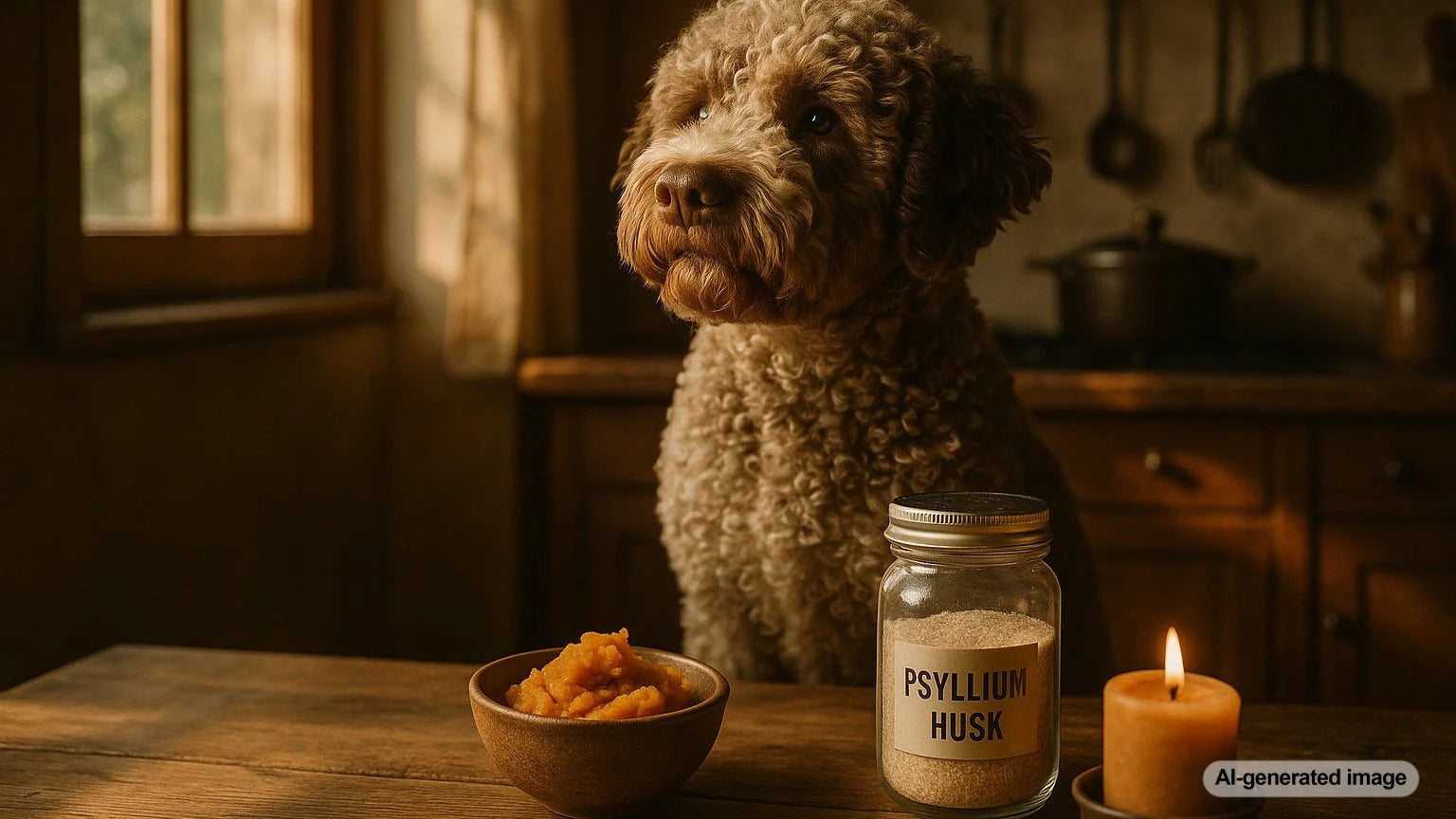
If you’ve ever scrambled to clean up a soft-serve mess after your dog’s mealtime, you know that sometimes what goes in doesn’t come out exactly right. Digestive misfires — diarrhea, constipation, irregular stools — can be stressful for both you and your pup. That’s why fiber matters. When used properly, fiber can help smooth out digestion, balance your dog’s gut health, and make those bathroom runs a whole lot more predictable. And there are two natural fiber heroes worth knowing about: plain canned pumpkin and psyllium husk.
At Woof, we believe the best care for your dog starts with simple, wholesome nutrition. Today we’re diving into how adding fiber — especially from pumpkin or psyllium husk — can have a major positive impact on your dog’s digestive health, stool consistency, and overall well-being. Think of it as a gentle tune-up for your pup’s gut.
Why Fiber Matters in a Dog’s Diet
Even though dogs are primarily meat-eaters, fiber still plays a vital supporting role. Fiber provides bulk and balance to the diet, helping food move smoothly through the digestive system and encouraging regular bowel movements. Low-fiber diets may leave stools too hard (which can strain your dog) or too loose (which can be messy and uncomfortable). A balanced fiber intake often means more regular, comfortable bathroom habits and less stress on your dog’s system.
Additionally, certain types of fiber act like prebiotics — feeding the healthy microbes that live in your dog’s gut. A thriving gut microbiome supports digestion, nutrient absorption, immune function, and even overall mood and coat health. Mixed fiber sources, when used right, offer more balanced gut support than relying on protein and fat alone.
Canned Pumpkin: The Gut-Friendly Classic
Plain canned pumpkin (not pumpkin pie filling!) is a go-to among dog owners for a reason. It’s rich in dietary fiber — both soluble and insoluble — which helps regulate digestion. The soluble fiber absorbs water and forms a soothing gel in the gut, while insoluble fiber adds bulk that helps food move along.
When a dog is dealing with loose stool or mild diarrhea, that soluble fiber in pumpkin can absorb excess water in the intestines and help firm up the stool. On the flip side, if your pup is constipated, the added bulk from fiber can encourage movement and make stools easier to pass. Pumpkin has been praised for being gentle yet effective in supporting gut health without drastic dietary overhauls.
On top of fiber, pumpkin also delivers extra nutrients. Vitamins like A and other antioxidants, along with vitamins and minerals found naturally in pumpkin, may support everything from skin and coat health to general wellness. Because it’s low in calories yet filling, pumpkin can even help with weight management for pups who tend to overeat.
Psyllium Husk: The Fiber Power Player
If canned pumpkin is the comforting, easy-to-add choice, psyllium husk is the fiber powerhouse — especially useful when your dog’s digestion needs extra support. Psyllium comes from the outer shell of seeds from the Plantago plant and is a form of soluble fiber that absorbs water and forms a gel-like substance in the intestines.
That water-absorbing, gel-forming action does wonders for stool consistency: it softens hard stools in constipated dogs and firms up loose stools in dogs with diarrhea. In many cases, psyllium works faster or with greater effect than whole-food fiber sources. For pups with irregular bowel habits, adding a measured amount of psyllium can bring much-needed consistency — and comfort.
Adopting psyllium is especially useful if your dog’s regular food is low in fiber or if they need more targeted digestive support. Because psyllium is so effective, it’s often used under veterinarian supervision for dogs with chronic digestive issues or anal gland troubles.
Choosing Between Pumpkin and Psyllium — Or Using Both
Both pumpkin and psyllium have unique strengths, and the choice really depends on your dog’s needs. If your dog’s digestion is generally fine but you want to gently support gut health, help stool regularity, or even manage weight — plain canned pumpkin is a great, low-calorie choice.
If instead your dog struggles with persistent constipation, loose stools, or irregular bowel movements, psyllium husk may offer more consistent, reliable results. Because it’s more concentrated and powerful, psyllium should be introduced gradually and in moderation — especially when increasing fiber intake or switching between fiber sources.
Some dog owners even use pumpkin and psyllium together — pumpkin for everyday fiber support and gut balance; psyllium for occasional “boost” when digestion gets off track. But because every dog is different, it’s always wise to consult your veterinarian before making fiber adjustments — especially if your dog has existing health conditions or a sensitive stomach.
Practical Tips for Adding Fiber to Your Dog’s Diet
Start slow: Introduce fiber gradually — a small spoonful of pumpkin to begin, or a low initial dose of psyllium — to give your dog’s gut time to adapt. Sudden increases can lead to gas, bloating, or loose stool. Watch water intake: Fiber pulls and holds water, so make sure your dog has plenty of fresh water available. Balance is key: Fiber should complement — not replace — a balanced diet rich in protein, healthy fats, and essential nutrients. Monitor results: Digestive health shows up in stool consistency, coat condition, energy levels, and overall mood. If you see improvements, you’re on the right track. If not — or if things worsen — check in with your vet. Moderation matters: More fiber isn’t always better. Overdoing it can result in the opposite of what you intended: more digestive upset.
Keeping Playtime and Wellness Balanced with Woof
At Woof, we know digestive health is only one part of a happy pup’s life. That’s why we offer products that support enrichment, activity, and mental stimulation — which all contribute to overall wellness. Whether you're tossing a Flyball for outdoor fun, mixing meals, or rewarding good behavior with Woof Puzzle Treats, a healthy gut helps your dog enjoy every moment to the fullest.
So next time you’re prepping dinner or treats, consider sprinkling in a bit of fiber — whether pumpkin or psyllium — and watch how your dog’s health (and happiness) can improve from the inside out. A healthy belly often means a wagging tail. ??


