






































































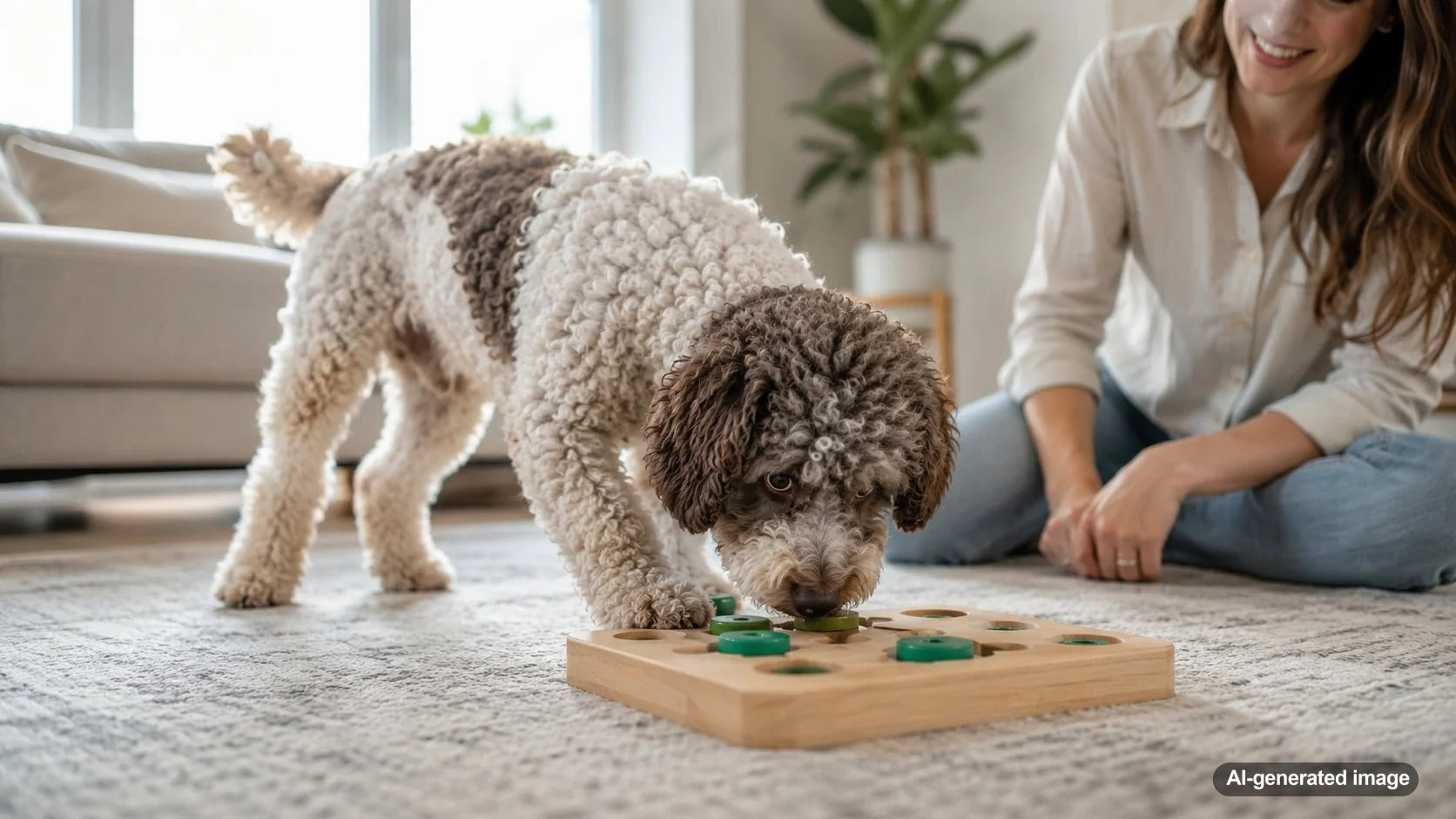
Indoor days can make even the sweetest dog act like they suddenly forgot every house rule. One minute they are napping peacefully, and the next they are stealing socks, barking at hallway ghosts, or giving the couch leg a suspicious amount of attention. The Best Ways to Keep Your Dog Entertained Indoors are not about wearing your dog out nonstop, but about giving their brain, nose, mouth, and body something satisfying to do in a safe, repeatable way.
Dogs were not built to spend the whole day waiting for something interesting to happen. Many dogs feel calmer when their day includes a mix of chewing, licking, sniffing, problem-solving, training, and rest. The right indoor routine can help redirect boredom before it turns into destructive chewing, counter surfing, demand barking, or that wild evening zoomie spiral.
Quick answer: The best indoor entertainment for dogs combines mental enrichment, safe chewing, licking, scent games, short training sessions, puzzle feeding, and low-impact movement. Start with 10 to 15 minutes at a time, supervise new activities, and rotate options so your dog does not get bored with the same setup every day.
Start With What Your Dog Is Really Asking For
When a dog seems restless indoors, they may not simply need more exercise. They may need an outlet for a specific natural behavior. Chewers often need something appropriate to gnaw. Sniffers need a scent game. Fast eaters may benefit from a slower, more challenging meal. Velcro dogs may need calm, confidence-building activities that do not always require your full attention.
Look at your dog's boredom style. A puppy chewing chair legs may need teething-safe outlets and short training games. A senior dog who cannot do much running may still enjoy sniffing for treats in a towel or licking a mat. A power chewer may need tougher, supervised chew options instead of soft plush toys that become confetti in three minutes.
Use Food Enrichment to Turn Snack Time Into Brain Time
Food enrichment is one of the easiest ways to keep a dog busy indoors because it taps into a dog's instinct to forage and work for food. Instead of placing every treat in a bowl, try scattering kibble in a snuffle towel, hiding a few treats around one room, or using a puzzle toy that makes your dog slow down and think.
For dogs who love a longer-lasting treat routine, The Pupsicle can be a helpful indoor enrichment tool because it gives dogs a focused licking and treat-play activity. You can use ready-to-go options like Pupsicle Pops or make your own treats with a freezer tray, depending on your routine and your dog's needs.
Helpful tip: If your dog gets frustrated and walks away, make the activity easier. Start with loose treats, bigger openings, or shorter sessions. Enrichment should feel satisfying, not like a puzzle your dog needs a college degree to solve.
Lean Into Licking for Calm, Quiet Entertainment
Licking can be a soothing activity for many dogs, especially during rainy days, work calls, grooming practice, or post-walk settle time. A lick mat gives your dog a slower, more focused way to enjoy a spreadable treat while staying in one spot. This can be especially useful for dogs who have a hard time switching from playful energy to calm indoor behavior.
Try spreading a thin layer of dog-safe food across a textured surface instead of piling it on thick. For an easy option, FlipMat works as a dual-sided lick mat and slow feeder, so you can adjust the challenge depending on your dog's experience level. Always choose foods that fit your dog's diet, and check with your veterinarian if your dog has allergies, digestive issues, or a special food plan.
Add Nose Games That Work in Small Spaces
You do not need a huge house to give your dog a good sniff workout. Start with a simple "find it" game by placing a treat in plain sight, saying the cue, and letting your dog eat it. Once they understand the game, hide treats behind a chair leg, under a towel edge, or inside an open cardboard box.
Sniffing is mentally engaging because dogs process a huge amount of information through scent. For energetic dogs, five minutes of focused searching can feel more satisfying than another round of bouncing off the furniture. For shy dogs, scent games can also build confidence because they get to solve the problem at their own pace.
Rotate Chewing, Tug, Training, and Rest
A great indoor day has variety. Chewing satisfies the mouth. Tug gives a short burst of physical play. Training builds focus and communication. Rest helps your dog actually recover instead of becoming overtired and cranky. Many behavior problems indoors come from too little stimulation, but some come from too much excitement with no calm finish.
Use a slow feeder, lick mat, or quick scent game with breakfast.
Practice three easy cues like sit, touch, and place for 5 minutes.
Offer a supervised chew or puzzle toy while you work nearby.
Finish with calm licking, a short sniff game, and a predictable rest spot.
If your dog is a rough player, keep indoor tug rules simple. Ask for a drop, pause the game when teeth touch skin, and use toys long enough to protect your hands. If your dog guards toys, treats, or chews, pause enrichment games that involve high-value items and speak with a qualified trainer or behavior professional.
Try Indoor Movement Without Turning the Living Room Into a Dog Park
Indoor exercise should be safe for your floors, furniture, and your dog's joints. Instead of high-speed hallway fetch, try controlled games like treat tosses on a rug, stepping over a broom handle, weaving around chairs, or practicing a gentle place-to-place recall. Small dogs may get plenty of movement from a few short laps. Large dogs often need more structure so they do not slide, crash, or knock over half the room.
For dogs who like rolling, chasing, and working for food, Walkabout can turn treats or kibble into a moving puzzle. Keep sessions supervised, especially with enthusiastic dogs, and choose spaces where your dog has traction.
Common Indoor Entertainment Mistakes
Do not make every activity harder. Dogs need wins. If every game is complicated, your dog may quit, bark, chew the toy, or look for easier entertainment, like your favorite shoe.
Do not skip supervision with new toys or chews. Watch how your dog uses anything new before leaving them with it.
Do not ignore sudden behavior changes. If your dog becomes restless, destructive, unusually clingy, aggressive, painful, or uninterested in food, ask your veterinarian or a qualified professional for guidance.
Dog Parent FAQs
How long should I entertain my dog indoors each day?
Most dogs do well with several short enrichment sessions instead of one long marathon. Try 10 to 15 minutes at a time and adjust based on your dog's age, energy, health, and frustration level.
Can indoor enrichment replace walks?
Indoor enrichment can help on bad-weather days, busy days, or recovery days, but many dogs still benefit from outdoor sniffing, movement, and fresh air when it is safe and appropriate.
What is the easiest indoor activity to start with?
A simple treat search is a great beginner option. Place a few treats around one room while your dog watches, say "find it," and gradually make the hiding spots more challenging.
What if my dog destroys every toy?
Choose more durable options, supervise closely, and focus on activities that match your dog's chewing style. If your dog eats pieces of toys or chews, remove the item and ask your veterinarian what is safest.
A Happier Indoor Dog Starts With a Better Routine
Keeping your dog entertained indoors does not have to mean buying every toy or planning a full activity schedule. The most helpful approach is to rotate simple outlets that match how your dog naturally likes to engage with the world: sniffing, licking, chewing, thinking, moving, and resting. When you make those outlets part of everyday life, indoor time can feel less like a boring backup plan and more like a cozy, enriching part of your dog's routine.


