






































































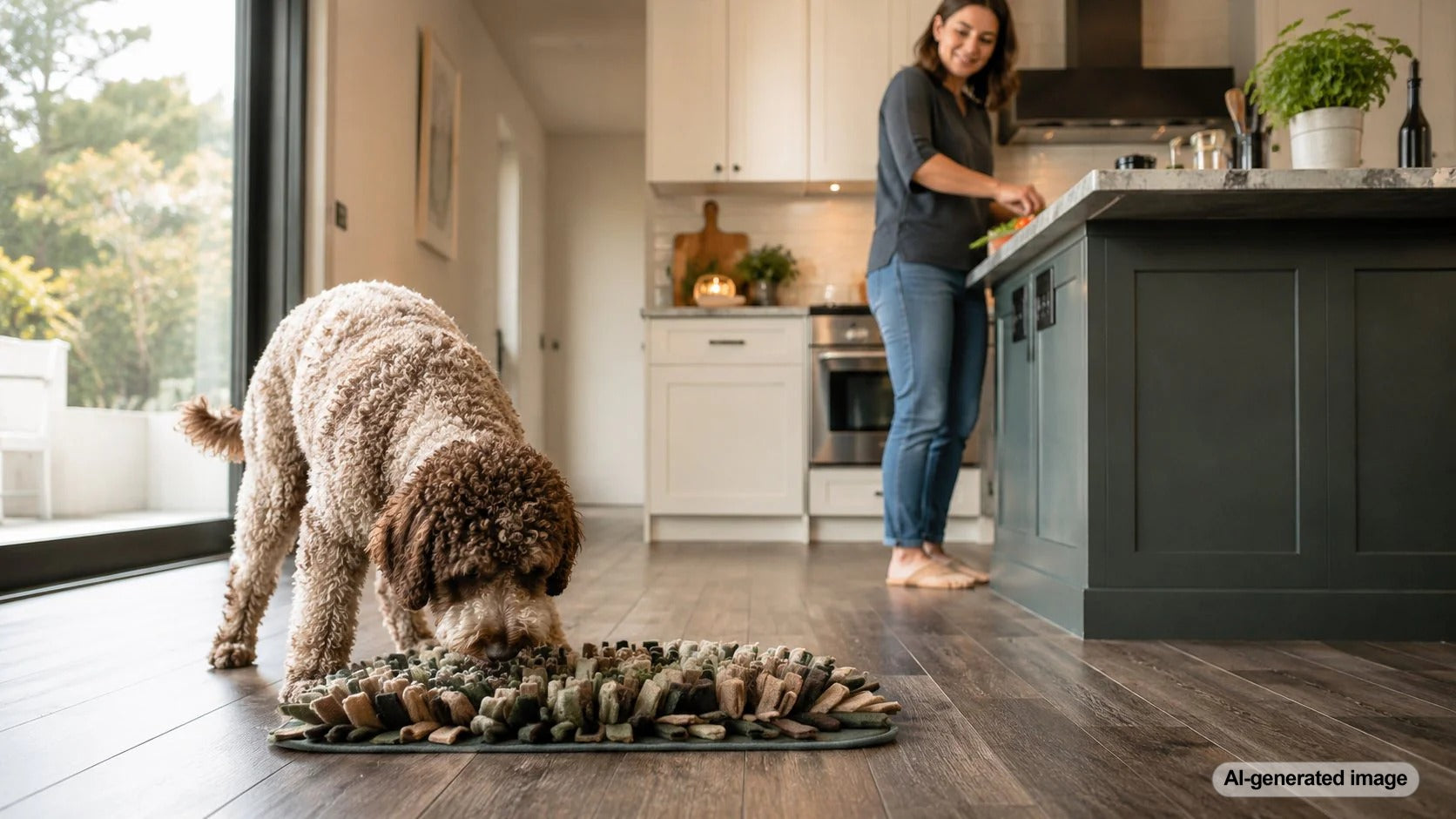
Cooking dinner should not feel like a full-contact sport with your dog. If your pup camps under your feet, noses the trash, stares at the counter, or barks because chopping vegetables is somehow the most exciting event of the day, you are not alone. The best ways to entertain a dog while you cook are safe, food-based enrichment, simple training games, a calm station outside the traffic zone, and boredom-busting activities that keep their brain busy without pulling your attention away from the stove.
Dogs often get extra interested in the kitchen because it is full of scent, movement, dropped crumbs, and human attention. Instead of waiting until your dog is already pacing or begging, set up a repeatable pre-cooking routine. Think of it as giving your dog a job before they invent one.
Start With a Kitchen-Safe Setup
Before choosing a toy or treat, decide where your dog should be. For some homes, that means a mat near the doorway. For others, it means a crate, playpen, baby-gated room, or bed where your dog can see you without being underfoot. This matters because hot pans, sharp knives, glass, onions, garlic, raw dough, chocolate, grapes, raisins, and xylitol-sweetened foods can turn a normal dinner into an emergency.
If your dog is a counter surfer, give them distance from the prep area before the food comes out. If your dog is a puppy, assume they will make very fast choices with very little wisdom. If your dog is a senior, choose a spot with traction and padding so they are not slipping, hovering, or repeatedly getting up and down on hard flooring.
Use Licking to Create a Calm Cooking Routine
Licking can be a useful calming activity for many dogs because it is repetitive, focused, and easy to do from one place. A lick mat works especially well when you need your dog occupied while you prep ingredients, simmer sauce, or clean up. Spread a dog-safe topping thinly, press it into the grooves, and freeze it for a longer challenge.
For everyday kitchen distractions, FlipMat is a practical fit because it works as both a lick mat and a slow feeder, with two challenge levels. That makes it helpful for dogs who need a quick distraction some days and a more focused enrichment session on others. Keep it on the floor away from the stove, supervise your dog, and pick it up when they are done so it stays a special cooking-time activity.
Give Your Dog a Long-Lasting Treat Toy Before They Start Begging
Timing is everything. If you hand your dog something after ten minutes of barking, they may learn that barking starts the treat party. Instead, set them up before you turn on the burner. That small shift can make the routine feel predictable instead of reactive.
A long-lasting treat toy is ideal for meals that take more time, like roasting vegetables, making soup, or prepping a family dinner. The Pupsicle can help turn treat time into a focused activity that keeps dogs licking, working, and engaged while you cook. It is especially useful for dogs who love food but need something more interesting than a plain biscuit.
Match the difficulty to your dog. Puppies may need softer, easier options and shorter sessions. Power chewers need sturdy enrichment tools and close supervision. Small dogs may do better with smaller portions, while large dogs may need an activity that lasts long enough to actually bridge the cooking window.
Practice the Place Cue in Tiny Pieces
Entertainment does not always have to mean food-filled toys. A simple place cue can be one of the best kitchen skills your dog learns. The goal is not a perfect obedience performance. The goal is to teach your dog that lying on their mat while you cook pays off.
Start when you are not cooking. Toss a treat on the mat, praise your dog for stepping onto it, then release them. Build up to sitting, lying down, and staying for a few seconds. Once that feels easy, practice while you open a cabinet, carry a pan, or chop one carrot. Real kitchen distractions should be added gradually so your dog can succeed.
| Dog behavior in the kitchen | What to try first |
|---|---|
| Hovering under your feet | Use a mat, baby gate, or bed outside the cooking path, then reward calm settling. |
| Begging or barking | Start enrichment before cooking begins and avoid rewarding the loudest moment. |
| Counter surfing | Increase distance, clear counters, and use a supervised chew or lick activity. |
| Restless pacing | Offer a longer-lasting lick toy, then add a short sniff walk before dinner prep next time. |
Turn Dinner Prep Into a Sniffing Game
Dogs experience the world through scent, so sniffing can be surprisingly satisfying. While you cook, hide a few small training treats in a towel fold, snuffle mat, cardboard box with crumpled paper, or a few safe spots in the room where your dog is allowed to search. Keep the game simple enough that your dog can win without needing constant help.
This works especially well for dogs who are busybodies. A dog who wants to investigate every ingredient may just need a legal way to investigate something else. For very food-motivated dogs, use part of their regular meal as the search reward so the routine does not accidentally become a second dinner.
Rotate Activities So They Stay Interesting
The same enrichment activity every night can lose its magic. Build a small rotation: lick mat on pasta night, treat toy for sheet-pan dinners, place training for quick breakfasts, and sniffing games when you only need ten minutes. Rotation also helps you learn what actually works for your dog.
Watch your dog's body language. A relaxed dog may lick steadily, settle between bites, or check in calmly. A frustrated dog may paw aggressively, bark at the toy, chew the edges, or abandon the activity. If that happens, make the challenge easier, choose a different texture, or switch to a calmer setup with more distance from the kitchen.
- Waiting until your dog is already begging before offering enrichment.
- Using a toy that is too hard, too small, or not suited to your dog's chewing style.
- Letting dogs chew unsupervised near hot appliances or dropped ingredients.
- Overfeeding by adding enrichment on top of full meals every day.
- Assuming sudden behavior changes are just boredom. If your dog seems anxious, painful, nauseous, or unusually restless, ask your veterinarian or a qualified trainer for guidance.
Dog Parent FAQs
How can I keep my dog out of the kitchen while I cook?
Set up a consistent station just outside the kitchen, such as a bed, mat, crate, or gated area. Pair it with a lick mat, treat toy, or calm reward so your dog learns that staying out of the cooking zone is worthwhile.
What is the best activity for a dog who begs during dinner prep?
Food-based enrichment usually works best because it gives your dog an appropriate way to focus on food. Offer it before begging starts, and use part of your dog's regular meal or a safe treat portion to avoid overfeeding.
Can I give my dog kitchen scraps to keep them busy?
It is safer to be selective. Some human foods are unsafe for dogs, and rich scraps can upset stomachs. Stick with dog-safe ingredients and check with your veterinarian if you are unsure.
What if my dog finishes every toy too quickly?
Try freezing lick activities, choosing a more challenging feeder, offering a short sniff walk before cooking, or rotating between activities. For power chewers, use durable products designed for tough chewing and supervise closely.
A Calmer Kitchen Starts With a Repeatable Plan
The best cooking-time routine is simple, safe, and easy to repeat. Give your dog a clear place to be, choose an activity that matches their needs, and offer it before they start making their own entertainment. With a little planning, dinner prep can become less chaotic for you and more satisfying for your dog.


