






































































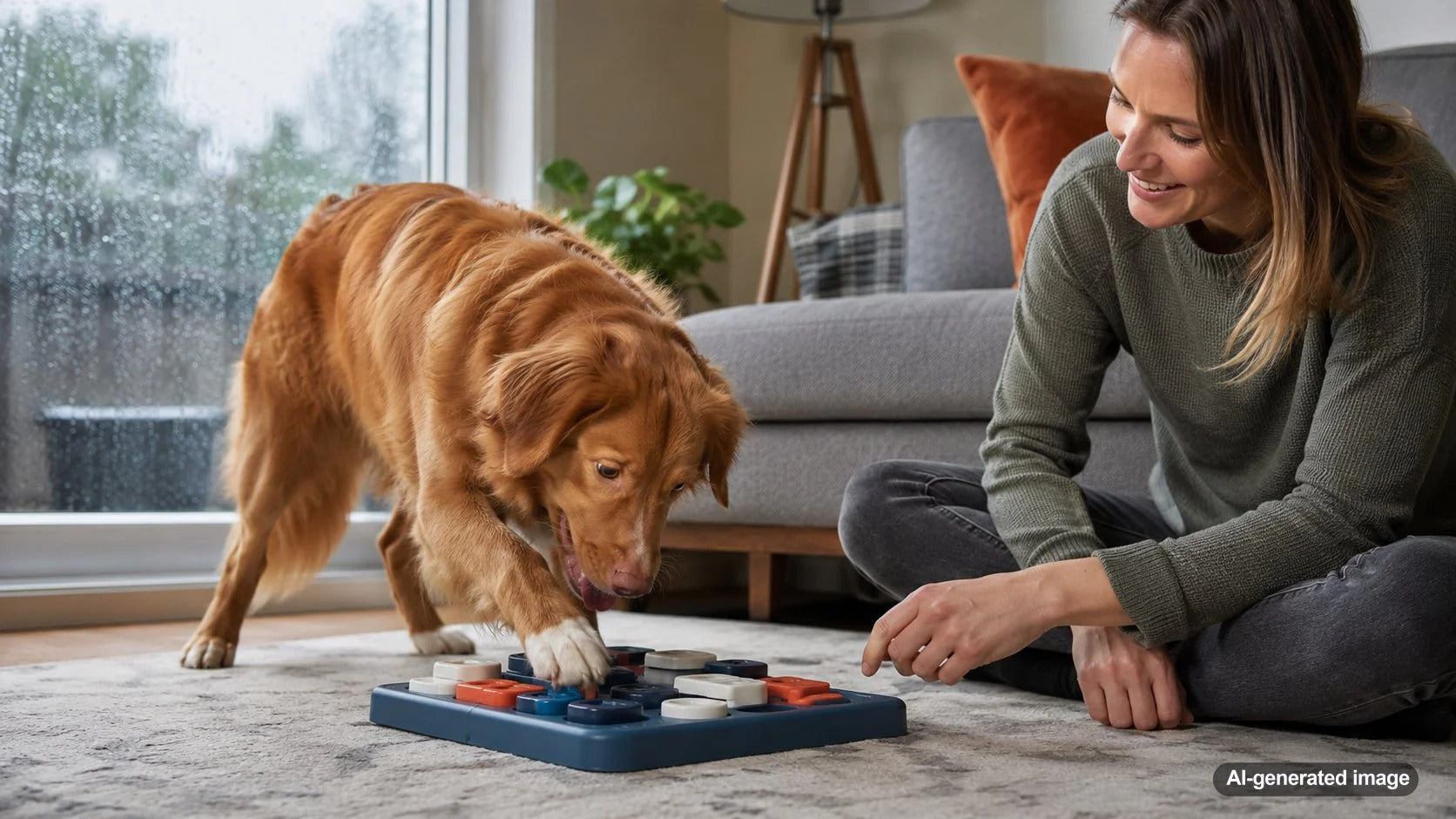
Bad weather has a special way of turning a normal dog into a pacing, squeaking, sock-stealing little storm cloud. When rain, snow, wind, heat, or icy sidewalks cut walks short, your dog still needs something to do with their brain, nose, mouth, and body. The Best Ways to Entertain a Dog During Bad Weather are simple indoor routines that mix sniffing, licking, chewing, light movement, training, and rest so your pup feels satisfied instead of stir-crazy.
The trick is not to recreate a full outdoor adventure in your living room. It is to give your dog small, satisfying jobs throughout the day. A five-minute scent game, a slow-feeding activity, a chew session, and a few training reps can often do more for a bored dog than one chaotic hour of indoor zoomies.
Quick Answer: What Should You Do First?
Start with a calm enrichment activity, then add a short movement game, then finish with something soothing. A great rainy-day rhythm is: sniffing game, treat toy or slow feeder, short training session, supervised chew, and quiet rest. This gives your dog mental stimulation, appropriate outlets for energy, and a predictable routine when the weather changes your normal schedule.
1. Turn Mealtime Into a Brain Game
One of the easiest ways to entertain a dog indoors is to stop serving every meal from a plain bowl. Dogs naturally like to sniff, search, lick, paw, and problem-solve for food. When mealtime becomes a puzzle, your dog gets to use those instincts in a safe, house-friendly way.
Try scattering kibble across a towel, placing a few pieces in different corners of a room, or using a slow-feeding mat. Start easy, especially if your dog is new to puzzles. A frustrated dog may bark, paw too hard, or walk away, so the first version should feel winnable.
For a simple daily option, Woof's FlipMat works well because it has two sides: one for licking and one for slower feeding. That makes it helpful for dogs who need both mental stimulation and a calmer way to enjoy treats or meals when outdoor plans are canceled.
2. Play Nose Games Around the House
A dog's nose is one of the best boredom-busting tools they have. Scent games can be especially helpful during bad weather because sniffing is mentally tiring without needing a lot of space. It is also easy to adjust for puppies, seniors, small dogs, large dogs, and dogs recovering from a lower-energy day.
Start with a basic game of "find it." Let your dog see you toss a treat a few feet away, say "find it," and praise them when they sniff it out. Once they understand the game, hide treats behind a chair leg, under the edge of a towel, or inside an open cardboard box. Keep the hiding places safe and reachable, and avoid areas where your dog might knock over furniture or chew something they should not.
For more advanced dogs, hide one favorite toy and encourage them to search room by room. Keep sessions short. Two or three minutes of focused sniffing can be surprisingly satisfying.
3. Use Licking to Encourage Calm
When the weather is loud or gloomy, some dogs do not just get bored. They get unsettled. Thunder, heavy wind, changes in routine, and skipped walks can make certain dogs clingy, restless, or extra vocal. Licking can be a useful part of a calming routine because it gives dogs a repetitive, focused activity.
A lick mat can be especially useful while you answer emails, make dinner, or wait out a storm. Spread a dog-safe treat mix or soft food thinly so your dog has to work slowly instead of gulping. Always supervise, choose an appropriate surface for your dog's size and chewing style, and pick up the mat when the licking session is done.
If your dog needs a longer-lasting indoor distraction, The Pupsicle can turn treat time into a more engaging activity. It is designed for long-lasting interactive treat play, which can be helpful when your dog needs something better to do than stare at the rain and complain dramatically.
Helpful tip: Freeze lickable treats or prepared enrichment refills when you need the activity to last longer. For dogs new to frozen treats, start with shorter sessions so their stomach and patience can adjust.
4. Create a Mini Indoor Obstacle Course
You do not need fancy equipment to help your dog move indoors. A few safe household items can create a gentle activity course. Ask your dog to step over a broom laid flat on the floor, weave around pillows, walk onto a mat, spin, touch your hand, or crawl under a sturdy chair if they are comfortable doing so.
Keep it low-impact. Bad-weather entertainment should not turn your hallway into a slippery racetrack. Avoid tight turns on slick floors, repeated jumping, or games that make your dog crash into furniture. Puppies may need short, simple activities because their bodies are still developing. Senior dogs may prefer slow stepping, nose targets, and stretching-style movement over fast games.
The goal is controlled movement plus attention. When your dog has to listen, follow cues, and use their body carefully, they get physical and mental engagement at the same time.
5. Teach One Tiny New Skill
Training is one of the most underrated indoor activities because it gives your dog a job and strengthens your communication. Bad-weather days are perfect for teaching small skills like "touch," "place," "spin," "look," or "drop it." Keep sessions around five minutes and end before your dog gets bored.
Use small, tasty rewards and make the first step very easy. For example, if you are teaching "place," reward your dog for looking at the mat, then stepping on it, then standing on it, then settling there. This makes training feel like a game instead of a test.
For high-energy dogs, alternate one minute of training with one minute of calm enrichment. For sensitive dogs, keep your voice light and avoid repeating cues over and over. If your dog seems confused, make the task easier.
6. Offer Safe, Supervised Chewing
Chewing is not just something dogs do when they are being naughty. It is a normal behavior that can help many dogs release energy and settle. During bad weather, dogs who miss their usual walk may redirect that need onto shoes, blankets, furniture, or the corner of the rug.
A good chew routine gives your dog an approved outlet. Choose chews and toys that match your dog's size, chewing strength, and habits. Power chewers need more durable options than gentle nibblers. Small dogs still need appropriately sized products, and seniors may need softer options depending on their teeth and gums.
Always supervise chew time, remove pieces that become too small, and check with your veterinarian if your dog has broken teeth, mouth pain, digestive issues, or a sudden change in chewing behavior.
7. Build a Bad-Weather Routine Your Dog Can Predict
Dogs often handle schedule changes better when they know what comes next. Instead of waiting until your dog is already barking at the window, create a simple rainy-day plan you can repeat.
A simple indoor routine could look like this:
- Morning: short potty break, then a slow-feeding breakfast activity.
- Midday: five minutes of training or scent work.
- Afternoon: supervised chew or puzzle toy time.
- Evening: calm licking activity, gentle play, and a quiet settle cue.
This does not need to be perfect. The point is to rotate activities so your dog is not relying on one type of entertainment all day. Too much wild play can leave some dogs more wound up. Too many food activities may be too rich for others. Mix active, calming, and thinking games for the best balance.
Common Mistakes to Avoid
The biggest mistake is waiting until your dog is already frustrated. If your dog is pacing, stealing items, whining, or demand barking, they may need an activity sooner in the day. Another common mistake is making every indoor game too exciting. Tug, fetch, and chase can be fun, but some dogs struggle to come back down afterward.
It is also easy to overdo treats on stormy days. Use part of your dog's regular food for games when possible, and keep rich treats in small amounts. If your dog has allergies, digestive sensitivity, appetite changes, vomiting, diarrhea, excessive drooling, pain, or unusual behavior, ask your veterinarian for guidance.
Bottom line: Bad weather does not have to mean a bored dog or a wrecked living room. Give your pup safe ways to sniff, lick, chew, learn, and move, and you can turn a stuck-inside day into a surprisingly satisfying routine.
Dog Parent FAQs
How long should I entertain my dog indoors on a bad-weather day?
Most dogs do best with several short activities spread throughout the day instead of one long session. Try five to fifteen minutes at a time, then give your dog a chance to rest.
What indoor activities are best for high-energy dogs?
High-energy dogs often benefit from a mix of scent games, training, controlled movement, puzzle feeding, and safe chewing. Avoid turning every activity into high-speed play, especially on slippery floors.
Can mental stimulation really tire out a dog?
Yes, many dogs find sniffing, problem-solving, training, and licking mentally satisfying. It may not replace every walk, but it can help take the edge off when outdoor exercise is limited.
What if my dog gets anxious during storms?
Keep the routine calm, use soothing enrichment, reduce loud noises when possible, and offer a comfortable resting spot. If your dog panics, pants heavily, hides, shakes, or cannot settle, talk with your veterinarian or a qualified behavior professional.


